This learning resource is available in interactive and printable formats. The interactive worksheet can be played online and assigned to students. The Printable PDF version can be downloaded and printed for completion by hand.
This comprehensive science reading passage for grades 6-8 introduces students to biodiversity and explores its importance at genetic, species, and ecosystem levels. The text explains how biodiversity is measured, why certain areas like tropical rainforests and coral reefs are hotspots, and what factors contribute to high biodiversity. Students learn about methods such as species richness and relative abundance, as well as current scientific estimates of Earth’s species. The passage connects biodiversity to ecosystem stability and human well-being, emphasizing real-world applications and implications for conservation. Aligned with NGSS standards MS-LS2-5 and MS-LS4-4, the resource includes a glossary, differentiated and Spanish versions, comprehension and writing activities, and graphic organizers. Audio integration supports accessibility and multiple learning styles. This lesson is ideal for classrooms aiming to deepen scientific understanding of biodiversity and its role in sustaining life on Earth.
CONTENT PREVIEW
Expand content preview
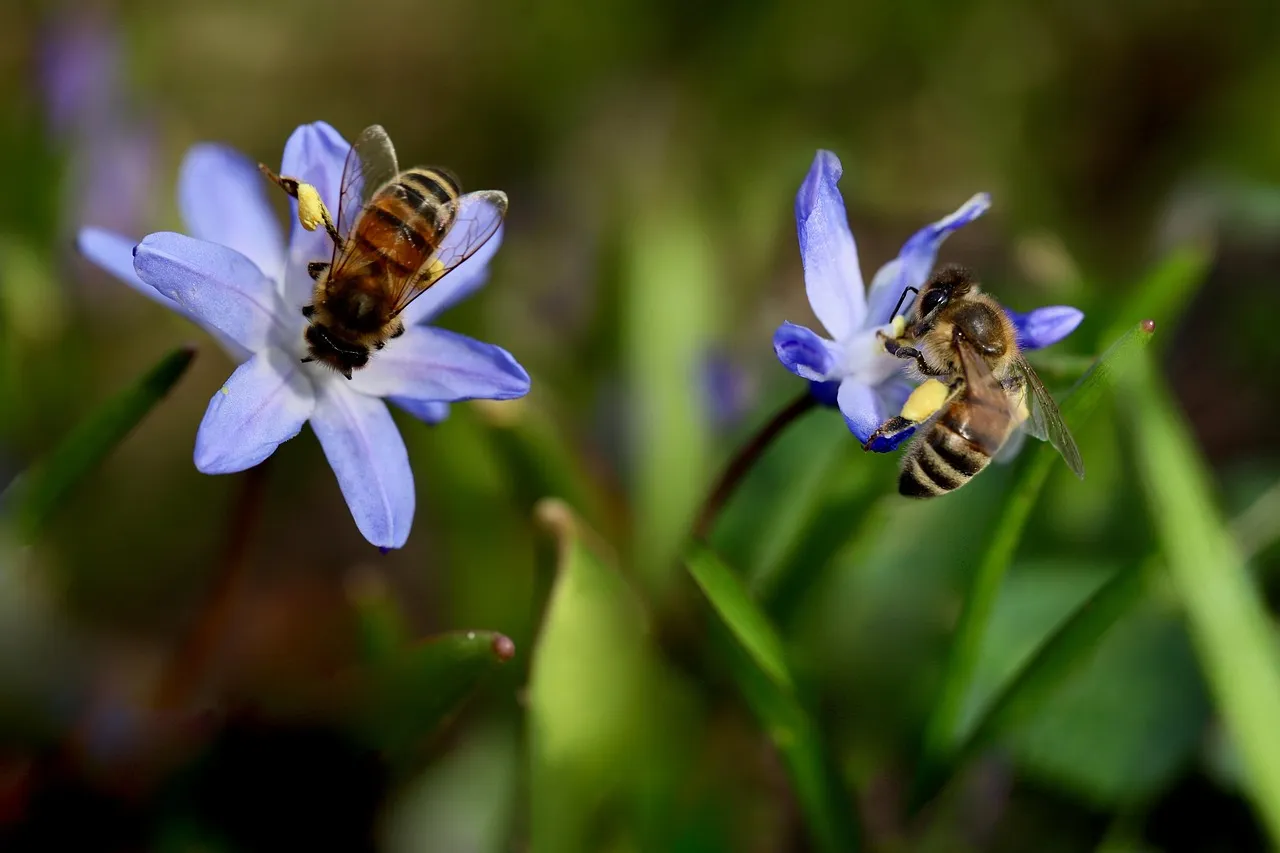
Biodiversity shapes the health and stability of life on our planet. Image by Nennieinszweidrei / Pixabay.
Biodiversity shapes the health and stability of life on our planet. Scientists have discovered that Earth’s living things are not just countless in number, but also incredibly varied, from tiny bacteria to towering redwood trees. This variety is not random; it forms the foundation of functioning ecosystems and supports all life, including humans. Understanding biodiversity helps us address challenges such as disease, food security, and climate change.
Levels of Biodiversity: Genes, Species, and Ecosystems
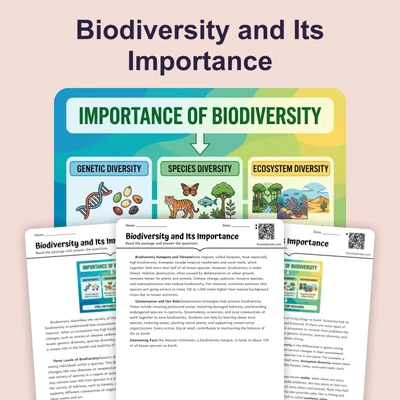
Biodiversity exists at three main levels. First, genetic diversity refers to the differences in DNA within a single species. For example, two wolves may look similar, but their genes can vary in ways that affect their survival and adaptability. Second, species diversity is the number and variety of species found in a particular place. In a coral reef, thousands of fish, coral, and invertebrate species interact in complex ways. Third, ecosystem diversity describes the variety of habitats, such as forests, deserts, and wetlands. Each habitat provides unique resources and supports different communities of organisms. These levels interact: genetic diversity within species boosts their chances of survival, while many species together create stable ecosystems.
Measuring Biodiversity and Hotspots
Scientists measure biodiversity using two main tools. Species richness counts the total number of different species in an area, while relative abundance looks at how evenly individuals are distributed among those species. Regions with especially high biodiversity are called hotspots. Tropical rainforests, for example, cover less than 7% of Earth’s land but contain over 50% of known species. Coral reefs, the island of Madagascar, and the Mediterranean basin are other famous hotspots. Scientists estimate there may be 8 to 10 million species on Earth, but most have not yet been discovered or described.
Why Some Places Have More Biodiversity
Biodiversity is not spread evenly across the planet. Areas near the equator tend to have more species because of warm temperatures, high rainfall, and stable climates. A region’s evolutionary history also matters. Tropical regions have been stable for millions of years, allowing life to diversify. Additionally, a greater variety of habitats—like mountains, rivers, and forests—supports more species. Human activity can threaten biodiversity by destroying habitats, introducing invasive species, and changing climate patterns. As biodiversity decreases, ecosystems become less resilient to changes and may provide fewer benefits, such as clean air and water.
Why Biodiversity Matters
Biodiversity is essential for ecosystem services that humans rely on. Diverse genetic resources help crops resist disease and adapt to changing conditions. Species interactions maintain soil fertility, pollinate plants, and regulate pests. Protecting biodiversity also preserves opportunities for new medicines and technologies. By studying and conserving biodiversity, scientists and communities can ensure the health and sustainability of life on Earth for future generations.
Interesting Fact: Scientists discover about 15,000 to 18,000 new species each year, but millions are still waiting to be found!
What is biodiversity?
The variety of all living things on EarthThe number of trees in a forestThe amount of rainfall in an areaA type of ecosystem found in rainforests
Which of the following is NOT a level of biodiversity?
Why are tropical rainforests called biodiversity hotspots?
They have more than 50% of known species but cover less than 7% of landThey have the fewest species on EarthThey receive the most rainfallThey are the coldest places on Earth
What does genetic diversity mean in the passage?
Differences in DNA within a speciesThe number of habitats in an areaVariety of species in a rainforestNumber of organisms in an ecosystem
What is the definition of a hotspot in this context?
A region with very high biodiversityA place with warm temperaturesAn area with no plant lifeA type of ecosystem in deserts
Which factor does NOT increase biodiversity in a region?
Stable climate over millions of yearsHigh variety of habitatsHuman destruction of habitatsWarm temperatures and high rainfall
What is one effect of decreasing biodiversity?
Ecosystems become less resilientThe number of species increasesThere are more hotspotsGenetic diversity increases
True or False: Scientists have already discovered all species living on Earth.
TrueFalse
True or False: Ecosystem diversity means having many different species in one area.
TrueFalse
How do scientists measure biodiversity?
By counting species richness and looking at relative abundanceOnly by measuring rainfallBy checking air temperatureBy measuring tree height
Perfect For:
👩🏫 Teachers
• Reading comprehension practice
• Auto-graded assessments
• Literacy skill development
👨👩👧👦 Parents
• Reading practice at home
• Comprehension improvement
• Educational reading time
🏠 Homeschoolers
• Reading curriculum support
• Independent reading practice
• Progress monitoring
Reading Features:
📖
Reading Passage
Engaging fiction or nonfiction text
❓
Comprehension Quiz
Auto-graded questions
📊
Instant Feedback
Immediate results and scoring
📄
Printable Version
Download for offline reading
🔊
Read Aloud
Voice-over with word highlighting
Reviews & Ratings
No reviews yet. Be the first to share your experience!
Related Content
How Rainforests Help the Planet
This NGSS-aligned reading passage for middle school students explains how rainforests help regulate Earth’s climate and ...
MS-ESS2-6MS-LS2-5
Understanding the Koppen Climate Classification System
This NGSS-aligned science reading passage explains the Köppen Climate Classification System, a scientific method used to...
MS-ESS2-6MS-LS2-5
Human Impacts: Invasive Species
This passage explores the science behind invasive species—non-native organisms that harm native ecosystems. Aligned to N...
MS-LS2-4MS-LS2-5
Human Impacts: Habitat Destruction
This grade 6-8 science passage explores human impacts on ecosystems, focusing on habitat destruction as the leading caus...
MS-LS2-4MS-LS2-5MS-ESS3-3
Biodiversity and Ecosystem Health
This comprehensive middle school science passage explores the relationship between biodiversity and ecosystem health, al...
MS-LS2-5
Ecosystem Services
This engaging middle school science passage introduces students to the concept of ecosystem services, the vital benefits...
MS-LS2-5MS-ESS3-3
Human Impacts: Overexploitation
This middle school science passage aligns with NGSS standards MS-LS2-4 and MS-LS2-5, focusing on human impacts through o...
MS-LS2-4MS-LS2-5
Conservation Strategies
This comprehensive passage introduces students in grades 6-8 to the major strategies used in conservation biology, such ...
MS-LS2-5MS-ESS3-4
Extinction: Past and Present
This comprehensive reading passage for grades 6-8 explores the concept of extinction, its causes, and its impact on life...
MS-LS4-1MS-LS2-5
Endangered Species and the Sixth Extinction
This engaging science reading passage for grades 6-8 explores the current biodiversity crisis, known as the 'Sixth Extin...
MS-LS4-1MS-LS2-5
Biodiversity and Its Importance
This comprehensive middle school science passage explores the concept of biodiversity at the genetic, species, and ecosy...
MS-LS4-4MS-LS2-5
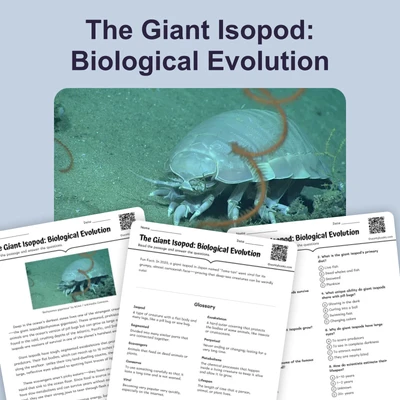
The Giant Isopod: Biological Evolution
This NGSS passage examines how giant isopods evolved for deep-sea survival, including slow metabolism for food scarcity,...
MS-LS4-4RI.6.3RI.7.3RI.8.8
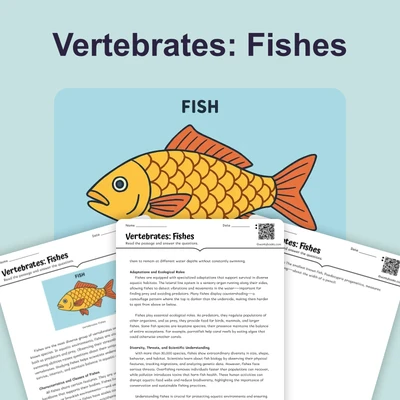
Vertebrates: Fishes
This middle school science reading passage offers an in-depth look at fishes, a major group of vertebrates. It covers fi...
MS-LS4-2MS-LS4-4
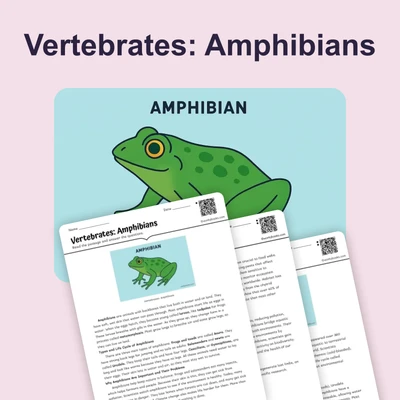
Vertebrates: Amphibians
This comprehensive middle school science passage dives into the fascinating world of amphibians, a group of vertebrates ...
MS-LS4-2MS-LS4-4
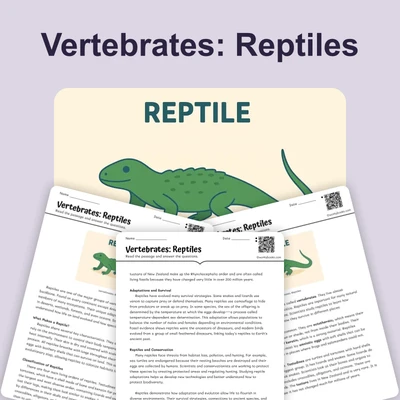
Vertebrates: Reptiles
This comprehensive science passage for grades 6-8 introduces students to reptiles, a fascinating class of vertebrates. A...
MS-LS4-2MS-LS4-4
Vertebrates: Birds
This middle school science passage explores birds as vertebrates, focusing on their unique adaptations such as feathers,...
MS-LS4-2MS-LS4-4
Vertebrates: Mammals
This comprehensive passage introduces middle school students to the class Mammalia and their defining characteristics, i...
MS-LS4-2MS-LS4-4
Invertebrates: Arthropods
This comprehensive science passage introduces middle school students to the phylum Arthropoda, the largest and most dive...
MS-LS4-2MS-LS4-4
Galápagos Islands
This engaging science passage explores the Galápagos Islands, a volcanic archipelago located off the coast of Ecuador in...