This learning resource is available in interactive and printable formats. The interactive worksheet can be played online and assigned to students. The Printable PDF version can be downloaded and printed for completion by hand.
This engaging middle school science passage introduces students to the concept of ecosystem services, the vital benefits humans receive from healthy ecosystems. Covering provisioning, regulating, supporting, and cultural services, the passage explains how nature provides food, clean water, climate regulation, pollination, and more. Real-world examples, such as honeybee pollination and natural water filtration, illustrate these connections. The passage also explores the economic value of ecosystem services—worth trillions of dollars globally—and emphasizes why protecting ecosystems is crucial for human well-being and future sustainability. Vocabulary is highlighted and defined for student comprehension. The passage and activities align with NGSS MS-LS2-5 and MS-ESS3-3, supporting crosscutting concepts of systems, cause and effect, and human impact. Audio integration is available for accessibility. Activities include a quiz, writing prompts, and graphic organizers to deepen understanding and support science literacy.
CONTENT PREVIEW
Expand content preview
Ecosystem Services
Ecosystem services are the essential benefits that humans receive from healthy natural environments. Every time we eat fresh food, drink clean water, or enjoy a walk in the park, we are experiencing the value of these services. Scientists study how these benefits come from the complex interactions between living things and their surroundings. Understanding ecosystem services helps us see how protecting nature is connected to human survival and well-being.
How Ecosystem Services Work
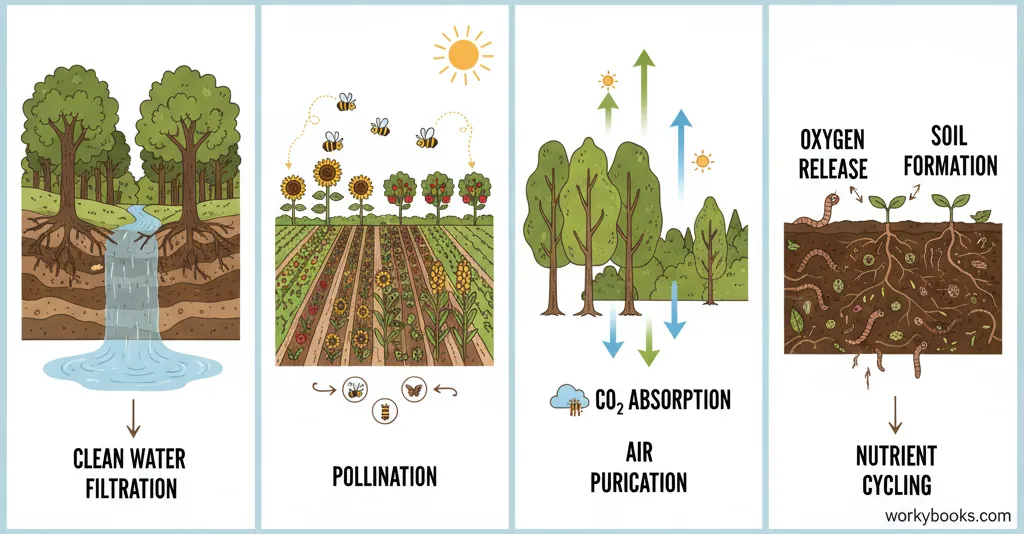
Nature provides different types of services that support human life. Provisioning services give us products like food, fresh water, wood, fiber, and medicines. For example, forests supply timber and wild plants used in medicine. Regulating services help control climate, purify water, pollinate crops, and manage pests. Wetlands act as natural filters, removing pollutants and preventing floods. Bees and other pollinators are crucial for growing fruits and vegetables. Supporting services include processes like nutrient cycling, soil formation, and photosynthesis. These functions make ecosystems stable and productive. Finally, cultural services provide recreation, spiritual connections, and educational opportunities, such as hiking, fishing, or learning about nature.
The Economic and Social Value of Nature
Research shows that the global value of ecosystem services is estimated to be tens of trillions of dollars each year. For instance, pollinators like bees contribute more than $200 billion to crop production worldwide. Clean water supplied by forests and wetlands reduces the need for expensive water treatment. In New York City, protecting natural watersheds saves the city over $1 billion annually in water purification costs. These examples show how healthy ecosystems can be more cost-effective than artificial solutions. When ecosystems are damaged by pollution, deforestation, or climate change, the loss of these services can harm human health and the economy.
Protecting Ecosystems for Our Future
When humans disrupt ecosystems, the services they provide can decline or disappear. For example, if pollinator populations drop, crop yields may decrease, making food more expensive and less available. If wetlands are destroyed, floods may become more severe and frequent. Protecting ecosystems means managing resources wisely, restoring damaged areas, and reducing pollution. By valuing ecosystem services, societies can make better decisions that benefit both nature and people. Scientists use data and models to predict how changes in ecosystems will affect the services we depend on. This scientific knowledge helps guide conservation and policy efforts that protect our shared future.
In summary, ecosystem services are the hidden foundation of human well-being, economy, and health. Recognizing their value helps us understand why caring for the environment is not just about protecting nature—it's about protecting ourselves.
Interesting Fact: Coral reefs provide coastal protection worth an estimated $9 billion each year by reducing wave energy and preventing erosion.
What are ecosystem services?
Benefits humans receive from natureTypes of wild animalsKinds of pollutionLaws about the environment
Which of the following is a provisioning service?
FoodFlood controlPollinationRecreation
What is the main purpose of regulating services?
Provide recreation and beautyControl natural processes like climate and water purificationSupply wood and fiberHelp with education
According to the passage, what role do wetlands play in ecosystems?
Act as natural filters that remove pollutantsProduce medicinesCreate new speciesMake laws for cities
What does the term 'photosynthesis' mean in the passage?
The process by which plants use sunlight to make foodThe movement of water in riversThe spreading of seeds by animalsThe protection of endangered species
What is the estimated annual value of ecosystem services worldwide?
Tens of trillions of dollarsA few million dollarsLess than $1,000Unknown
If pollinator populations drop, what could happen according to the passage?
Crop yields may decrease and food could become more expensiveMore trees would growFlooding would increaseWater would be cleaner
Why is protecting natural watersheds important for cities like New York?
It saves the city money on water purificationIt increases pollutionIt makes the city biggerIt creates new roads
True or False: Cultural services include things like recreation, spiritual value, and education.
TrueFalse
True or False: Damaging ecosystems always increases the value of ecosystem services.
TrueFalse
Perfect For:
👩🏫 Teachers
• Reading comprehension practice
• Auto-graded assessments
• Literacy skill development
👨👩👧👦 Parents
• Reading practice at home
• Comprehension improvement
• Educational reading time
🏠 Homeschoolers
• Reading curriculum support
• Independent reading practice
• Progress monitoring
Reading Features:
📖
Reading Passage
Engaging fiction or nonfiction text
❓
Comprehension Quiz
Auto-graded questions
📊
Instant Feedback
Immediate results and scoring
📄
Printable Version
Download for offline reading
🔊
Read Aloud
Voice-over with word highlighting
Reviews & Ratings
No reviews yet. Be the first to share your experience!
Related Content
Natural Disaster: Volcanic Eruptions
Volcanoes can erupt with lava and ash, changing the landscape. While dangerous, they also create fertile land and new la...
RI.3.1RI.4.4RI.4.2RI.5.2
Human Impacts: Pollution
This middle school science reading passage, aligned with NGSS standards MS-LS2-4 and MS-ESS3-3, examines the mechanisms ...
MS-LS2-4MS-ESS3-3
Human Impacts: Habitat Destruction
This grade 6-8 science passage explores human impacts on ecosystems, focusing on habitat destruction as the leading caus...
MS-LS2-4MS-LS2-5MS-ESS3-3
Environmental Problems and Solutions
This passage for grades 6-8 introduces major environmental problems such as habitat loss, pollution, climate change, inv...
MS-LS2-4MS-ESS3-3MS-ESS3-4
Remote Sensing
This middle school science passage introduces students to the concept of remote sensing—the collection of information ab...
MS-ESS3-3MS-PS4-2MS-ETS1-1MS-ETS1-3
Geographic Information Systems (GIS)
This engaging middle school science passage introduces students to Geographic Information Systems (GIS), aligning with N...
MS-ESS3-3MS-ETS1-1MS-ETS1-2MS-ETS1-3
Renewable vs. Nonrenewable Energy
This engaging passage, aligned with NGSS standards MS-PS3-4, MS-ESS3-3, and MS-ESS3-4, helps middle school students diff...
MS-PS3-4MS-ESS3-3MS-ESS3-4
Fossil Fuels: Coal
This middle school science reading passage explores the science behind coal, a major fossil fuel. Students will learn ho...
MS-PS3-4MS-ESS3-3MS-ESS3-4
Solar Energy
This engaging passage for grades 6-8 explores the science of solar energy, focusing on how sunlight is converted into el...
MS-PS3-4MS-ESS3-3MS-ESS3-4
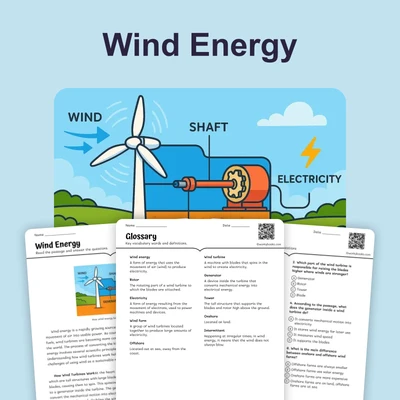
Wind Energy
This comprehensive middle school science passage explores the scientific principles behind wind energy and how wind turb...
MS-PS3-4MS-ESS3-3MS-ESS3-4
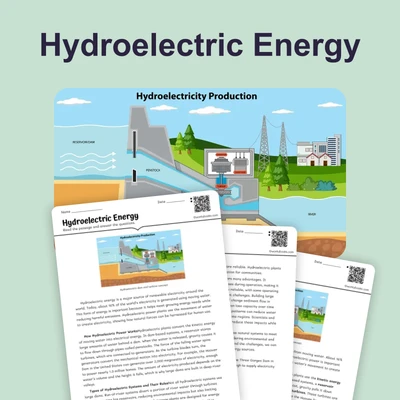
Hydroelectric Energy
This comprehensive passage introduces middle school students to the science behind hydroelectric energy, directly aligni...
MS-PS3-4MS-ESS3-3MS-ESS3-4
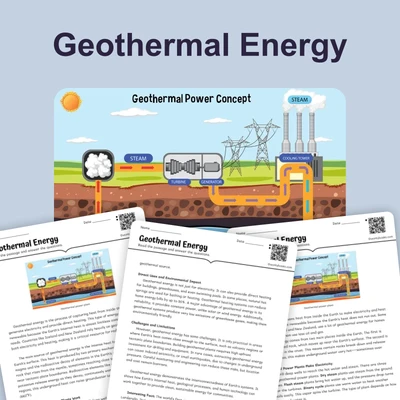
Geothermal Energy
This comprehensive science passage introduces middle school students to the mechanisms and applications of geothermal en...
MS-PS3-4MS-ESS3-3MS-ESS3-4
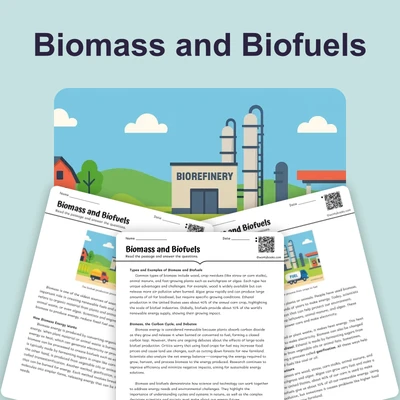
Biomass and Biofuels
This NGSS-aligned passage introduces grades 6-8 students to the science of biomass and biofuels, explaining how organic ...
MS-PS3-4MS-ESS3-3MS-ESS3-4
Nuclear Energy as a Resource
This NGSS-aligned informational science passage, designed for grades 6-8, explores nuclear energy as a resource in the c...
MS-PS3-4MS-ESS3-3MS-ESS3-4
Water Quality
This middle school science reading passage covers the topic of water quality, aligned with NGSS standards MS-ESS3-1 and ...
MS-ESS3-1MS-ESS3-3
Florida Everglades
This comprehensive passage introduces middle school students to the Florida Everglades, a distinctive wetland ecosystem ...
MS-LS2-1MS-LS2-4MS-ESS3-3MS-ESS3-4
Congo Rainforest
This middle school science passage explores the Congo Rainforest—Earth’s second-largest rainforest, located in Central A...
MS-LS2-1MS-ESS3-3
Nuclear Power Plants
This comprehensive reading passage introduces middle school students (grades 6-8) to the science of nuclear power plants...
MS-PS3-4MS-ESS3-3
Nuclear Safety and Waste
This middle school science passage explores the critical topic of nuclear safety and waste management, aligned with NGSS...