Reading PassagePremium

California Education Policy

Interactive passage with audio narration, comprehension questions, and printable PDF.

No ratings yet
Grades 3–5ReadingElaSocial-studiesHistoryEnglish · SpanishInteractive · Printable
Aligned toD2.HIS.16.3-5D2.CIV.7.3-5RI.4.3RI.4.4W.4.2
Just this resource
$1.50
One-time purchase
Best value
Unlock everything
$49.99$24.99/yr
50% off until Sept 15 — 10,000+ resources
Renews at $49.99/year.
Unlock above to use these actions

What's included

Reading passage
Audio narration
Comprehension quiz
Writing activity
Glossary & flashcards
Differentiated version
Spanish translation

Part of this bundle

California Education Policy preview and details

About this printable California Education Policy reading passage (Grades 3-5)

This educational reading passage explores how decisions are made about what students learn in U.S. schools, focusing on the modern era and the state of California. It describes the roles of government, school boards, and teachers, highlighting how laws and community voices shape the curriculum. Real-life examples and a clear cause-and-effect structure help students understand the process. The passage features a glossary of key terms and is designed for foundational literacy development. The resource includes a Spanish translation and an engaging quiz to reinforce learning. This passage and its activities are aligned to standards D2.His.16.3-5, RI.4.3, and W.4.2, making it a perfect fit for classrooms seeking to meet history and ELA requirements. An included read aloud audio supports accessibility for all learners.
Written by Workybooks TeamPublished by Workybooks
Preview

Sample passage and quiz from California Education Policy

Reading passage and comprehension quiz preview

California Education Policy
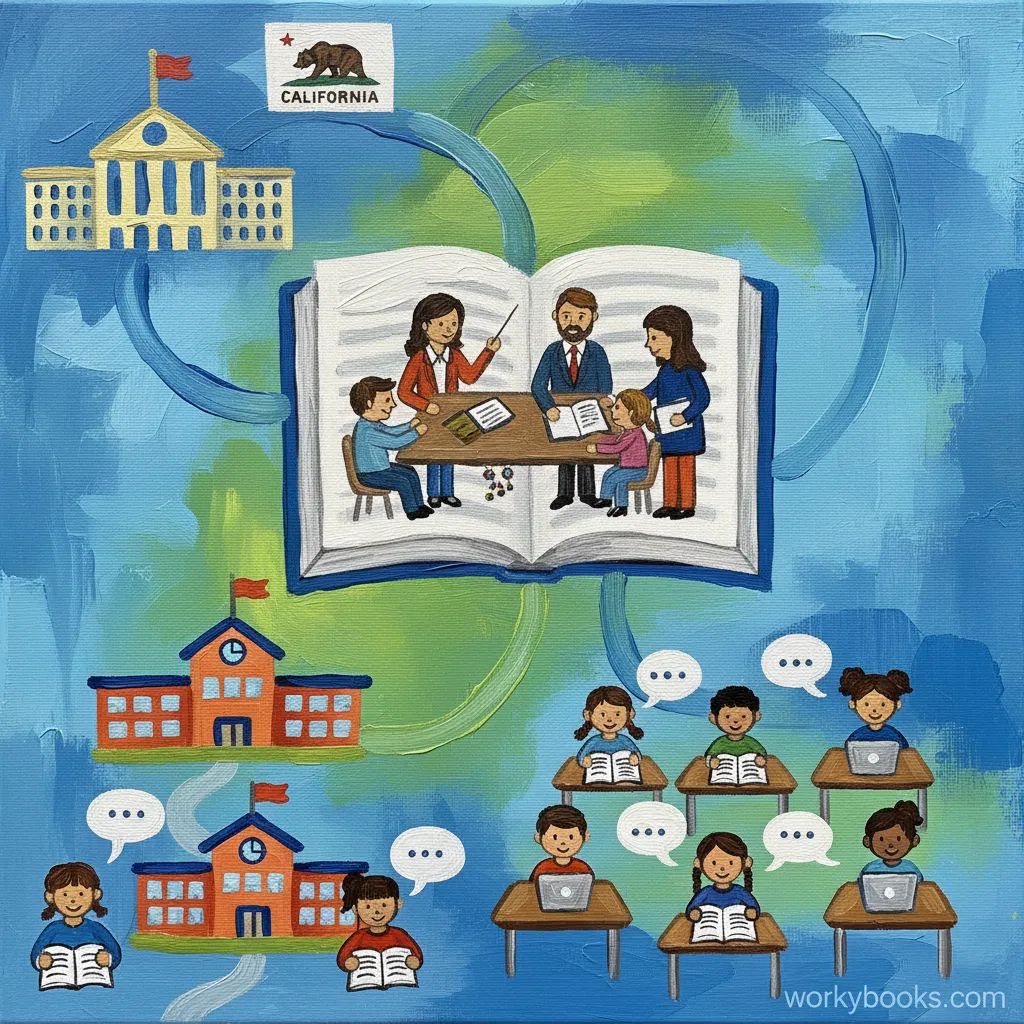
An acrylic painting illustrating the various groups involved in creating school curriculum.
Artistic Representation of A visual representation of the different groups shaping student education in California.

California education policy is decided by the State Board of Education and local school boards. These groups work together to guide what students learn in schools across the state. Their decisions affect every classroom, from small towns to large cities.

The State Board of Education is a group of people chosen by the governor. They set the main curriculum and standards for all public schools in California. Curriculum means the subjects and lessons students must study, like math, science, reading, and history. Standards are the goals and skills students should learn at each grade level.

Local school boards are elected by people in each city or county. They decide how to use money from the state and local taxes. This money, called school funding, pays for teachers, books, and school buildings. Local boards can also add extra lessons or programs that fit their communities’ needs, like art or technology classes.

California’s education policy has changed over time. In the past, each town often made its own rules. Some schools had fewer books or teachers. This was not fair for all students. The State Board was created to make sure every student had a chance to learn the same important things. Now, both the state and local boards work together to give all students a good education.

Sometimes, people disagree about what should be taught in schools. For example, some parents and teachers may want more science or math. Others may want more art or sports. The boards listen to these ideas before making decisions. This helps schools meet the needs of many students.

School funding is always important. The state sends money to schools based on how many students are in each district. If a district has more students, it gets more money. Local taxes, like property tax, also help pay for schools. This system tries to make sure all students have what they need to learn.

Decisions about education policy are important because they affect what you learn every day. When boards make good decisions, students get more opportunities and can do better in life.

Interesting Fact: The California State Board of Education was created in 1921 to help make sure all students in the state get a fair education.

Comprehension quiz (8 questions)

1. Who sets main rules for California schools?

State Board of Education
Classroom teachers
Parents
Federal government

2. What does curriculum mean?

Subjects and lessons in school
School buildings
Lunch menus
Class sizes

3. When was the State Board created?

1921
1950
2000
1870

4. Why do local boards listen to parents?

To meet student needs
To build new schools
To hire more teachers
To make lunch better

5. What happens if a district has more students?

Gets more money
Gets less money
Gets more books only
Gets fewer teachers

6. Why did the State Board start?

To make education fair
For sports
To build roads
For new taxes

7. School funding pays for teachers and books. True or false?

True
False

8. What are standards?

Goals and skills to learn
School lunches
Sports rules
Book covers
Curriculum

Common Core standards for California Education Policy

RI.4.3

Explain events, procedures, ideas, or concepts in a historical, scientific, or technical text, including what happened and why, based on specific information in the text.

RI.4.4

Determine the meaning of general academic and domain-specific words or phrases in a text relevant to a grade 4 topic or subject area.

W.4.2

Write informative/explanatory texts to examine a topic and convey ideas and information clearly.

Who it's for

Perfect for the way you teach

Teachers
  • Build comprehension skills
  • Auto-graded quiz
  • Differentiated reading
Parents
  • Read together at home
  • Improve fluency
  • Quiet reading time
Homeschoolers
  • Reading curriculum support
  • Independent practice
  • Track Lexile growth
Topics

Reviews & Ratings

No reviews yet. Be the first to share your experience!

More reading you might love

19 more
Passage
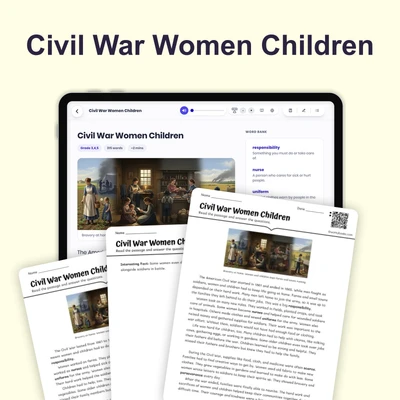
Children and Women During the Civil War - reading educational content
Grades 3–5

Children and Women During the Civil War

us history · D2.HIS.2.3-5

Free
Passage
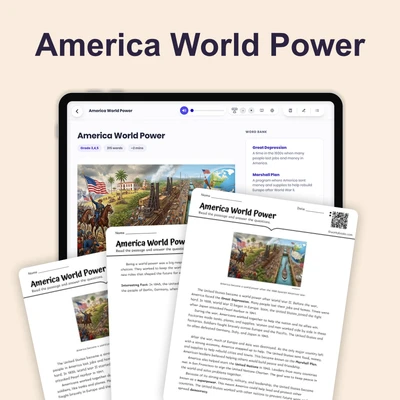
America Becomes a World Power - reading educational content
Grades 3–5

America Becomes a World Power

us history · D2.HIS.2.3-5

$1.50
Passage
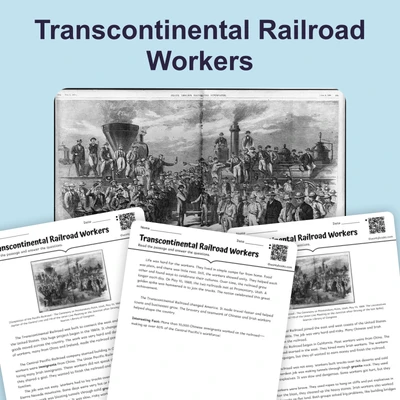
Transcontinental Railroad Workers  - reading educational content
Grades 3–5

Transcontinental Railroad Workers

us history · D2.HIS.16.3-5

$1.50
Passage
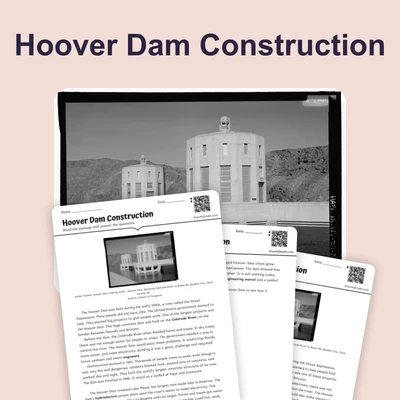
Building the Hoover Dam: Jobs in Hard Times - reading educational content
Grades 3–5

Building the Hoover Dam: Jobs in Hard Times

us history · D2.HIS.1.3-5

$1.50
Passage
James Watt and the Steam Engine - reading educational content
Grades 3–5

James Watt and the Steam Engine

us history · D2.HIS.3.3-5

$1.50
Passage
Telegraph Invention - reading educational content
Grades 3–5

Telegraph Invention

us history · D2.HIS.3.3-5

$1.50
Passage
Child Labor in the Industrial Revolution - reading educational content
Grades 3–5

Child Labor in the Industrial Revolution

us history · D2.HIS.2.3-5

$1.50
Worksheet
Informational Text —Healthy Teeth and Gums - worksheet educational content
Grades 4–5

Informational Text —Healthy Teeth and Gums

reading informational text · RI.4.10

$1.50
Worksheet
Informational Text —Migratory Birds - worksheet educational content
Grades 4–5

Informational Text —Migratory Birds

reading informational text · RI.4.10

Free
Worksheet
Informational Text —All About Dentists - worksheet educational content
Grades 4–5

Informational Text —All About Dentists

reading informational text · RI.4.10

$1.50
Passage
The Role of Pollinators in Nature - reading educational content
Grades 4–5

The Role of Pollinators in Nature

reading informational text · RI.4.2

Free
Passage
Pollination: A Crucial Ecosystem Service - reading educational content
Grades 4–5

Pollination: A Crucial Ecosystem Service

reading informational text · RI.4.2

Free
Passage
Seed Dispersal: How Plants Travel - reading educational content
Grades 4–5

Seed Dispersal: How Plants Travel

reading informational text · RI.4.2

Free
Passage
The States of Matter: Solid - reading educational content
Grades 4–5

The States of Matter: Solid

reading informational text · RI.4.2

Free
Passage
What is a Simple Machine - reading educational content
Grades 4–5

What is a Simple Machine

reading informational text · RI.4.2

Free
Passage
Bats in the Night - reading educational content
Grades 1–3

Bats in the Night

reading informational text · RI.3.1

Free
Passage
The Milky Way - Our Galactic Home - reading educational content
Grades 4–5

The Milky Way - Our Galactic Home

earth and space science · 5-ESS1-1

Free
Passage
Andromeda - Our Galactic Neighbor - reading educational content
Grades 4–5

Andromeda - Our Galactic Neighbor

earth and space science · 5-ESS1-1

$1.50
Passage
Malala Yousafzai - reading educational content
Grades 5–8

Malala Yousafzai

reading informational text · NGSS

Free
Copyright © 2026 Workybooks. Made with ♥ in California.