Rosa Parks and the Montgomery Bus Boycott — Reading Comprehension
Rate this
Premium Resource
Present
Present in classroom. No work saved
Assign
Classroom with student accounts, Track progress
Quick Play
No student accounts, assign with a link
Grades
3
4
5
Standards
D2.HIS.2.3-5
D2.HIS.16.3-5
RI.4.3
RI.4.4
W.4.2
PRINT+DIGITAL RESOURCE
This learning resource is available in interactive and printable formats. The interactive worksheet can be played online and assigned to students. The Printable PDF version can be downloaded and printed for completion by hand.
This engaging U.S. history reading passage explores the brave actions of Rosa Parks and the beginning of the Montgomery Bus Boycott. Students will learn how Rosa Parks’ decision not to give up her seat on a bus in Montgomery, Alabama, led to a powerful protest against unfair segregation laws. The passage uses clear and simple language suitable for upper elementary students, introduces key vocabulary words, and follows a chronological storyline. Activities include a multi-question reading comprehension quiz, writing prompts, and a timeline of important events. This resource supports the C3 Framework for Social Studies and Common Core ELA standards. An authentic public domain photo and a Spanish translation are included, making it ideal for diverse classrooms. The passage also provides a glossary and ends with an interesting historical fact to inspire further learning. This resource helps students connect past events to the present and understand the importance of standing up for what is right.
CONTENT PREVIEW
Expand content preview
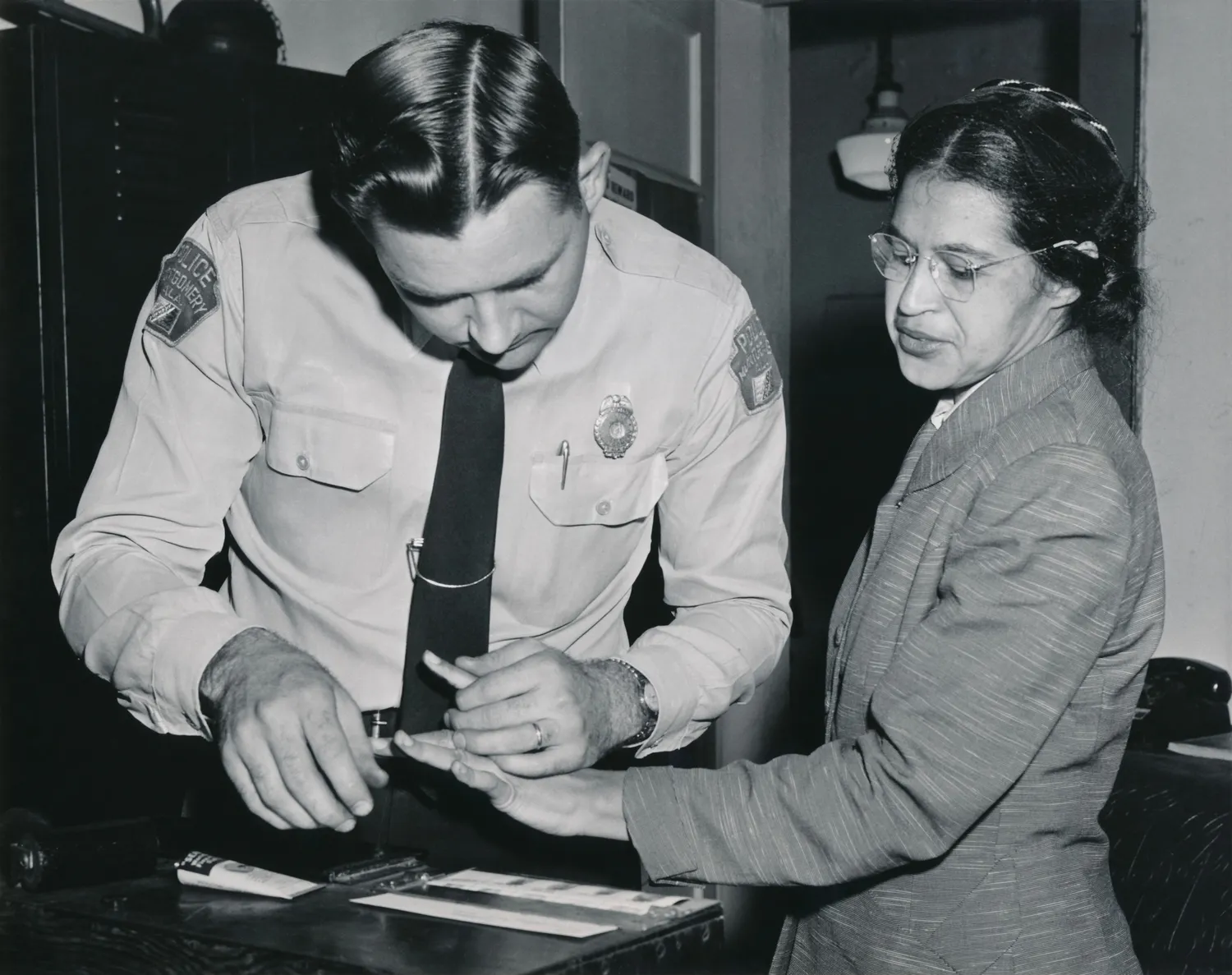
Rosa Parks being fingerprinted by Deputy Sheriff D.H. Lackey after being arrested on February 22, 1956, during the Montgomery bus boycott.jpg Source: Wikimedia Commons - Gene Herrick for the Associated Press; restored by Adam Cuerden
On December 1, 1955, in Montgomery, Alabama, a woman named Rosa Parks did something that would change history. She was tired after a long day at work. Rosa took a seat on a city bus. When the bus filled up, the driver told her to give up her seat to a white passenger. Rosa quietly refused. She was arrested for breaking the city’s segregation laws, which kept Black and white people apart in public places.
Many people in the Black community were upset. They wanted to show that these laws were unfair. Leaders in Montgomery, like Dr. Martin Luther King Jr., asked everyone to stop riding the buses. This was called the Montgomery Bus boycott. For 381 days, Black citizens walked, shared rides, or found other ways to get to work and school. They wanted to send a message that segregation on buses was wrong.
The boycott was a form of peaceful protest. People did not use violence. Instead, they worked together and supported each other. The boycott brought the Black community closer. It also showed the country how strong they were when they stood together.
The city lost lots of money because so many people stopped riding the buses. After more than a year, the U.S. Supreme Court decided that segregation on city buses was illegal. The law changed. Black and white people could sit anywhere they wanted on Montgomery’s buses.
Rosa Parks’ brave action and the boycott helped start the Civil Rights Movement. This movement fought to end unfair laws and gain equal rights for all Americans. Rosa Parks became a symbol of courage and hope. The Montgomery Bus Boycott showed that peaceful resistance could bring about important changes.
Interesting Fact: Rosa Parks was not the first person to refuse to move on a bus, but her story inspired millions and helped change America.
Who refused to give up her bus seat?
Rosa ParksHarriet TubmanSusan B. AnthonyEleanor Roosevelt
Where did the bus boycott happen?
MontgomeryAtlantaNew YorkChicago
How long did the boycott last?
381 days50 days1 week2 years
Why did people boycott the buses?
To fight unfair lawsFor cheaper ticketsTo get new busesFor more drivers
What happened after the boycott?
Segregation on buses endedBuses stopped runningTickets got expensiveRosa moved away
How did people protest during the boycott?
Peaceful protestViolenceShoutingNone
Rosa Parks was arrested for refusing to move. True or false?
TrueFalse
What is a boycott?
Stopping use as protestBuying more thingsAsking for helpWriting a letter
Perfect For:
👩🏫 Teachers
• Reading comprehension practice
• Auto-graded assessments
• Literacy skill development
👨👩👧👦 Parents
• Reading practice at home
• Comprehension improvement
• Educational reading time
🏠 Homeschoolers
• Reading curriculum support
• Independent reading practice
• Progress monitoring
Reading Features:
📖
Reading Passage
Engaging fiction or nonfiction text
❓
Comprehension Quiz
Auto-graded questions
📊
Instant Feedback
Immediate results and scoring
📄
Printable Version
Download for offline reading
🔊
Read Aloud
Voice-over with word highlighting
Reviews & Ratings
No reviews yet. Be the first to share your experience!
Related Content
Children and Women During the Civil War
This engaging history reading passage explores the important roles of children and women during the Civil War. Aligned w...
D2.HIS.2.3-5D2.HIS.3.3-5D2.HIS.16.3-5RI.4.1
America Becomes a World Power
This engaging history reading passage explores how America became a world power, focusing on key events, figures, and ca...
D2.HIS.2.3-5D2.HIS.16.3-5RI.4.3RI.4.4
Life in a California Mining Camp
This engaging reading passage explores daily life in a California mining camp during the Gold Rush era of the late 1840s...
D2.HIS.2.3-5D2.HIS.3.3-5D2.HIS.16.3-5RI.4.3
Chinese Miners in California
This engaging U.S. history reading passage explores the experiences of Chinese immigrants during the California Gold Rus...
D2.HIS.4.3-5D2.HIS.16.3-5RI.4.3RI.4.4
The Gold Rush Changes California Forever
This engaging U.S. History reading passage explores how the Gold Rush changed California forever. Students will learn ab...
D2.HIS.1.3-5D2.HIS.2.3-5D2.HIS.16.3-5RI.4.3
Building the Transcontinental Railroad
This engaging history reading passage explores the building of the Transcontinental Railroad, a major achievement in U.S...
D2.HIS.2.3-5D2.HIS.16.3-5RI.4.3RI.4.4
Transcontinental Railroad Workers
This history reading passage explores the vital roles of Chinese and Irish workers in building America's railroads durin...
D2.HIS.16.3-5D2.HIS.2.3-5RI.4.1RI.4.3
California Labor Reform
This engaging reading passage introduces students to the important changes and reforms of the Progressive Era in U.S. hi...
D2.HIS.5.3-5D2.HIS.16.3-5RI.4.3RI.4.4
Building the Hoover Dam: Jobs in Hard Times
This history reading passage explores the story of the Hoover Dam, built during the Great Depression. Students will lear...
D2.HIS.1.3-5D2.HIS.2.3-5D2.HIS.16.3-5RI.4.3
Hollywood: The World of Entertainment
This engaging U.S. history reading passage introduces students to Hollywood and its transformation into the world’s ente...
D2.HIS.6.3-5D2.HIS.16.3-5RI.5.3RI.5.4
California Education Policy
This educational reading passage explores how decisions are made about what students learn in U.S. schools, focusing on ...
D2.HIS.16.3-5D2.CIV.7.3-5RI.4.3RI.4.4
James Watt and the Steam Engine
This engaging U.S. history reading passage explores the life and work of James Watt and his impact on the Industrial Rev...
D2.HIS.3.3-5D2.HIS.16.3-5RI.4.3RI.4.4
Telegraph Invention
This engaging passage explores the invention of the telegraph and its vital role during the Progressive Era of U.S. hist...
D2.HIS.3.3-5D2.HIS.16.3-5RI.4.3RI.4.4
Child Labor in the Industrial Revolution
This engaging history reading passage introduces students to the topic of child labor during the Industrial Revolution i...
D2.HIS.2.3-5D2.HIS.16.3-5RI.4.3RI.4.4
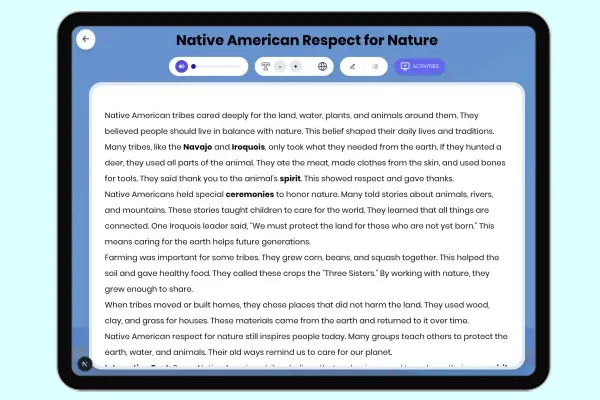
Native American Tribes Across America
This engaging history reading passage introduces students to Native American tribes across America, focusing on their da...
D2.HIS.1.3-5D2.HIS.2.3-5RI.4.1RI.4.2
Teepees: Homes on the Great Plains
This engaging history reading passage introduces students to teepees, the unique homes of Native American tribes on the ...
D2.HIS.2.3-5D2.HIS.14.3-5RI.4.1RI.4.2RI.4.4
Traditional Native American Clothing
This engaging history passage explores traditional Native American clothing and how it reflected the environment, values...
D2.HIS.2.3-5D2.HIS.3.3-5RI.4.3RI.4.4
The Iroquois Confederacy: A System of Peace
This engaging U.S. History reading passage introduces students to the Iroquois Confederacy, a powerful alliance of Nativ...
D2.HIS.2.3-5D2.HIS.3.3-5RI.4.3RI.4.4
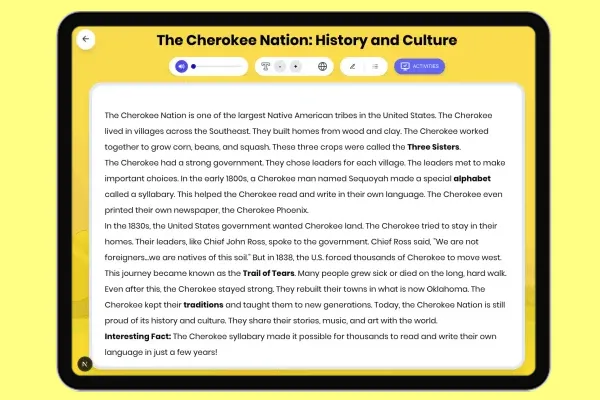
The Cherokee Nation: History and Culture
This reading passage explores the rich history and culture of the Cherokee Nation, one of the largest Native American tr...