China Under the Jin Dynasty
Interactive passage with audio narration, comprehension questions, and printable PDF.
By completing this purchase you agree to our Terms of Use and Privacy Policy. Your subscription renews automatically until you cancel. You can cancel anytime from your account settings. All sales are final and non-refundable. Digital content is available for download in your account immediately upon purchase.
What's included
China Under the Jin Dynasty preview and details
About this printable China Under the Jin Dynasty reading passage (Grades 5-8)
Sample passage and quiz from China Under the Jin Dynasty
Reading passage and comprehension quiz preview
China Under the Jin Dynasty
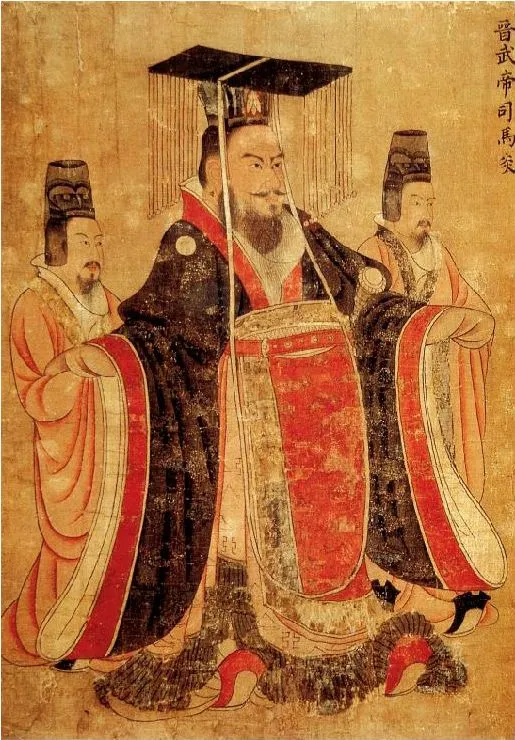
Emperor Wu of Jin. Wikimedia Commons (Public domain).
The Han Dynasty ended in 220 CE, leading to a period of great political division in China known as the Three Kingdoms period. In 265 CE, the Jin Dynasty arose, uniting much of China under one rule. The Jin Dynasty provides a crucial link between the ancient Han and later dynasties, shaping the future of Chinese civilization.
The Jin Dynasty was founded by Sima Yan, also known as Emperor Wu of Jin, who overthrew the Wei kingdom and declared himself emperor in 266 CE. By 280 CE, the Jin forces had conquered the rival kingdoms of Shu and Wu, ending the Three Kingdoms era and bringing most of China back under a single government. This reunification was a significant achievement, as China had been divided and plagued by wars for decades. The Jin capital was established in Luoyang, a major city on the Yellow River, which became a center of administration, culture, and trade.
Despite reunification, the Jin Dynasty faced serious challenges. Powerful aristocrats owned vast lands and often ignored imperial authority, leading to political instability. The government struggled to control regions far from the capital, and conflicts among noble families led to the disastrous War of the Eight Princes (291–306 CE). This civil war weakened the Jin, making it vulnerable to invasions by nomadic groups from the north, such as the Xiongnu and Xianbei. By 316 CE, the Western Jin Dynasty collapsed when its capital was captured by invading forces. However, members of the Jin royal family fled south and established the Eastern Jin Dynasty, continuing the dynasty in a new region.
Archaeological evidence, such as tombs and official documents, reveals details about daily life and social structure during the Jin era. For example, the tomb of Sima Jinlong, a Jin prince, contained beautiful pottery, metalwork, and inscriptions that show the importance of family status and Confucian values. The Book of Jin, a primary source written in the 7th century, records the dynasty's history and provides insight into the challenges faced by rulers and commoners alike.
The Jin Dynasty's brief reunification of China set the stage for future dynasties and influenced Chinese art, literature, and government. Its struggles with internal conflict and foreign invasions highlight the importance of strong leadership and unity. The legacy of the Jin can be seen in the continued development of Chinese civilization, especially in the south, where the Eastern Jin preserved many traditions and cultural achievements.
Studying the Jin Dynasty helps us understand how societies respond to division, war, and change, connecting to the broader theme of how ancient civilizations adapt and shape their futures.
Interesting Fact: The famous Chinese board game Go was especially popular among Jin aristocrats, symbolizing intelligence and strategy.
Comprehension quiz (8 questions)
1. When did the Han Dynasty end?
2. Who founded the Jin Dynasty?
3. What was the Jin capital?
4. What caused the Jin Dynasty's internal chaos?
5. Why did the Western Jin collapse?
6. What did the tomb of Sima Jinlong show?
7. The Book of Jin is a primary source. True or false?
8. What is an aristocrat?
Perfect for the way you teach
- Build comprehension skills
- Auto-graded quiz
- Differentiated reading
- Read together at home
- Improve fluency
- Quiet reading time
- Reading curriculum support
- Independent practice
- Track Lexile growth