Chinese Invention of Paper
Interactive passage with audio narration, comprehension questions, and printable PDF.
By completing this purchase you agree to our Terms of Use and Privacy Policy. Your subscription renews automatically until you cancel. You can cancel anytime from your account settings. All sales are final and non-refundable. Digital content is available for download in your account immediately upon purchase.
What's included
Chinese Invention of Paper preview and details
About this printable Chinese Invention of Paper reading passage (Grades 6-8)
Sample passage and quiz from Chinese Invention of Paper
Reading passage and comprehension quiz preview
Chinese Invention of Paper
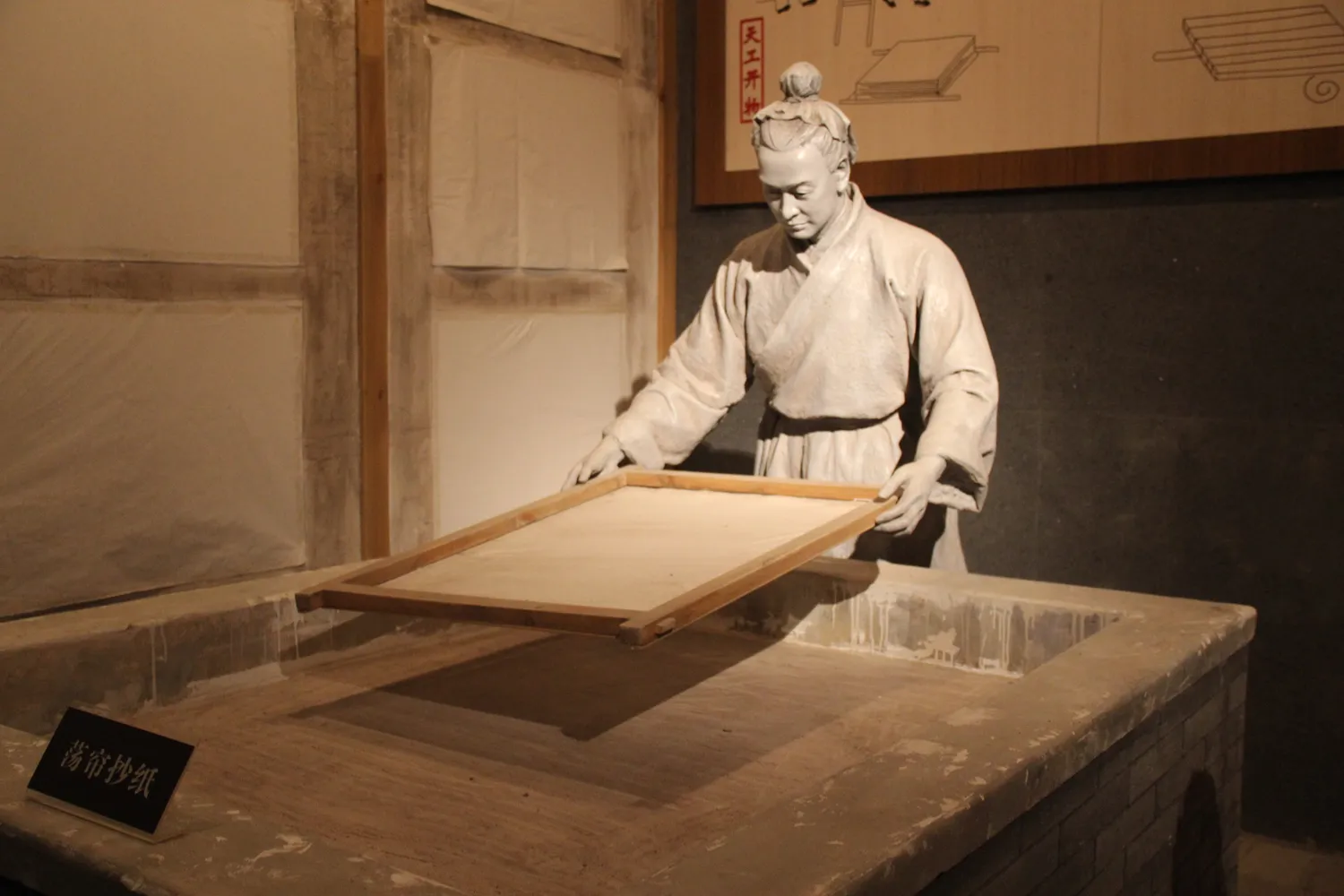
"Paper-making in the Han Dynasty (10194731213)" by Gary Todd from Xinzheng, China /
Source: Wikimedia Commons (CC0).
The Han Dynasty of ancient China is famous for many important achievements, but one of its most influential inventions was paper making. Before paper was invented, people in China wrote on materials such as bamboo strips, silk, or wooden tablets. These materials were either too heavy, too expensive, or not practical for everyday use. The invention of paper provided a new, affordable, and lightweight way to record information, opening the door for expanded communication and education.
Paper making as we know it began during the Eastern Han Dynasty, around 105 CE. According to historical records, the process was improved by a court official named Cai Lun. Cai Lun experimented with different materials, including tree bark, hemp, old rags, and fishnets. By pounding and soaking these materials in water, he created a pulp that could be pressed and dried into sheets. This innovation made paper both strong and smooth, making it ideal for writing and drawing. Archaeological evidence suggests that paper existed in China even before Cai Lun’s improvements, but his methods made it practical and widely used.
A primary source from the official Han records, the "Book of Later Han," credits Cai Lun with presenting his new paper to the Emperor in 105 CE. The Emperor recognized the value of this invention, and soon, paper began to replace bamboo and wooden slips in government and daily life. The spread of paper making had a profound effect on Chinese society. It allowed for the creation of books, helped scholars keep records, and made the spread of literature and ideas much easier. Over time, paper making technology spread along the Silk Road, reaching Central Asia, the Middle East, and eventually Europe by the 12th century.
The invention of paper also influenced social hierarchy and daily life. In the Han Dynasty, education and civil service were highly valued. With paper, more people could learn to read and write, since books were cheaper to produce. This helped scholars, officials, and even merchants to keep records and communicate. Paper also played a role in art and religion, as it was used for calligraphy, painting, and printing sacred texts.
Today, paper remains a vital part of human civilization. The Han Dynasty’s invention transformed how people share information and preserve knowledge. Understanding the origins of paper helps us appreciate how technological advancements can change societies and connect cultures across time and distance.
Interesting Fact: Chinese papermakers guarded their techniques closely for centuries. When the knowledge finally spread to other lands, it sparked huge changes in education and trade worldwide.
Comprehension quiz (8 questions)
1. Who improved paper making in 105 CE?
2. What materials did Cai Lun use?
3. Which book is a primary source?
4. Why was paper better than bamboo for writing?
5. How did paper affect Han society?
6. What was an effect of paper's spread?
7. Paper reached Europe in the 12th century. True or false?
8. What is the Silk Road?
Perfect for the way you teach
- Build comprehension skills
- Auto-graded quiz
- Differentiated reading
- Read together at home
- Improve fluency
- Quiet reading time
- Reading curriculum support
- Independent practice
- Track Lexile growth