Confucius and His Teachings
Interactive passage with audio narration, comprehension questions, and printable PDF.
By completing this purchase you agree to our Terms of Use and Privacy Policy. Your subscription renews automatically until you cancel. You can cancel anytime from your account settings. All sales are final and non-refundable. Digital content is available for download in your account immediately upon purchase.
What's included
Confucius and His Teachings preview and details
About this printable Confucius and His Teachings reading passage (Grades 6-8)
Sample passage and quiz from Confucius and His Teachings
Reading passage and comprehension quiz preview
Confucius and His Teachings
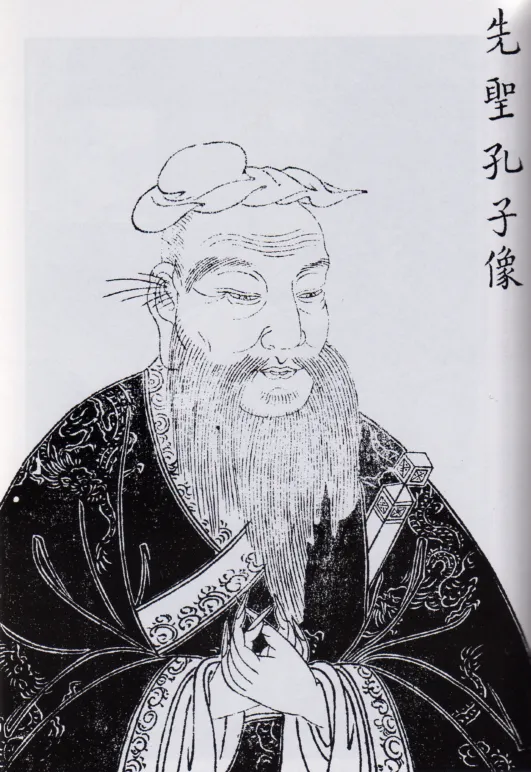
"Confucius the scholar" / Wikimedia Commons (Public domain).
Confucius was a Chinese philosopher who lived from 551 to 479 BCE in the state of Lu, in what is now eastern China. He is considered one of the most important thinkers in ancient China. His ideas, known as Confucianism, have shaped Chinese society, politics, and culture for over two thousand years. Confucius believed that a stable society depended on people acting with respect, responsibility, and kindness toward one another.
Born during a time of great political disorder called the Spring and Autumn Period, Confucius saw that rulers often fought for power and ignored the needs of ordinary people. He believed that society could be improved if everyone, especially leaders, followed a strict code of conduct. This code was based on the virtues of filial piety (respect for parents and ancestors), benevolence (kindness), righteousness (doing what is right), and propriety (proper behavior). According to Confucius, if rulers practiced these values, their example would inspire the whole society to act morally.
Confucius did not leave behind written works himself, but his teachings were collected by his students in a book called the Analects. In one famous passage, Confucius says, “Do not do to others what you do not want done to yourself.” This principle, sometimes called the Golden Rule, was central to his philosophy. Archaeological discoveries, such as inscriptions from the period and ancient manuscripts, support the idea that Confucius’s teachings became highly respected over time. The civil service system in China, which tested government officials on their knowledge of Confucian texts, was established centuries later during the Han Dynasty (206 BCE–220 CE), showing the lasting impact of his ideas.
Confucianism also defined social roles and relationships. For example, Confucius taught that each person had a duty to their family and community. The social hierarchy he described placed rulers above subjects, parents above children, and elders above youth, but all were expected to act with mutual respect and responsibility. These teachings influenced daily life, education, and government for centuries. Even as other philosophies like Daoism and Legalism emerged, Confucian values remained a guiding force in Chinese society.
Today, Confucius’s ideas still influence Chinese culture and are studied by people around the world. By promoting duty, morality, and respect, Confucius helped lay the foundation for a unified and ethical society. His teachings show how individual actions and beliefs can shape entire civilizations.
Interesting Fact: Confucius is sometimes called the “First Teacher” in China, and his birthday is celebrated as Teachers’ Day in Taiwan and other places.
Confucius’s teachings on duty and morality connect to larger themes in world history, such as how belief systems influence government and social order.
Comprehension quiz (8 questions)
1. When did Confucius live?
2. Where was Confucius born?
3. Which book collected Confucius's teachings?
4. Why did Confucius value filial piety?
5. How did Confucianism influence government?
6. What is the Golden Rule in Confucianism?
7. Confucius wrote the Analects. True or false?
8. What does 'hierarchy' mean?
Perfect for the way you teach
- Build comprehension skills
- Auto-graded quiz
- Differentiated reading
- Read together at home
- Improve fluency
- Quiet reading time
- Reading curriculum support
- Independent practice
- Track Lexile growth