Civil Rights Movements: Fighting for Equality
Interactive passage with audio narration, comprehension questions, and printable PDF.
By completing this purchase you agree to our Terms of Use and Privacy Policy. Your subscription renews automatically until you cancel. You can cancel anytime from your account settings. All sales are final and non-refundable. Digital content is available for download in your account immediately upon purchase.
What's included
Civil Rights Movements: Fighting for Equality preview and details
About this printable Civil Rights Movements: Fighting for Equality reading passage (Grades 5-8)
Sample passage and quiz from Civil Rights Movements: Fighting for Equality
Reading passage and comprehension quiz preview
Civil Rights Movements: Fighting for Equality
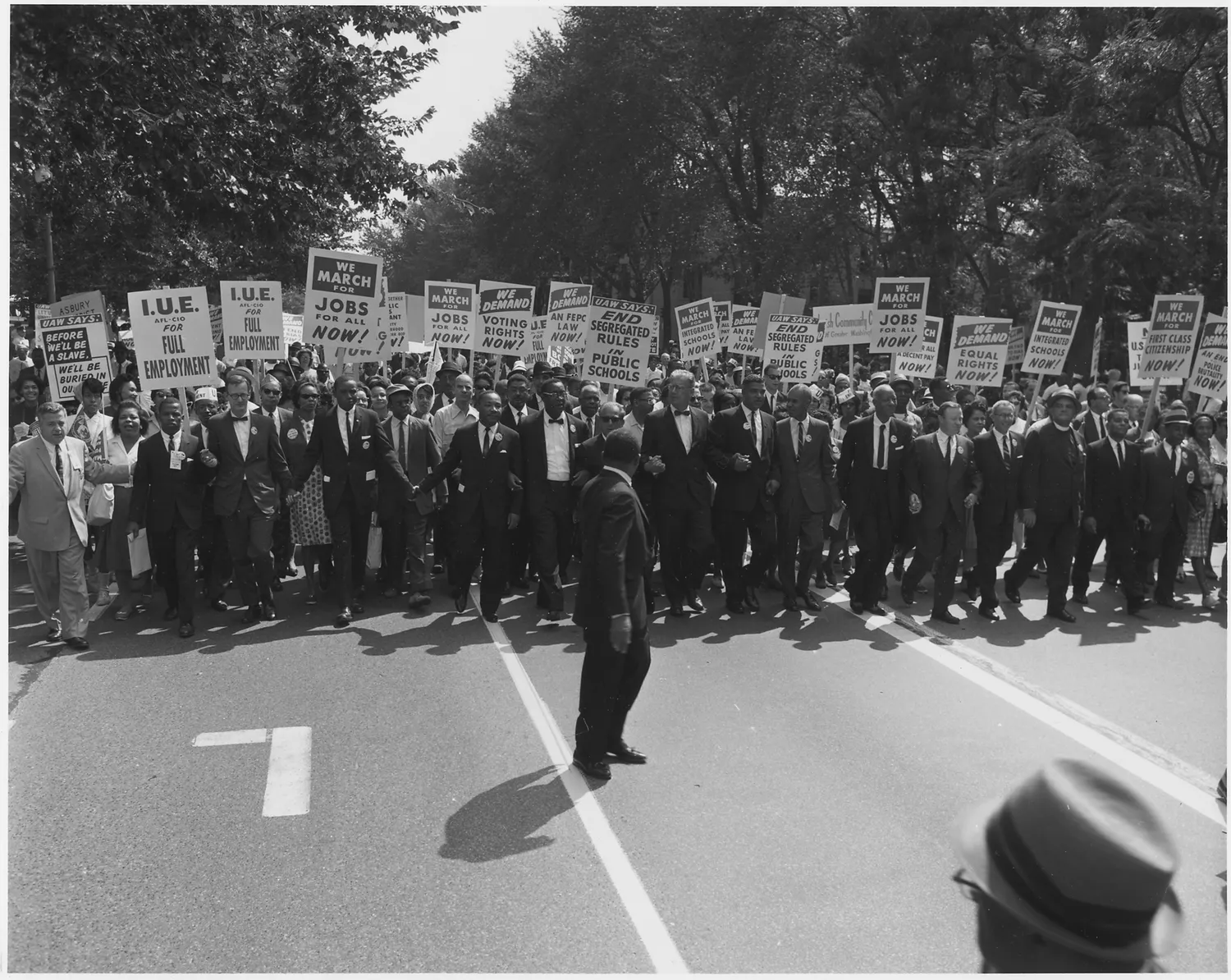
"Civil Rights March on Washington, D.C. (Leaders marching.) - NARA - 542001"/
Source: Wikimedia Commons (Public domain).
The twentieth century witnessed powerful movements for equality around the world. In many countries, people challenged unfair laws and demanded justice. These civil rights movements aimed to end discrimination based on race, gender, or background. By looking at the United States, South Africa, and the global struggle for women's rights, we can see how ordinary people and leaders changed history.
In the United States, the civil rights movement of the 1950s and 1960s fought for equal rights for African Americans. One major cause was the long history of segregation in public places and schools. In 1954, the Supreme Court decided in Brown v. Board of Education that racial segregation in schools was illegal. This encouraged activists like Rosa Parks, who refused to give up her bus seat in Montgomery, Alabama, in 1955. Her action led to the Montgomery Bus Boycott, organized by Dr. Martin Luther King, Jr. and others. Through peaceful protest and nonviolent resistance, activists demanded equal treatment. Primary sources, such as King's speeches and photos of marches, show the power of their message. The Civil Rights Act of 1964 and the Voting Rights Act of 1965 became important laws that helped end legal discrimination.
Meanwhile, in South Africa, a system called apartheid separated people by race from 1948 to 1994. Nonwhite South Africans faced harsh restrictions, including where they could live, work, and go to school. Leaders like Nelson Mandela and groups such as the African National Congress organized protests and sometimes faced imprisonment. International pressure grew, with other countries refusing to trade with South Africa. After decades of struggle, apartheid ended in 1994, and Mandela became the country's first Black president. Documents from Mandela’s prison letters and photographs of rallies serve as primary evidence of this movement. The end of apartheid changed South Africa’s society and inspired other countries to fight for equality.
The fight for women’s rights has also been global. For example, women in the United Kingdom marched for the right to vote, winning suffrage in 1918. In the United States, leaders like Susan B. Anthony and Sojourner Truth worked for equal rights. Even after gaining the vote, women in many countries continued to seek equality in education, work, and law. The United Nations declared 1975 the International Women’s Year, showing that the struggle for rights is worldwide and ongoing. Letters, speeches, and photographs from women’s marches are key primary sources that help us understand these efforts. The push for gender equality continues today in sports, politics, and daily life.
These civil rights movements changed societies by challenging unfair systems, inspiring new laws, and giving hope to future generations. Their impact can be seen not only in legal victories but also in the ways people around the world think about freedom and equality.
Studying these movements helps us understand how geography, leadership, and ordinary people shaped history and reminds us that the fight for fairness connects different times and places.
Interesting Fact: In South Africa’s first free election in 1994, over 19 million people voted, many for the first time in their lives.
Comprehension quiz (8 questions)
1. Who led the Montgomery Bus Boycott?
2. What ended in South Africa in 1994?
3. Which law ended school segregation in the U.S.?
4. Why did women march in the United Kingdom in 1918?
5. How did international pressure affect South Africa?
6. What is a primary source?
7. Civil rights movements used nonviolent protest.
8. What does 'apartheid' mean?
Perfect for the way you teach
- Build comprehension skills
- Auto-graded quiz
- Differentiated reading
- Read together at home
- Improve fluency
- Quiet reading time
- Reading curriculum support
- Independent practice
- Track Lexile growth