This learning resource is available in interactive and printable formats. The interactive worksheet can be played online and assigned to students. The Printable PDF version can be downloaded and printed for completion by hand.
This Grade 4-5 level science passage, 'Your Brain is Your Control Center,' introduces students to the vital role of the brain in the human body. Aligned with NGSS standards, the passage explains how the brain acts as the body's command center, processing information, controlling movements, and helping us think, learn, and remember. Key scientific vocabulary such as neurons, nervous system, cerebrum, and reflexes are highlighted and defined. The passage uses real-world examples to connect science to everyday life, such as catching a ball or tasting food. An 'Interesting Fact' section offers additional engagement. The resource includes a glossary, Spanish translation, multiple-choice quiz, and grade-appropriate writing activities. The content is audio-integrated for accessibility, ensuring all learners can engage with the material. This resource is ideal for classroom or home learning to build foundational knowledge about the human brain and nervous system.
CONTENT PREVIEW
Expand content preview
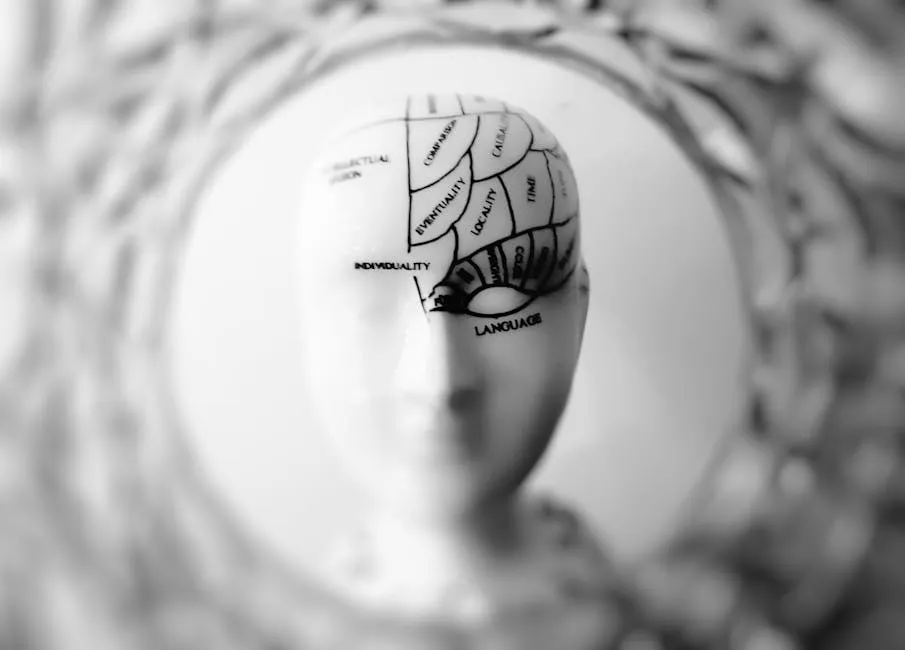
Brain acts as your body’s control center. Image by meo / Pexels.
The brain is one of the most important organs in your body. It acts as your body’s control center. The brain sends and receives messages that help you move, think, feel, and remember things.
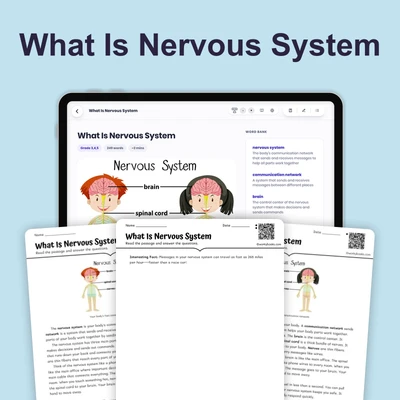
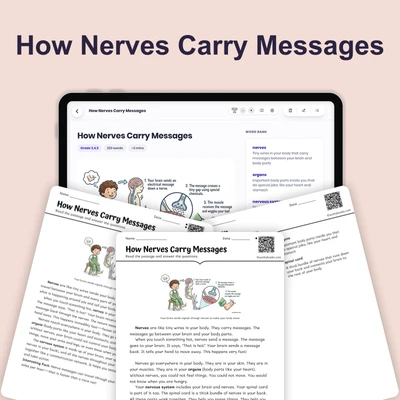
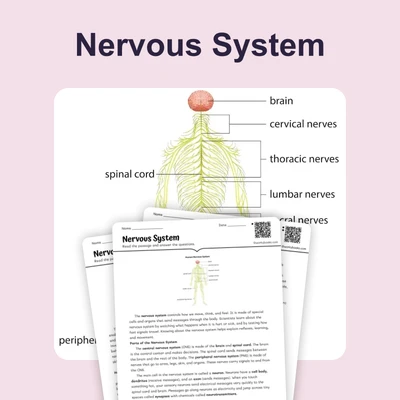
Your brain is made up of billions of special cells called neurons. These neurons use tiny electrical signals to communicate with each other. When you touch something hot, your neurons quickly send a message to your brain, and your brain tells your hand to move away. This process is part of your nervous system, which includes your brain, spinal cord, and nerves.
The largest part of your brain is called the cerebrum. The cerebrum helps you solve math problems, read stories, and talk with friends. Another part, the cerebellum, helps you balance and move smoothly. The brainstem controls basic actions like breathing and your heartbeat, even when you are asleep.
Your brain also lets you use your five senses: sight, hearing, smell, taste, and touch. For example, when you eat an apple, your brain helps you taste the sweetness and feel the crunch. If you play sports, your brain helps you catch a ball by quickly processing what your eyes see and telling your muscles what to do.
Sometimes, your brain reacts very fast without you even thinking. This is called a reflex. For example, when a doctor taps your knee, your leg kicks out automatically. Reflexes help protect your body from harm.
Interesting Fact: Did you know your brain uses about 20% of all the energy your body needs, even though it is only about the size of a grapefruit?
What is the brain's main job?
Control the bodyPump bloodDigest foodProtect bones
What are neurons?
Cells that send messagesBones in the armParts of the heartFood for the brain
Which part helps you balance?
CerebellumCerebrumBrainstemSpinal cord
What would happen if your brain did not process senses?
You couldn't taste or seeYou would run fasterYou would sleep lessYour bones would grow
How does the brain help in sports?
Processes what eyes seeMakes you tallerCools your bodyChanges your hair color
What is a reflex?
A fast, automatic actionA way to eatA slow movementA type of food
The brain helps control breathing. True or false?
TrueFalse
Which word means 'body's message system'?
Nervous systemDigestive systemCirculatory systemSkeletal system
Perfect For:
👩🏫 Teachers
• Reading comprehension practice
• Auto-graded assessments
• Literacy skill development
👨👩👧👦 Parents
• Reading practice at home
• Comprehension improvement
• Educational reading time
🏠 Homeschoolers
• Reading curriculum support
• Independent reading practice
• Progress monitoring
Reading Features:
📖
Reading Passage
Engaging fiction or nonfiction text
❓
Comprehension Quiz
Auto-graded questions
📊
Instant Feedback
Immediate results and scoring
📄
Printable Version
Download for offline reading
🔊
Read Aloud
Voice-over with word highlighting
Reviews & Ratings
No reviews yet. Be the first to share your experience!
Related Content
The Nature of Life Science
This passage, aligned with NGSS MS-LS1-1, introduces students in grades 6-8 to the foundational concepts of life science...
MS-LS1-1
Aerobic Organisms
This engaging, audio-integrated reading passage, titled 'Aerobic Organisms: The Breath of Life,' introduces students to ...
From Cells to Organisms
This educational passage, "From Cells to Organisms," explores the fundamental concept of how living things are built, st...
Using Dichotomous Keys to Identify Organisms
This audio-integrated passage, 'Using Dichotomous Keys to Identify Organisms,' introduces 6th-grade students to a fundam...
Science Vocabulary
This worksheet on domain-specific words will help students learn some science vocabulary. Students will be asked to matc...
L.3.6L.3.4.A
The Aorta: Molecules to Organisms of the Body's Largest Artery
This educational content features a fascinating reading passage, audio integrated for an enhanced learning experience, a...
Tools and Technology for Life Scientists
This informational passage for grades 6-8 explores the essential tools and technology used by life scientists, aligned t...
MS-LS1-1MS-LS1.A
Simple Machines Science Report
This science writing task requires students to clearly explain how three simple machines work using precise domain-speci...
W.5.4
Cryptobiosis: Pausing Life to Survive
This engaging, audio-integrated reading passage explores the amazing biological process of cryptobiosis, where organisms...
From Senses to Actions
This Grade 4-5 science passage, 'From Senses to Actions,' explores how our senses work together with the brain and body ...
The Science of Hibernation
This educational module, featuring an audio-integrated reading passage titled 'The Science of Hibernation,' is designed ...
The Life Cycle of a Giant Panda
This engaging, audio-integrated reading passage, titled "The Life Cycle of a Giant Panda," explores the fascinating stag...
How Bats Use Sound to See
This Grade 4-5 science passage, 'How Bats Use Sound to See,' explores the fascinating process of echolocation in bats. S...
Citizen Science and Ecological Monitoring
This engaging passage for grades 6-8 introduces the concept of citizen science and its critical role in ecological monit...
MS-LS2-1
The Pumpkin Life Cycle
This informational worksheet explores the pumpkin lifecycle, guiding students through procedural steps in a scientific t...
RI.2.3RI.2.10
Life Cycle Stages
This comprehensive word sort activity helps Grade 3 students understand the universal stages of life cycles as outlined ...
Growth and Development of Organisms
This middle school science passage, aligned with NGSS standards MS-LS1-4 and MS-LS1-5, provides an in-depth look at the ...
MS-LS1-4MS-LS1-5
Life Makers
This engaging word sort activity helps elementary students understand the diverse methods of reproduction in living orga...
What Is Earth Science?
This engaging middle school science passage introduces students to the field of Earth science, aligning with NGSS standa...
MS-ESS1MS-ESS2MS-ESS3SEP
Barnacles and Biofouling
This engaging, audio-integrated reading passage, 'Barnacles and Biofouling,' delves into the fascinating world of how ti...