COVID-19 Pandemic: A Global Health Crisis
Interactive passage with audio narration, comprehension questions, and printable PDF.
By completing this purchase you agree to our Terms of Use and Privacy Policy. Your subscription renews automatically until you cancel. You can cancel anytime from your account settings. All sales are final and non-refundable. Digital content is available for download in your account immediately upon purchase.
What's included
COVID-19 Pandemic: A Global Health Crisis preview and details
About this printable COVID-19 Pandemic: A Global Health Crisis reading passage (Grades 5-8)
Sample passage and quiz from COVID-19 Pandemic: A Global Health Crisis
Reading passage and comprehension quiz preview
COVID-19 Pandemic: A Global Health Crisis
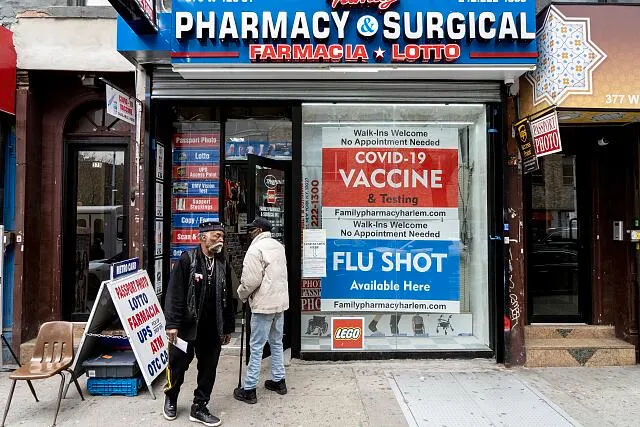
"COVID-19 vaccine and testing, Pharmacy & Surgical, 379 West 125th St., Harlem" by Vergara, Camilo J. / Library of Congress.
The COVID-19 pandemic was a major event in world history that began in late 2019. First identified in Wuhan, China, the disease is caused by a new type of coronavirus. COVID-19 spread quickly across borders, changing daily life for billions of people. By March 2020, the World Health Organization (WHO) declared COVID-19 a pandemic, meaning it was a global crisis affecting almost every country.
The spread of COVID-19 was rapid and surprising. Scientists believe the virus likely jumped from animals to humans in a seafood market in Wuhan. Within weeks, cases appeared in Europe, the United States, and on every continent except Antarctica. Governments responded by closing schools, shutting down businesses, and asking people to stay home—a process known as lockdown. For example, in Italy, one of the hardest-hit countries in early 2020, strict lockdowns began in March. In the United States, major cities like New York and Los Angeles saw hospitals crowded with patients by April. Primary sources, such as news reports and public health announcements, show how quickly daily life changed: streets were empty, masks became common, and travel nearly stopped.
Scientists and health workers played a crucial role in the response. Research teams around the world worked together to develop vaccines, which are substances that help the body fight off the virus. In December 2020, the first vaccine for COVID-19 was approved for emergency use in several countries, including the United Kingdom and the United States. This was a record speed for vaccine development, as most vaccines take years to create. The global effort included organizations like the World Health Organization and national health agencies. Vaccines became a key tool in reducing deaths and helping countries reopen their societies.
The pandemic affected all parts of society, but not equally. People working in hospitals, grocery stores, and public transportation were at higher risk. Students, especially those from lower-income families, faced challenges with remote learning. Many families lost loved ones, and economies around the world suffered, with millions losing jobs. Governments and international organizations learned important lessons about the need for strong public health systems and global cooperation. For example, the sharing of scientific data and resources was critical to fighting the virus, as shown in official reports by the WHO and national governments.
Today, the COVID-19 pandemic remains a powerful reminder of how connected our world is, and how important it is for countries to work together during global challenges. Understanding the pandemic helps us see the importance of science, government action, and cooperation in world history.
Interesting Fact: In 2021, more than 10 billion COVID-19 vaccine doses were given worldwide, showing the largest coordinated vaccination campaign in history.
Comprehension quiz (8 questions)
1. Where did COVID-19 begin?
2. When did the WHO declare a pandemic?
3. What helped reduce COVID-19 deaths?
4. What is a lockdown?
5. Why were vaccines important?
6. How did the pandemic affect daily life?
7. COVID-19 was declared a pandemic in 2020.
8. What does cooperation mean?
Perfect for the way you teach
- Build comprehension skills
- Auto-graded quiz
- Differentiated reading
- Read together at home
- Improve fluency
- Quiet reading time
- Reading curriculum support
- Independent practice
- Track Lexile growth