Causes of World War I
Interactive passage with audio narration, comprehension questions, and printable PDF.
By completing this purchase you agree to our Terms of Use and Privacy Policy. Your subscription renews automatically until you cancel. You can cancel anytime from your account settings. All sales are final and non-refundable. Digital content is available for download in your account immediately upon purchase.
What's included
Causes of World War I preview and details
About this printable Causes of World War I reading passage (Grades 5-8)
Sample passage and quiz from Causes of World War I
Reading passage and comprehension quiz preview
Causes of World War I
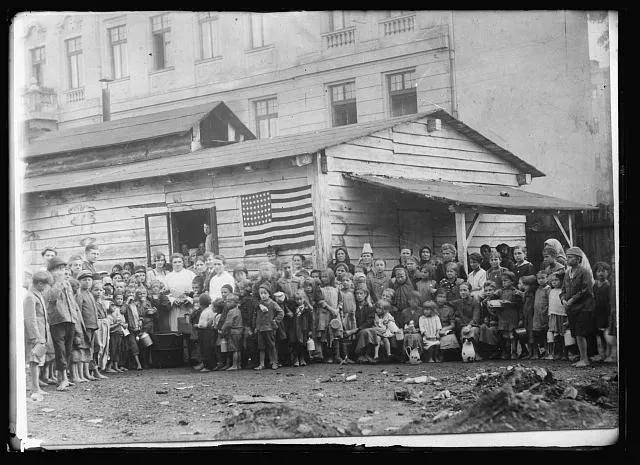
Source: Library of Congress
World War I began in 1914 because of a combination of political, economic, and social factors that built up over decades. The war involved many nations, mostly in Europe, and became one of the deadliest conflicts in history. Understanding the causes of World War I helps us see how global events can be shaped by complex relationships and decisions.
One major cause was the system of alliances that developed among European powers. By the early 1900s, countries like Germany, Austria-Hungary, and Italy had formed the Triple Alliance. Meanwhile, France, Russia, and Great Britain created the Triple Entente. These alliances were meant to provide security, but instead, they increased tension and suspicion. For example, a letter from British Foreign Secretary Sir Edward Grey in 1914 shows how alliances made it likely that a conflict between two countries could quickly involve many others.
Another cause was nationalism, a strong sense of pride and loyalty to one's nation. Nationalism made people in countries like Serbia want independence from empires like Austria-Hungary. It also led to rivalries among nations, as each tried to prove its power. In the Balkans, sometimes called the "Powder Keg of Europe," different groups struggled for control. For instance, a Serbian nationalist group called the Black Hand planned the assassination of Archduke Franz Ferdinand, the heir to the Austro-Hungarian throne. This event, which took place in Sarajevo on June 28, 1914, became the immediate trigger for the war.
Imperialism and militarism also played important roles. Imperialism is when a country seeks to expand its power by controlling colonies or other territories. European countries competed fiercely for colonies in Africa and Asia. This competition led to arguments and mistrust. Militarism is the belief in building up strong armed forces. Countries spent large amounts of money on weapons and armies, making war seem more likely. German military plans, like the Schlieffen Plan of 1905, are examples of how nations prepared for large-scale conflict. Political leaders, such as Kaiser Wilhelm II of Germany, often spoke about the importance of military strength in speeches and public documents.
These causes combined over time, creating an unstable situation by 1914. When Archduke Franz Ferdinand was assassinated, Austria-Hungary declared war on Serbia. Because of the alliances, other countries were quickly drawn in. Within weeks, much of Europe was at war. The war led to massive loss of life, changed borders, and affected societies around the world. By analyzing the causes, we can see how geography, politics, and human choices can shape world events.
This study of the origins of World War I connects to broader themes in world history, such as how societies respond to conflict and how decisions by leaders impact millions.
Interesting Fact: The assassination weapon used in Sarajevo was a Browning FN M1910 pistol, which is now kept in the Museum of Military History in Vienna.
Comprehension quiz (8 questions)
1. When did World War I begin?
2. Who was assassinated in Sarajevo?
3. Which countries formed the Triple Entente?
4. Why did alliances increase tension?
5. How did nationalism affect the Balkans?
6. What was the immediate trigger for war?
7. Imperialism is when countries expand by taking colonies. (true or false)
8. What does 'militarism' mean?
Perfect for the way you teach
- Build comprehension skills
- Auto-graded quiz
- Differentiated reading
- Read together at home
- Improve fluency
- Quiet reading time
- Reading curriculum support
- Independent practice
- Track Lexile growth