Abolition Movement
Interactive passage with audio narration, comprehension questions, and printable PDF.
By completing this purchase you agree to our Terms of Use and Privacy Policy. Your subscription renews automatically until you cancel. You can cancel anytime from your account settings. All sales are final and non-refundable. Digital content is available for download in your account immediately upon purchase.
What's included
Abolition Movement preview and details
About this printable Abolition Movement reading passage (Grades 5-8)
Sample passage and quiz from Abolition Movement
Reading passage and comprehension quiz preview
Abolition Movement
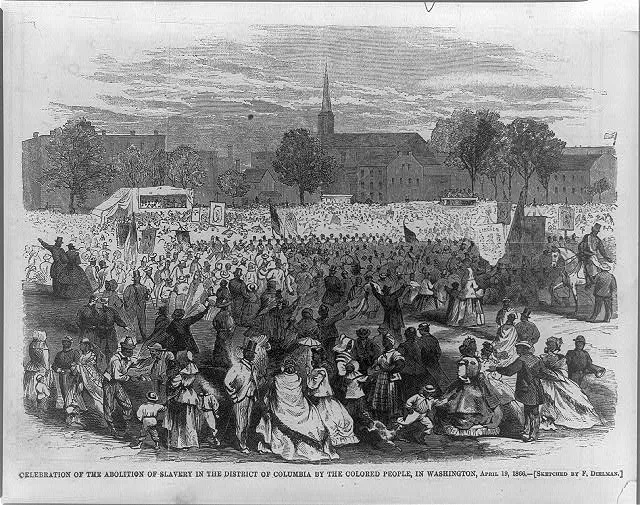
"Celebration of the abolition of slavery in the District of Columbia by the colored people, in Washington, April 19, 1866" by Dielman, Frederick, 1847-1935 / Library of Congress.
The Abolition Movement was a major effort during the 19th century to end slavery in the Americas and Europe. Slavery, where people were forced to work without pay or freedom, had existed for centuries in many societies. By the late 1700s and early 1800s, more people began to question the morality and legality of slavery. This change in attitude set the stage for a global movement to achieve emancipation, or the freeing of enslaved people.
Slavery was a crucial part of the economy in the Americas, especially in the United States, Brazil, and the Caribbean. European countries, such as Britain, Portugal, and France, made profits from enslaved labor in their colonies. However, religious groups like the Quakers were among the first to publicly oppose slavery. They argued that it was morally wrong and against human rights. Key figures, including Frederick Douglass, a former enslaved person, and Harriet Tubman, who helped hundreds escape, became leaders in the abolitionist cause. They gave speeches, wrote books, and risked their lives to expose the cruelty of slavery. The Underground Railroad was a secret network of safe houses and routes that helped enslaved people escape to freedom. Tubman herself led over 13 missions, helping more than 70 people reach safety.
The abolition movement used a variety of strategies to achieve its goals. Activists organized public meetings, published anti-slavery newspapers, and petitioned governments. In Britain, abolitionists like William Wilberforce used both moral arguments and political action. After years of campaigning, Britain passed the Slavery Abolition Act in 1833, freeing enslaved people in most of its colonies. In the United States, the movement led to heated debates and eventually contributed to the outbreak of the Civil War in 1861. President Abraham Lincoln issued the Emancipation Proclamation in 1863, declaring freedom for enslaved people in Confederate states. The 13th Amendment to the U.S. Constitution officially ended slavery in 1865.
Despite the progress, the path to abolition was difficult and dangerous. Many abolitionists faced threats, violence, and imprisonment. Some regions resisted change for economic and social reasons. However, the movement’s growth was fueled by powerful speeches, stories from enslaved people, and the spread of new ideas about human rights. Abolition also created new opportunities for previously enslaved people, though challenges remained in securing full equality.
The abolition movement changed societies by promoting the ideas of equality and justice. It showed how determined individuals and groups could challenge unjust systems. The struggle for abolition is connected to broader themes in world history, such as the fight for civil rights and the expansion of democracy.
Interesting Fact: The British slave ship Brookes, shown in an 18th-century diagram, was used by abolitionists as visual evidence to rally public support for ending the slave trade.
Comprehension quiz (8 questions)
1. Who was a famous abolitionist leader?
2. What was the Underground Railroad?
3. What year did the U.S. end slavery?
4. Why did the abolition movement grow over time?
5. What was a result of abolition?
6. Why did some resist the abolition movement?
7. The Slavery Abolition Act was passed in 1833.
8. What does 'emancipation' mean?
Perfect for the way you teach
- Build comprehension skills
- Auto-graded quiz
- Differentiated reading
- Read together at home
- Improve fluency
- Quiet reading time
- Reading curriculum support
- Independent practice
- Track Lexile growth