New Technologies Connect the World
Interactive passage with audio narration, comprehension questions, and printable PDF.
By completing this purchase you agree to our Terms of Use and Privacy Policy. Your subscription renews automatically until you cancel. You can cancel anytime from your account settings. All sales are final and non-refundable. Digital content is available for download in your account immediately upon purchase.
What's included
New Technologies Connect the World preview and details
About this printable New Technologies Connect the World reading passage (Grades 5-8)
Sample passage and quiz from New Technologies Connect the World
Reading passage and comprehension quiz preview
New Technologies Connect the World
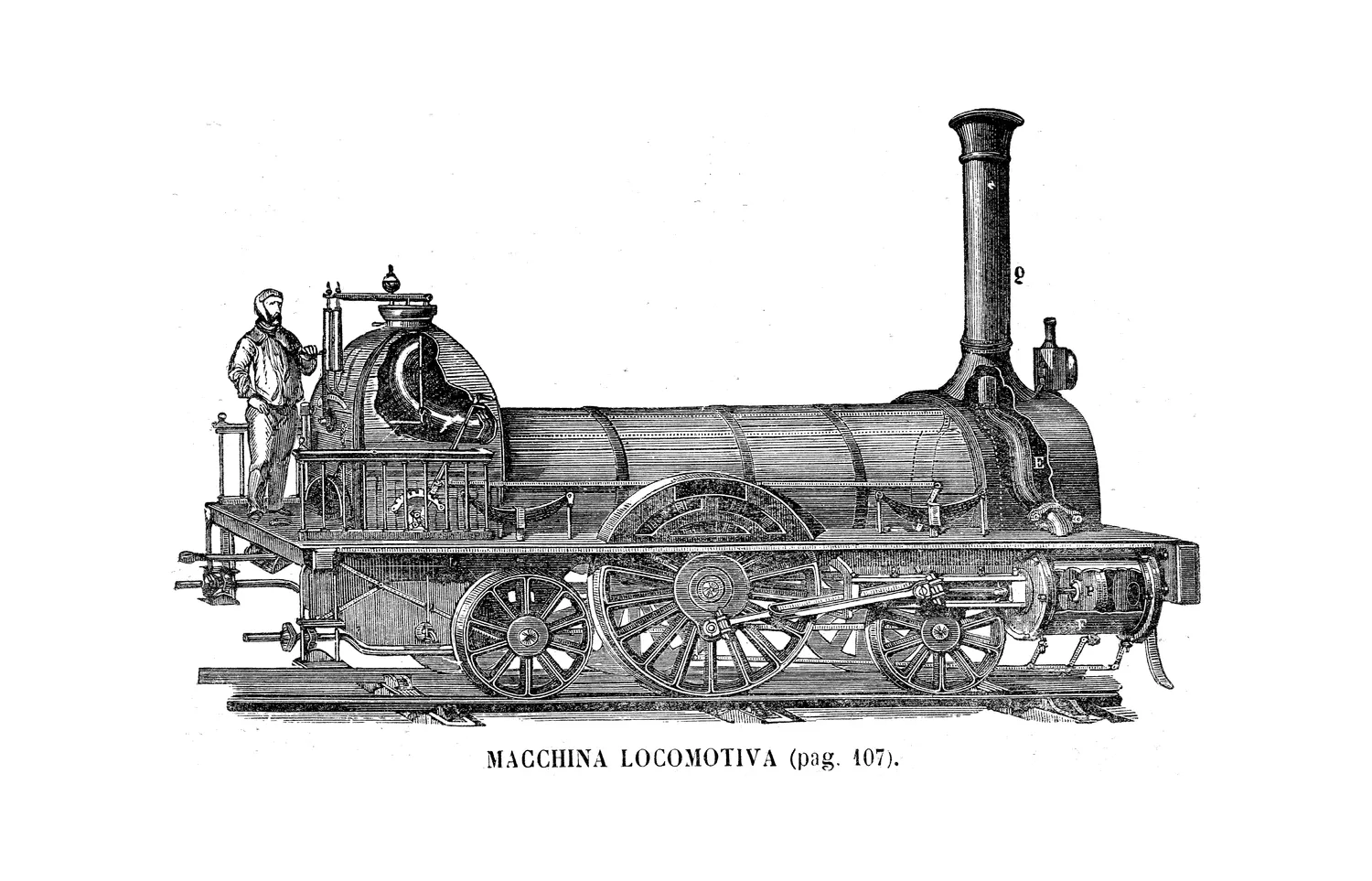
"Steam locomotive (Fornari 1903)" by Valerio Giuso /
Source: Wikimedia Commons (Public domain).
The 19th century was a period of remarkable technological change that transformed how people communicated and traveled across the globe. New inventions such as the telegraph and the steam locomotive allowed information and people to move faster and farther than ever before. These innovations connected distant lands and cultures, helping create the modern, interconnected world.
One of the most important inventions of the 19th century was the telegraph. Developed by Samuel Morse and first demonstrated in 1844 between Washington, D.C. and Baltimore, the telegraph used electrical signals to send messages almost instantly over long distances. This was a dramatic improvement over older methods, such as sending letters by ship or horseback, which could take weeks or months. The telegraph soon spread worldwide, and by 1866, the first successful transatlantic cable connected Europe and North America. Important historical documents, such as early telegrams, show how governments, businesses, and families could now communicate quickly, shaping events like wars and trade negotiations.
Transportation also changed dramatically in the 19th century. The steam engine, improved by inventors like George Stephenson in Britain, powered the first railways. The 1825 opening of the Stockton and Darlington Railway signaled a new era for travel. Trains could carry goods and people across countries at unprecedented speeds. Railroads crossed continents, as seen in the 1869 completion of the U.S. Transcontinental Railroad. Cities grew rapidly near railway lines, and raw materials could be shipped to factories or ports much more efficiently. Primary sources, such as railway tickets and early newspaper articles, reveal excitement and sometimes fear about how these machines would change society. Steamships also sped up ocean travel, making migration and global trade easier.
These technologies had a deep impact on daily life, social hierarchy, and the global economy. Merchants could send goods and news more quickly, while workers could move to new cities in search of jobs. However, not everyone benefited equally. Wealthy industrialists gained power and profit, while some workers faced difficult conditions in growing cities. The spread of technology also led to increased contact—and sometimes conflict—between different cultures and nations. Over time, the world became more interconnected, as information and products flowed across borders with increasing speed.
The 19th-century wave of invention changed how people saw the world and each other. These new technologies made it possible to connect continents, speed up communication, and transform economies. The legacy of these inventions can still be seen in today’s global networks and rapid communication tools.
This period of innovation links to broader world history themes, such as how technology shapes societies, the rise of industrial economies, and the challenges and opportunities of a connected world.
Interesting Fact: The first telegraph message sent by Samuel Morse in 1844 read, “What hath God wrought?”—a phrase chosen from the Bible.
Comprehension quiz (8 questions)
1. Who invented the telegraph?
2. What year was the first telegraph message sent?
3. Which invention sped up ocean travel?
4. What was a direct effect of railroads?
5. Why did telegraphs matter for governments?
6. How did new technology affect workers?
7. The transatlantic cable connected Europe and Asia. True or false?
8. What does 'hierarchy' mean in the passage?
Perfect for the way you teach
- Build comprehension skills
- Auto-graded quiz
- Differentiated reading
- Read together at home
- Improve fluency
- Quiet reading time
- Reading curriculum support
- Independent practice
- Track Lexile growth