July 20, 1969: The First Moon Landing
Interactive passage with audio narration, comprehension questions, and printable PDF.
By completing this purchase you agree to our Terms of Use and Privacy Policy. Your subscription renews automatically until you cancel. You can cancel anytime from your account settings. All sales are final and non-refundable. Digital content is available for download in your account immediately upon purchase.
What's included
July 20, 1969: The First Moon Landing preview and details
About this printable July 20, 1969: The First Moon Landing reading passage (Grades 5-8)
Sample passage and quiz from July 20, 1969: The First Moon Landing
Reading passage and comprehension quiz preview
July 20, 1969: The First Moon Landing
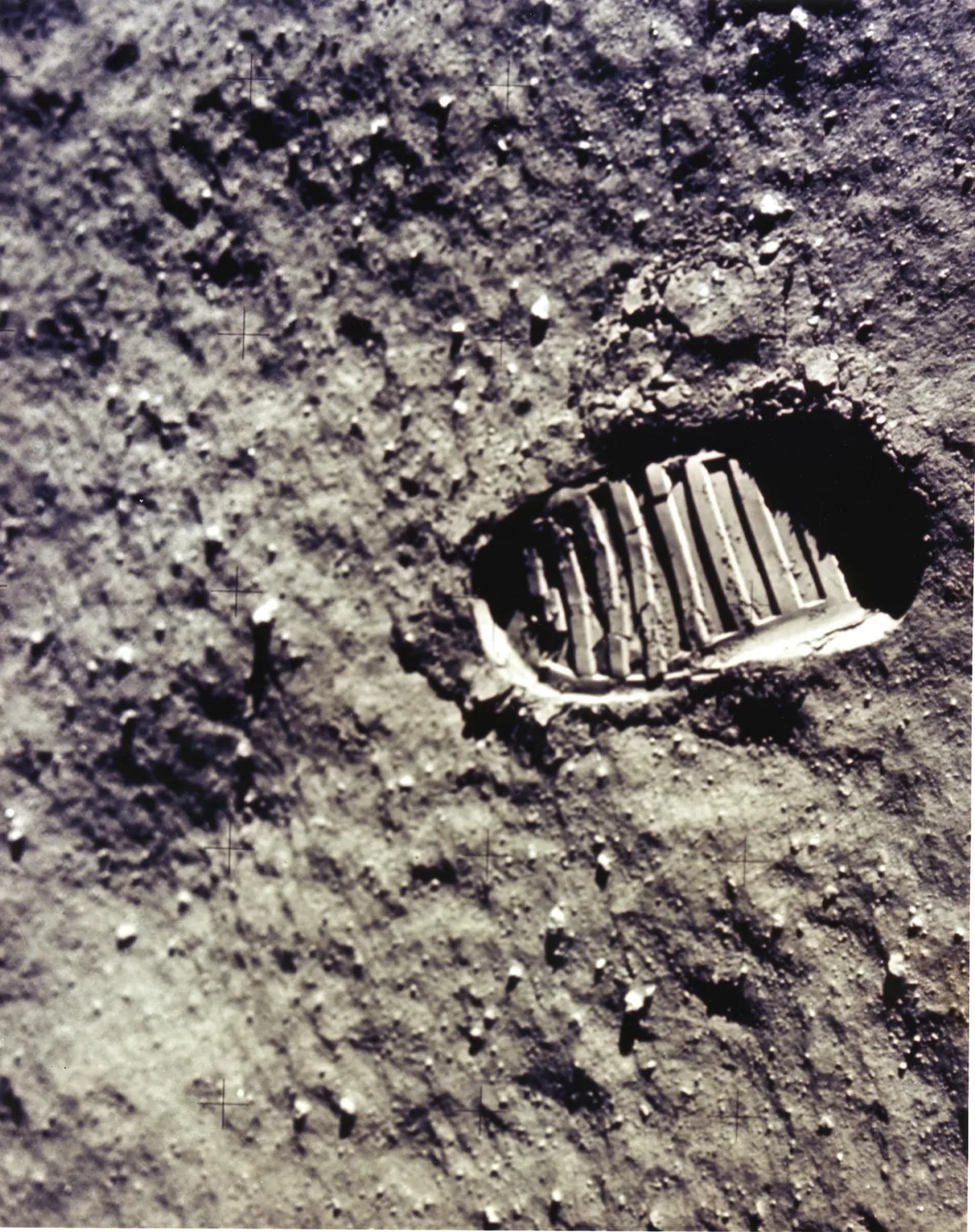
"Armstrong and Aldrin landed on the Moon July 20, 1969, and, after take-off from the Moon July 21, joined Collins in the Command Module circling the Moon" by NASA Kennedy Space Center / Wikimedia Commons (Public domain).
On July 20, 1969, a historic event unfolded as humans set foot on the Moon for the first time. This achievement was the result of years of international competition and scientific progress during the Cold War era, particularly between the United States and the Soviet Union. The Apollo 11 mission, led by the United States’ National Aeronautics and Space Administration (NASA), changed the course of space exploration forever.
The space race began in the late 1950s when the Soviet Union launched Sputnik, the first artificial satellite. In response, the United States increased funding for science and technology, determined to reach the Moon first. President John F. Kennedy challenged his nation in 1961, promising that America would send a man to the Moon and return him safely before the decade ended. This commitment sparked rapid progress in engineering, teamwork, and scientific research. By 1969, the United States was ready for the Apollo 11 mission.
Apollo 11’s crew consisted of three astronauts: Neil Armstrong, Buzz Aldrin, and Michael Collins. Armstrong and Aldrin traveled from the command module to the lunar surface in the lunar module named Eagle, while Collins remained in orbit around the Moon. On July 20, Armstrong carefully descended the ladder and set foot on the Moon’s surface at 10:56 p.m. Eastern Time. His first words, broadcast to millions watching on television, were, “That’s one small step for man, one giant leap for mankind.” This phrase became famous, symbolizing not only the technological achievement but also the spirit of global cooperation and possibility.
Primary sources, such as Armstrong’s speech and footage of the landing, provide direct evidence of the event’s impact. The astronauts planted an American flag, conducted experiments, and collected rocks to bring back to Earth. The lunar module’s landing site, the Sea of Tranquility, was chosen for its flat terrain, demonstrating how geography influenced mission planning. The crew spent about 21 hours on the Moon before returning safely to Earth on July 24, 1969. Their journey was followed by people around the globe, including both supporters and critics of the space program.
The first Moon landing marked a turning point in world history. It showed how nations could achieve extraordinary goals through collaboration, innovation, and determination. The event inspired future missions, international partnerships, and technological advancements that still affect daily life. The success of Apollo 11 demonstrated the power of science and the importance of investing in exploration for the benefit of all humanity.
This event connects to broader course themes such as technological change, global competition, and humanity’s ongoing quest to explore and understand new frontiers.
Interesting Fact: The Apollo 11 astronauts left a plaque on the Moon that reads, “We came in peace for all mankind.”
Comprehension quiz (8 questions)
1. Who was the first person on the Moon?
2. What year did Apollo 11 land on the Moon?
3. Where did Apollo 11 land on the Moon?
4. Why did the U.S. want to reach the Moon?
5. How did geography affect the landing?
6. What was Armstrong’s famous quote?
7. The Apollo 11 crew returned safely. True or false?
8. What does the word 'exploration' mean?
Perfect for the way you teach
- Build comprehension skills
- Auto-graded quiz
- Differentiated reading
- Read together at home
- Improve fluency
- Quiet reading time
- Reading curriculum support
- Independent practice
- Track Lexile growth