Comparing Communication Methods
Interactive passage with audio narration, comprehension questions, and printable PDF.
By completing this purchase you agree to our Terms of Use and Privacy Policy. Your subscription renews automatically until you cancel. You can cancel anytime from your account settings. All sales are final and non-refundable. Digital content is available for download in your account immediately upon purchase.
What's included
Comparing Communication Methods preview and details
About this printable Comparing Communication Methods science reading passage, NGSS-aligned (Grades 3-5)
Sample passage and quiz from Comparing Communication Methods
Reading passage and comprehension quiz preview
Comparing Communication Methods
Communication is the way we share information with other people. People use many different methods to communicate over short and long distances. Understanding how these methods work helps us choose the best way to send messages.
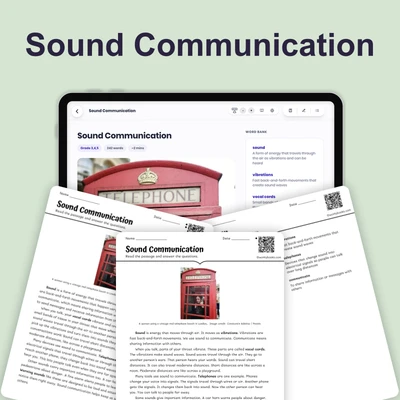
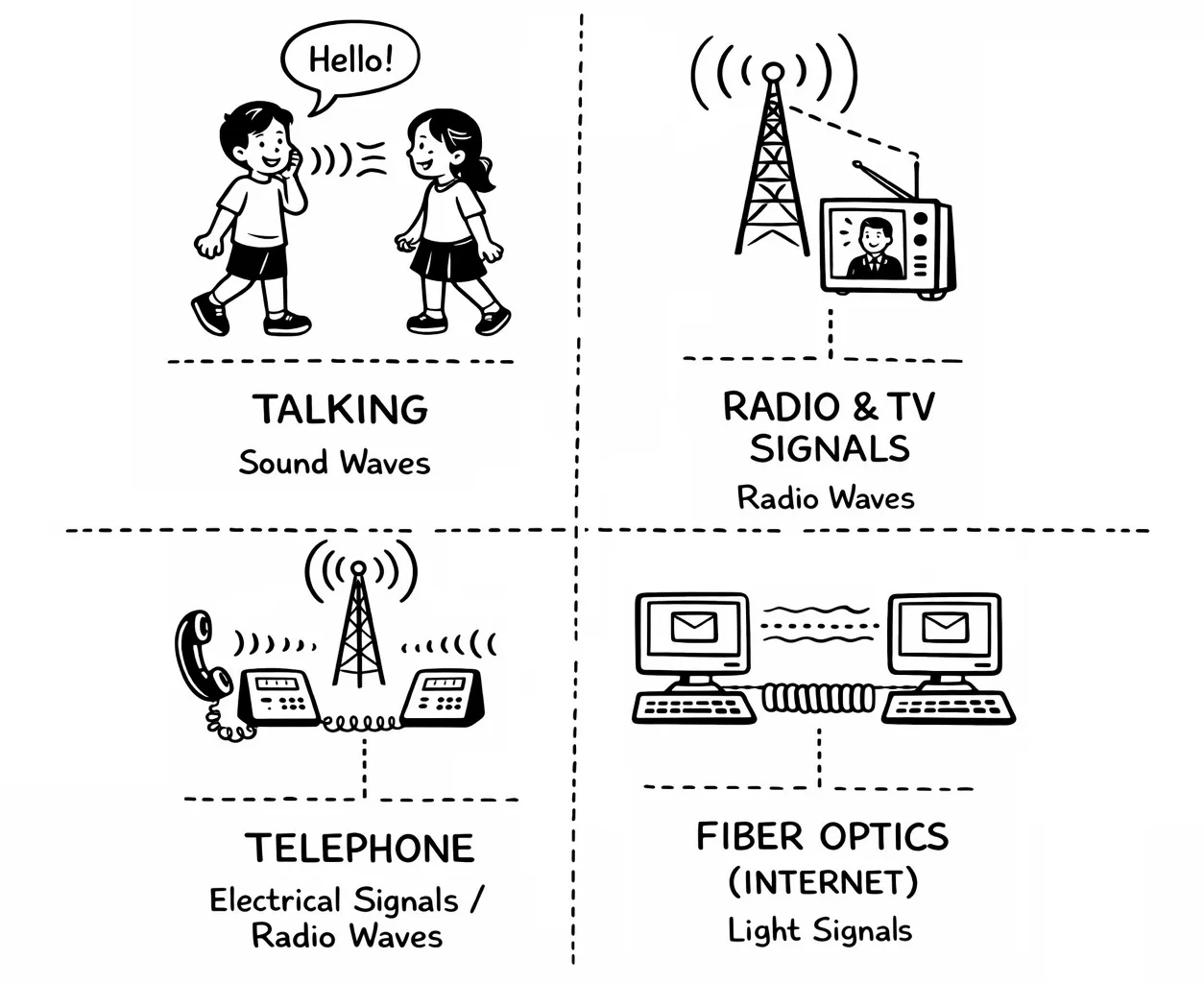
Some communication methods use sound waves, which are vibrations that travel through air. A telephone changes your voice into sound waves, then into electrical signals that travel through wires or as radio waves through the air. The telephone at the other end changes these signals back into sound waves so the other person can hear you. Telephones work well for talking to people far away, but both people need phones.
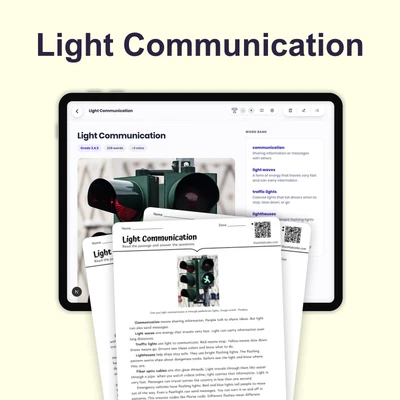
Other methods use light waves. Fiber optic cables are thin glass threads that carry information as pulses of light. Light travels very fast, so fiber optic cables can send huge amounts of information quickly over long distances. Internet connections often use fiber optic cables.
Radio and television use radio waves, which are invisible waves that travel through air. Radio waves can reach many people at once and travel long distances. However, mountains and buildings can block them.
Computers use digital signals, which are patterns of electrical pulses that represent information as numbers. Digital signals can be sent through wires, fiber optic cables, or as radio waves. This makes them very flexible.
Each communication method has strengths and weaknesses. Sound-based methods like talking work for short distances without technology. Light-based methods like fiber optics are fast but need special cables. Radio waves reach far but can be blocked. Choosing the right method depends on distance, speed, and available technology.
Comprehension quiz (8 questions)
1. What are sound waves?
2. What carries information as light pulses?
3. Which waves can be blocked by mountains?
4. Why are fiber optic cables fast?
5. How do telephones send your voice?
6. What makes digital signals flexible?
7. Radio waves can reach many people simultaneously.
8. What does communication mean in this passage?
Perfect for the way you teach
- Build comprehension skills
- Auto-graded quiz
- Differentiated reading
- Read together at home
- Improve fluency
- Quiet reading time
- Reading curriculum support
- Independent practice
- Track Lexile growth