How Do Cell Phones Send Messages
Interactive passage with audio narration, comprehension questions, and printable PDF.
By completing this purchase you agree to our Terms of Use and Privacy Policy. Your subscription renews automatically until you cancel. You can cancel anytime from your account settings. All sales are final and non-refundable. Digital content is available for download in your account immediately upon purchase.
What's included
How Do Cell Phones Send Messages preview and details
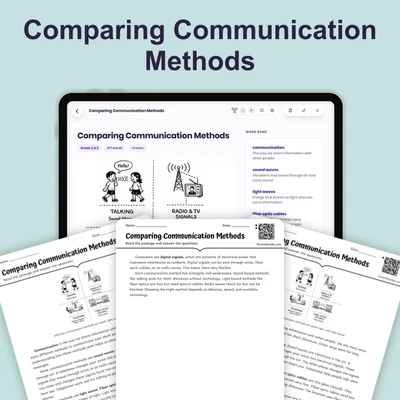
About this printable How Do Cell Phones Send Messages science reading passage, NGSS-aligned (Grades 3-5)
Sample passage and quiz from How Do Cell Phones Send Messages
Reading passage and comprehension quiz preview
How Do Cell Phones Send Messages
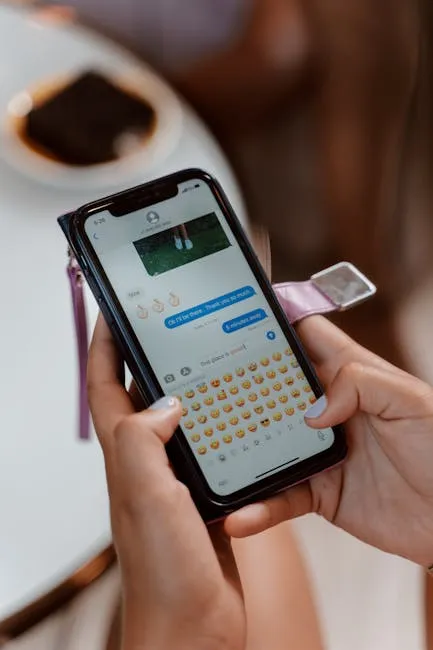
Person typing emoji in a text message on a smartphone. Image credit RDNE Stock project / Pexels.
When you send a text or make a call on a cell phone, your message travels through the air to reach another person. Cell phones use digital signals, which are messages changed into a special code made of numbers, to send information. This system allows people to communicate quickly over long distances.
Here's how it works: When you speak into your phone or type a text, the phone converts your voice or words into digital signals. These signals are like a secret number code that represents your message. The phone then changes these digital signals into radio waves, which are invisible waves of energy that can travel through the air. Think of radio waves like ripples spreading across a pond, except they move through the air instead of water.
The radio waves carry your encoded message to the nearest cell tower, which is a tall structure with antennas that receives and sends signals. The cell tower picks up your signal and sends it through a network, which is a connected system of towers and cables, until it reaches the cell tower closest to the person you're contacting.
That tower then sends radio waves to the recipient's phone. Their phone converts the radio waves back into digital signals, and then into sound or text they can understand. This entire process happens almost instantly, letting you communicate with people far away in just seconds.
Comprehension quiz (8 questions)
1. What do cell phones use to send messages?
2. What are radio waves?
3. What does a cell tower do?
4. Why does the phone convert messages to signals?
5. What happens after radio waves reach the recipient's tower?
6. How does information travel between cell towers?
7. Messages sent by cell phones happen instantly.
8. What is a network in cell phone communication?
Perfect for the way you teach
- Build comprehension skills
- Auto-graded quiz
- Differentiated reading
- Read together at home
- Improve fluency
- Quiet reading time
- Reading curriculum support
- Independent practice
- Track Lexile growth