Waves Can Carry Information
Interactive passage with audio narration, comprehension questions, and printable PDF.
By completing this purchase you agree to our Terms of Use and Privacy Policy. Your subscription renews automatically until you cancel. You can cancel anytime from your account settings. All sales are final and non-refundable. Digital content is available for download in your account immediately upon purchase.
What's included
Waves Can Carry Information preview and details
About this printable Waves Can Carry Information science reading passage, NGSS-aligned (Grades 3-5)
Sample passage and quiz from Waves Can Carry Information
Reading passage and comprehension quiz preview
Waves Can Carry Information
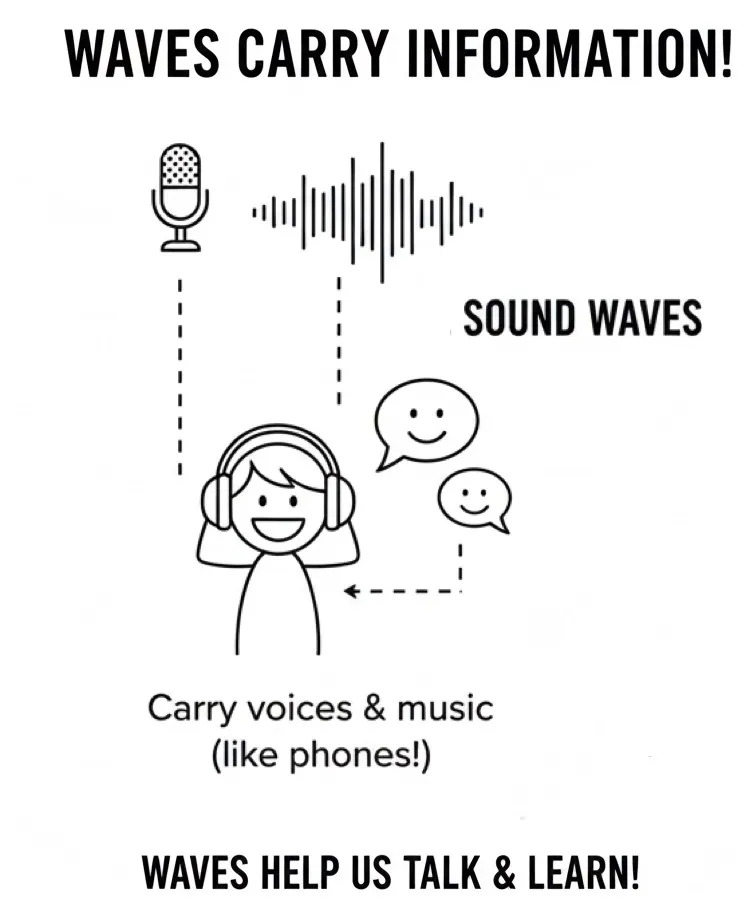
Waves are disturbances that move energy from one place to another. Waves can carry information, which is facts or messages that help us understand something. This matters because waves help us communicate and learn about the world around us.
When you talk to a friend, sound waves carry your voice through the air. Sound waves are vibrations that travel through materials like air, water, or solid objects. Your vocal cords vibrate and create sound waves that move to your friend's ears. Without sound waves, your friend couldn't hear you even if you were standing right next to each other.
Light waves also carry information. Light waves are a type of energy that our eyes can detect. When you look at a book, light waves bounce off the pages and travel to your eyes. Your brain uses this information to see the words and pictures. Light waves work like messengers delivering pictures to your eyes.
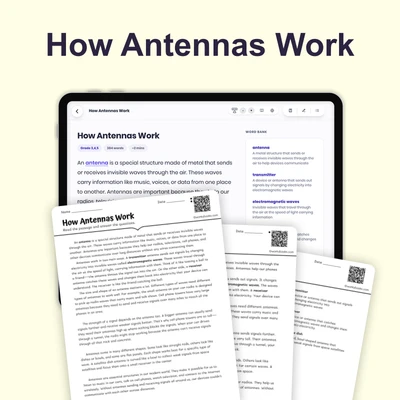
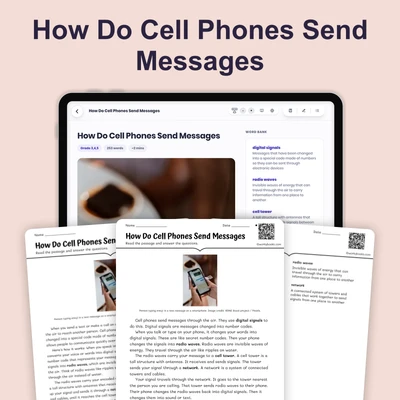
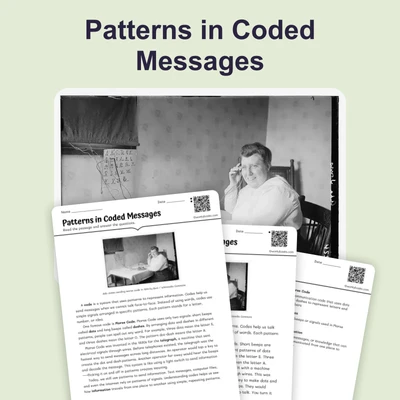
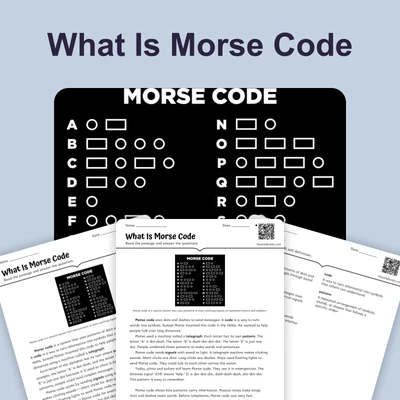
Technology uses waves to send information too. Phones turn your voice into digital patterns, which are coded signals made of waves. These patterns travel through wires or through the air to reach another phone. Television, radio, and computers also use waves to send information. Even walkie-talkies use radio waves to carry messages between devices, which are tools or machines that do specific jobs.
Different types of waves can carry different kinds of information over short or long distances.
Comprehension quiz (8 questions)
1. What do waves carry from place to place?
2. What creates sound waves when you talk?
3. How do light waves help you read?
4. What do phones turn voices into?
5. Which device uses radio waves for messages?
6. Why do we need sound waves?
7. Waves can only travel short distances.
8. What does the word 'information' mean?
Perfect for the way you teach
- Build comprehension skills
- Auto-graded quiz
- Differentiated reading
- Read together at home
- Improve fluency
- Quiet reading time
- Reading curriculum support
- Independent practice
- Track Lexile growth