This learning resource is available in interactive and printable formats. The interactive worksheet can be played online and assigned to students. The Printable PDF version can be downloaded and printed for completion by hand.
This engaging 250-word reading passage introduces fourth-grade students to the foundational concept of signals as described in NGSS standard 4-PS4-3 and Disciplinary Core Idea PS4.C. Students discover that a signal is a pattern used to send messages through light, sound, or other waves. The passage uses relatable examples like traffic lights, sirens, phone notifications, and Morse code to help students recognize signals in their everyday lives. Written at an appropriate Grade 4 reading level, the passage includes bolded vocabulary terms with immediate definitions and concrete analogies. The content builds foundational understanding without overwhelming students with complex details, preparing them for hands-on investigations and classroom discussions. Audio integration supports diverse learners by providing text-to-speech functionality, making the content accessible to all students. Accompanying activities include multiple-choice comprehension questions, writing prompts, and graphic organizers that reinforce key concepts about how signals work and why they matter in communication and safety.
CONTENT PREVIEW
Expand content preview
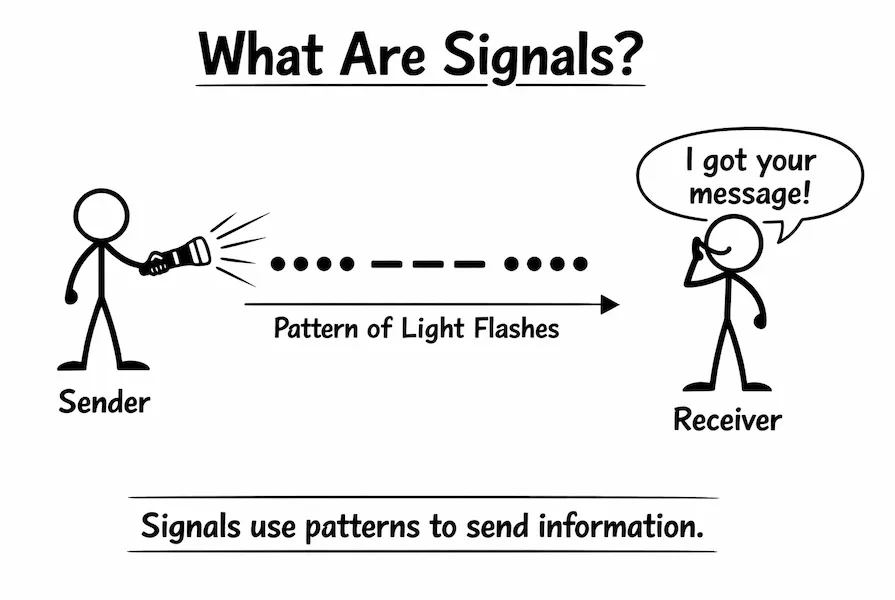
A signal is a pattern that sends a message from one place to another. Signals use light, sound, or other waves to carry information. Waves are movements of energy that travel through space or materials. Signals help people and machines communicate quickly and clearly.
We see and hear signals every day. A traffic light uses colored light as a signal. Red means stop, yellow means slow down, and green means go. The pattern of colors tells drivers what to do. A siren on an ambulance uses loud sound as a signal. The repeating sound pattern warns people to move out of the way. Your phone uses light and sound signals too. A beep or flash tells you someone sent a message.
Signals work because they follow patterns that people agree on. Think of signals like a secret code everyone knows. When you see a red light, you know exactly what it means because everyone learned the same pattern. Long ago, people used signals like smoke patterns or drum beats to send messages across distances. Today, we use digital signals in computers and phones. Digital signals are patterns of electrical energy that carry information as numbers.
Signals are important because they let us share information without being in the same place. They keep us safe, help us communicate, and make modern technology work.
What does a signal do?
Sends a message using patternsMakes things move fasterCreates new colorsStops all sounds
What does red mean on traffic lights?
Go fasterStopTurn leftHonk horn
What carries information in a signal?
Paper and pencilsCars and trucksLight, sound, or wavesBooks and magazines
Why does an ambulance siren work?
It makes a pretty soundIt uses a loud pattern people recognizeIt turns on the lightsIt stops the traffic
How did people send signals long ago?
With phones and computersWith emails and textsWith smoke patterns and drum beatsWith cars and trains
Why do signals need patterns everyone knows?
So people understand the same messageTo make them look prettyTo use less energyTo make them louder
Signals only use light to send messages.
TrueFalse
What are digital signals?
Patterns of electrical energy carrying informationColored lights on buildingsLoud sounds from sirensSmoke from fires
Perfect For:
👩🏫 Teachers
• Reading comprehension practice
• Auto-graded assessments
• Literacy skill development
👨👩👧👦 Parents
• Reading practice at home
• Comprehension improvement
• Educational reading time
🏠 Homeschoolers
• Reading curriculum support
• Independent reading practice
• Progress monitoring
Reading Features:
📖
Reading Passage
Engaging fiction or nonfiction text
❓
Comprehension Quiz
Auto-graded questions
📊
Instant Feedback
Immediate results and scoring
📄
Printable Version
Download for offline reading
🔊
Read Aloud
Voice-over with word highlighting
Reviews & Ratings
No reviews yet. Be the first to share your experience!
Related Content
How Antennas Work
This engaging 350-word science passage introduces elementary students to the fascinating world of antennas and signal tr...
NGSS 4-PS4-3
How Do Cell Phones Send Messages
This engaging 250-word reading passage introduces fourth-grade students to the fascinating process of how cell phones se...
NGSS 4-PS4-3
Patterns in Coded Messages
This engaging Grade 4-5 science passage explores how codes are systems of patterns that represent information, allowing ...
NGSS 4-PS4-3
What Is Morse Code
This engaging 250-word science passage introduces Grade 4-5 students to Morse code, a fascinating communication system t...
NGSS 4-PS4-3
How Does Wi-Fi Work
This 250-word reading passage introduces fourth-grade students to the science behind Wi-Fi technology, aligned with NGSS...
NGSS 4-PS4-3
Waves Carry Information
This 250-word reading passage introduces fourth-grade students to the fundamental concept that waves carry information f...
NGSS 4-PS4-3
Light Communication
This engaging 250-word reading passage introduces fourth-grade students to the fascinating world of light communication....
NGSS 4-PS4-3
Sound Communication
This engaging 250-word reading passage introduces fourth-grade students to the concept of sound communication aligned wi...
NGSS 4-PS4-3
Comparing Communication Methods
This 250-word informational reading passage helps Grade 4 students compare different communication methods that use wave...