Light Communication
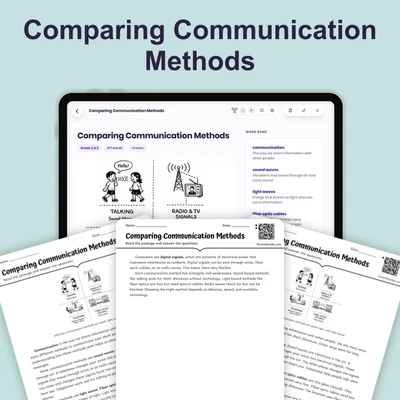
Interactive passage with audio narration, comprehension questions, and printable PDF.
By completing this purchase you agree to our Terms of Use and Privacy Policy. Your subscription renews automatically until you cancel. You can cancel anytime from your account settings. All sales are final and non-refundable. Digital content is available for download in your account immediately upon purchase.
What's included
Light Communication preview and details
About this printable Light Communication science reading passage, NGSS-aligned (Grades 3-5)
Sample passage and quiz from Light Communication
Reading passage and comprehension quiz preview
Light Communication
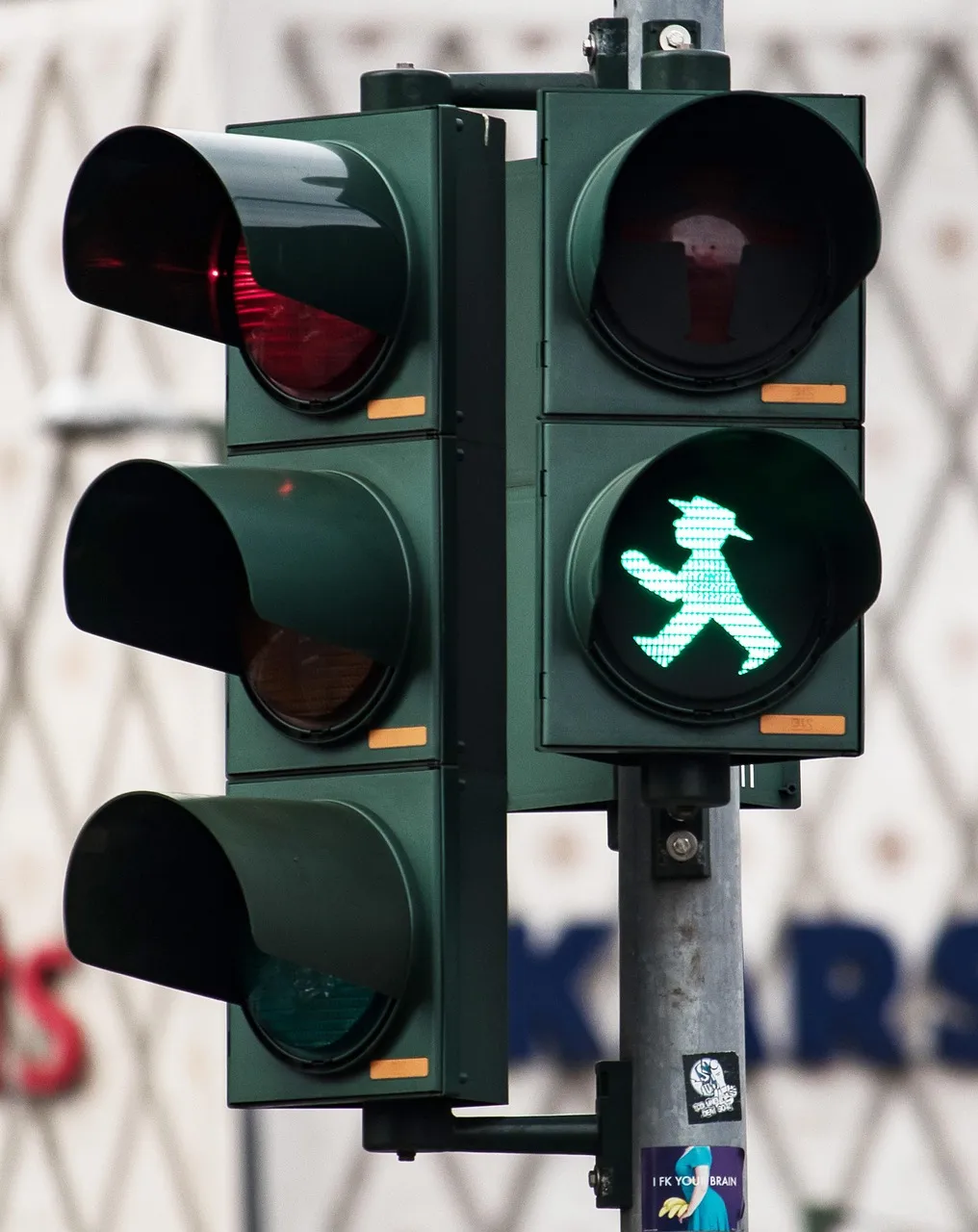
One way light communicates is through pedestrian lights. Image credit Pixabay.
Communication means sharing information with others. People communicate using words, but light can also send messages. Light waves are a form of energy that travels very fast and can carry information over long distances.
One way light communicates is through traffic lights. Red light means stop, yellow means slow down, and green means go. Drivers understand these light signals without hearing any words. Lighthouses use bright flashing lights to warn ships about dangerous rocks or shorelines. The pattern of flashes tells sailors where they are and helps them stay safe.
Fiber optic cables are thin glass threads that carry light signals. They work like pipes for light. When you watch a video online or make a phone call, information travels as light pulses through these cables. Light moves so fast that messages can travel across the country in less than a second. This is much faster than sending a letter in the mail.
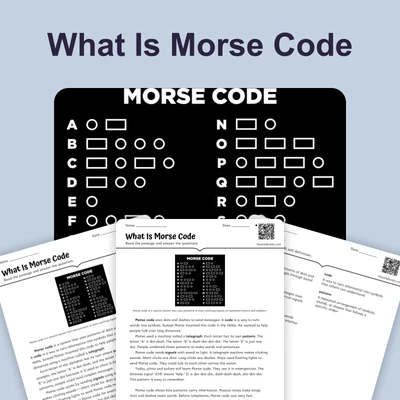
Emergency vehicles use flashing red and blue lights to communicate urgency. When people see these lights, they know to move out of the way. Even a simple flashlight can send messages. People can turn it on and off in patterns to create codes, like Morse code, where different flashes represent different letters.
Light communication works because light travels quickly and can be seen from far away, making it perfect for sending important messages.
Comprehension quiz (8 questions)
1. What does red light mean at traffic lights?
2. What do lighthouses use to warn ships?
3. What are fiber optic cables made of?
4. Why is light good for communication?
5. How do emergency vehicles use light signals?
6. What carries information when you watch videos online?
7. Light waves can carry information over long distances.
8. What does communication mean?
Perfect for the way you teach
- Build comprehension skills
- Auto-graded quiz
- Differentiated reading
- Read together at home
- Improve fluency
- Quiet reading time
- Reading curriculum support
- Independent practice
- Track Lexile growth