Reading Passage

Condensation in the Water Cycle

Interactive passage with audio narration, comprehension questions, and printable PDF.

No ratings yet
Grades 5–8ScienceElaEnglish · SpanishInteractive · Printable
Aligned toMS-ESS2-4; RST.6-8.1RST.6-8.4

What's included

Reading passage
Audio narration
Comprehension quiz
Writing activity
Glossary & flashcards
Differentiated version
Spanish translation

Condensation in the Water Cycle preview and details

Preview

Sample passage and quiz from Condensation in the Water Cycle

Reading passage and comprehension quiz preview

Condensation in the Water Cycle

densation is a key part of the water cycle, which is the continuous movement of water through Earth’s systems. It happens when water vapor in the air cools down and changes back into liquid water. This process forms clouds, fog, and even dew on grass in the early morning.


Condensation begins after evaporation, when heat from the Sun turns liquid water into vapor. That vapor rises into the atmosphere. As the water vapor goes higher, the air becomes cooler. When the vapor cools enough, it turns into tiny water droplets. These droplets group together around small particles like dust and form clouds. Without condensation, we wouldn’t have any precipitation—rain, snow, sleet, or hail.


Temperature plays a major role in condensation. Warm air can hold more water vapor, but as the air cools, it can't hold as much. This is why condensation often occurs at night or early in the morning when temperatures are lower. It's also why you might see water droplets on the outside of a cold glass—the water in the air around the glass condenses when it touches the cold surface.


Condensation is important because it helps return water to the Earth's surface. It makes weather events like rain possible and is a part of the natural system that keeps water moving. Meteorologists study condensation to help predict weather, and engineers use it in machines like air conditioners and refrigerators.


Fun Fact: Every cloud you see in the sky is made up of billions of tiny water droplets formed by condensation!

Comprehension quiz (8 questions)

1. What is condensation?

Water turning into ice
Water vapor becoming liquid
Water soaking into soil
Water running off land

2. What causes water vapor to condense?

Strong winds
Heat from the Sun
Cooling of air
Movement of rivers

3. What forms when tiny droplets group together in the sky?

Dew
Clouds
Hail
Wind

4. Which process happens before condensation in the water cycle?

Freezing
Runoff
Evaporation
Precipitation

5. Why do water droplets form on a cold glass?

Ice is melting
Glass is leaking
Water in air condenses
Glass is evaporating

6. What role does temperature play in condensation?

Warmer air causes it
Cooler air causes it
It freezes water
It speeds up sunlight

7. What is the main idea of the passage?

Water vapor is dangerous
Clouds are made of gas
Condensation turns vapor into liquid
Air can't hold water

8. How do air conditioners use condensation?

They heat air
They create clouds
They cool vapor into liquid
They dry water
Who it's for

Perfect for the way you teach

Teachers
  • Build comprehension skills
  • Auto-graded quiz
  • Differentiated reading
Parents
  • Read together at home
  • Improve fluency
  • Quiet reading time
Homeschoolers
  • Reading curriculum support
  • Independent practice
  • Track Lexile growth

Reviews & Ratings

No reviews yet. Be the first to share your experience!

More reading you might love

11 more
Passage
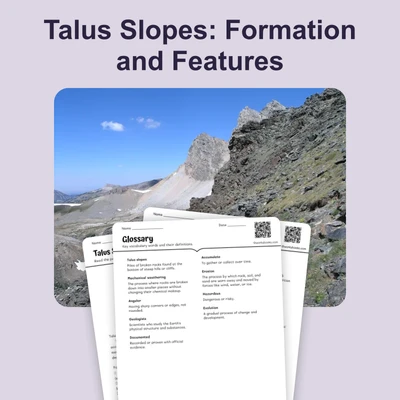
Talus Slopes: Formation and Features - reading educational content
Grades 5–8

Talus Slopes: Formation and Features

science · MS-ESS2-1

Free
Passage
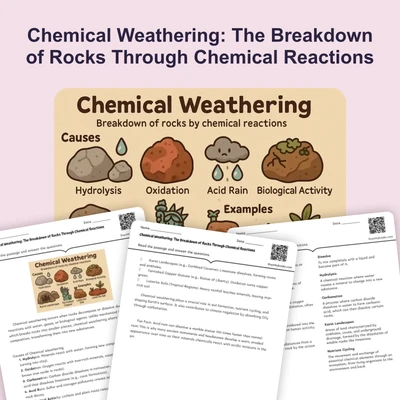
Chemical Weathering: The Breakdown of Rocks Through Chemical Reactions - reading educational content
Grades 5–8

Chemical Weathering: The Breakdown of Rocks Through Chemical Reactions

earth and space science · MS-ESS2-1

Free
Passage
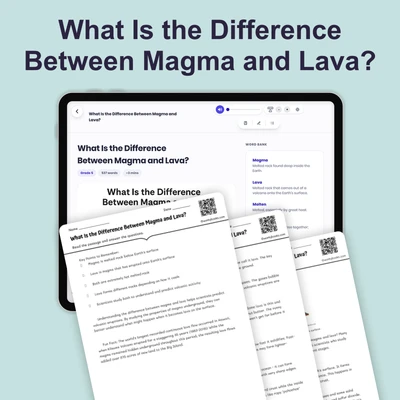
What Is the Difference Between Magma and Lava? - reading educational content
Grades 5–8

What Is the Difference Between Magma and Lava?

earth and space science · MS-ESS2-3

$1.50
Passage
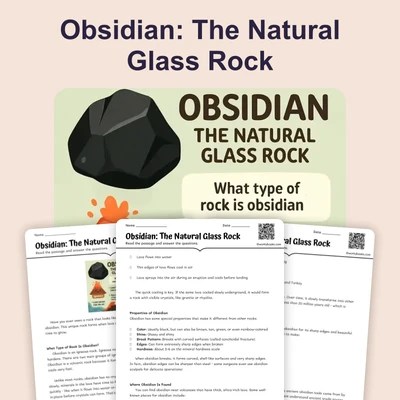
Obsidian: The Natural Glass Rock - reading educational content
Grades 5–8

Obsidian: The Natural Glass Rock

earth and space science · MS-ESS2-3

Free
Passage
How Rainforests Help the Planet - reading educational content
Grades 5–8

How Rainforests Help the Planet

life science · MS-LS2-3

$1.50
Passage
Animal Migration and Climate Change - reading educational content
Grades 5–8

Animal Migration and Climate Change

weather and climate · MS-LS2-4

$1.50
Passage
What Drives the Water Cycle - reading educational content
Grades 5–8

What Drives the Water Cycle

weather and climate · MS-ESS2-4

$1.50
Passage
Global vs. Local Temperature - reading educational content
Grade 6

Global vs. Local Temperature

weather and climate · MS-ESS2-6

$1.50
Passage
Lucy the Australopithecus - reading educational content
Grade 6

Lucy the Australopithecus

science · MS-LS4-1

$1.50
Passage
Proxy vs. Real Temperature Data - reading educational content
Grade 6

Proxy vs. Real Temperature Data

weather and climate · MS-ESS2-6

$1.50
Interactive
Natural Disasters Quiz: Types, Impacts & Mitigation for Grad - game educational content
Grade 8

Natural Disasters Quiz: Types, Impacts & Mitigation for Grad

natural disasters · RST.6-8.4

Free
Copyright © 2026 Workybooks. Made with ♥ in California.