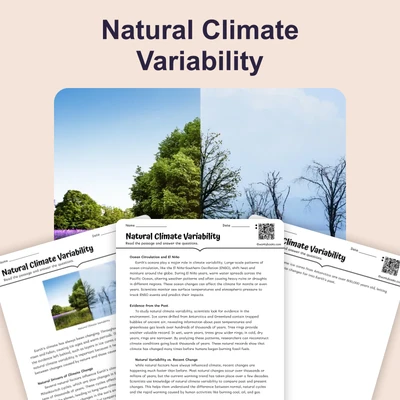
Animal Migration and Climate Change
Interactive passage with audio narration, comprehension questions, and printable PDF.
By completing this purchase you agree to our Terms of Use and Privacy Policy. Your subscription renews automatically until you cancel. You can cancel anytime from your account settings. All sales are final and non-refundable. Digital content is available for download in your account immediately upon purchase.
What's included
Animal Migration and Climate Change preview and details
About this printable Animal Migration and Climate Change science reading passage, NGSS-aligned (Grades 5-8)
Sample passage and quiz from Animal Migration and Climate Change
Reading passage and comprehension quiz preview
Animal Migration and Climate Change
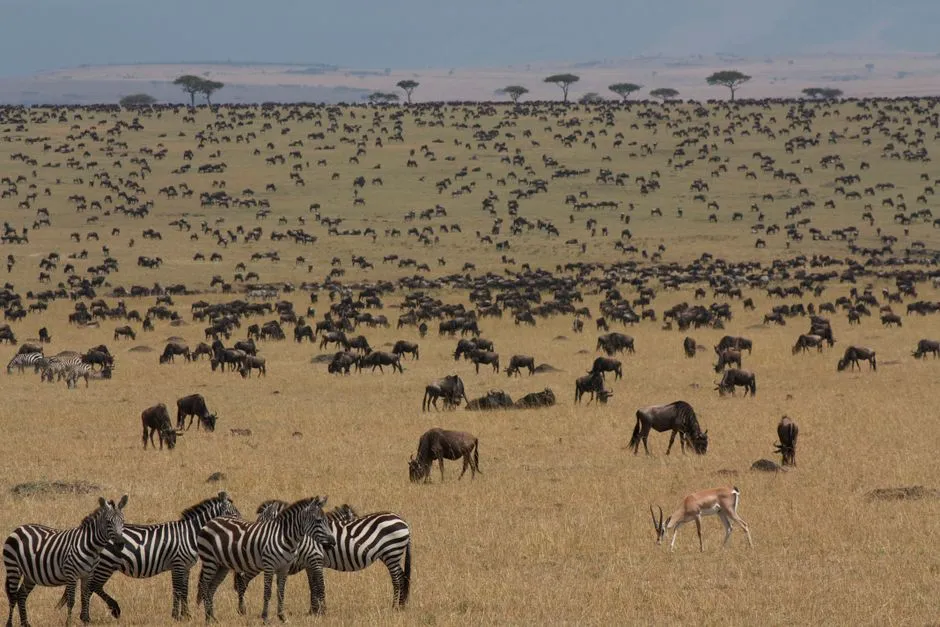
"A large herd of wildebeests and zebras in the African savannah during migration season." by Vik Joshi / Pexels.
Every year, billions of animals travel thousands of miles in one of nature's most remarkable events: migration. Migration is the seasonal movement of animals from one region to another to find food, reproduce, or escape harsh weather. Animals time these journeys using environmental cues like temperature changes, daylight length, and food availability. However, climate change is disrupting these ancient patterns. Rising global temperatures are shifting the timing of seasons and altering the landscapes along migration routes.
Many migratory birds now face a serious problem called phenological mismatch. This occurs when animals arrive at their destinations at the wrong time. Birds may reach their breeding grounds too early or too late to find peak insect populations. Evidence shows that some bird species now arrive at nesting sites up to two weeks earlier than they did fifty years ago. When insects emerge before birds arrive, or after they leave, the birds struggle to feed their young. This mismatch can cause population declines across entire species.
Birds are not alone in facing these challenges. Caribou in the Arctic migrate to calving grounds where they depend on nutritious spring plants. Warmer temperatures cause plants to grow earlier in the season. By the time caribou arrive, the plants are already mature and less nutritious. Sea turtles navigate ocean currents that are shifting due to warming waters. Monarch butterflies rely on milkweed plants along their migration route, but changing temperatures affect where these plants grow. Whales and fish follow food sources that are moving to cooler waters as oceans warm.
Scientists explain that migration evolved over thousands of years as animals adapted to predictable seasonal patterns. Climate change is rearranging this calendar faster than many species can adjust. When migration timing no longer matches food availability, animals face starvation and reproductive failure. Entire populations can crash when these mismatches continue year after year. Some species may adapt by changing their migration schedules, but others cannot adjust quickly enough.
Understanding how climate change affects migration matters for protecting biodiversity. Migration connects different ecosystems across the planet. When migratory animals decline, the ecosystems they visit also suffer. Plants may not get pollinated, and predators may lose food sources. Scientists observe migration patterns to track climate change impacts and identify species that need protection. Conservation efforts can help by preserving habitat along migration routes and reducing other stressors on animal populations.
Interesting Fact: The Arctic Tern holds the record for the longest migration, traveling about 44,000 miles each year from the Arctic to Antarctica and back. Climate change is now forcing these birds to fly even farther to find food along their route.
Comprehension quiz (10 questions)
1. What is migration?
2. What environmental cues do animals use to time their migration?
3. What does 'phenological mismatch' mean?
4. According to the passage, some bird species now arrive at nesting sites how much earlier than fifty years ago?
5. Why do caribou face problems when plants grow earlier in the season?
6. Which animal depends on milkweed plants along its migration route?
7. What can happen when migration timing no longer matches food availability?
8. How does the decline of migratory animals affect ecosystems?
9. Climate change is causing seasons to shift faster than many species can adapt.
10. All migratory animals can easily adjust their migration schedules to match climate change.
Perfect for the way you teach
- Build comprehension skills
- Auto-graded quiz
- Differentiated reading
- Read together at home
- Improve fluency
- Quiet reading time
- Reading curriculum support
- Independent practice
- Track Lexile growth