Global vs. Local Temperature
Interactive passage with audio narration, comprehension questions, and printable PDF.
By completing this purchase you agree to our Terms of Use and Privacy Policy. Your subscription renews automatically until you cancel. You can cancel anytime from your account settings. All sales are final and non-refundable. Digital content is available for download in your account immediately upon purchase.
What's included
Global vs. Local Temperature preview and details
About this printable Global vs. Local Temperature science reading passage, NGSS-aligned (Grade 6)
Sample passage and quiz from Global vs. Local Temperature
Reading passage and comprehension quiz preview
Global vs. Local Temperature
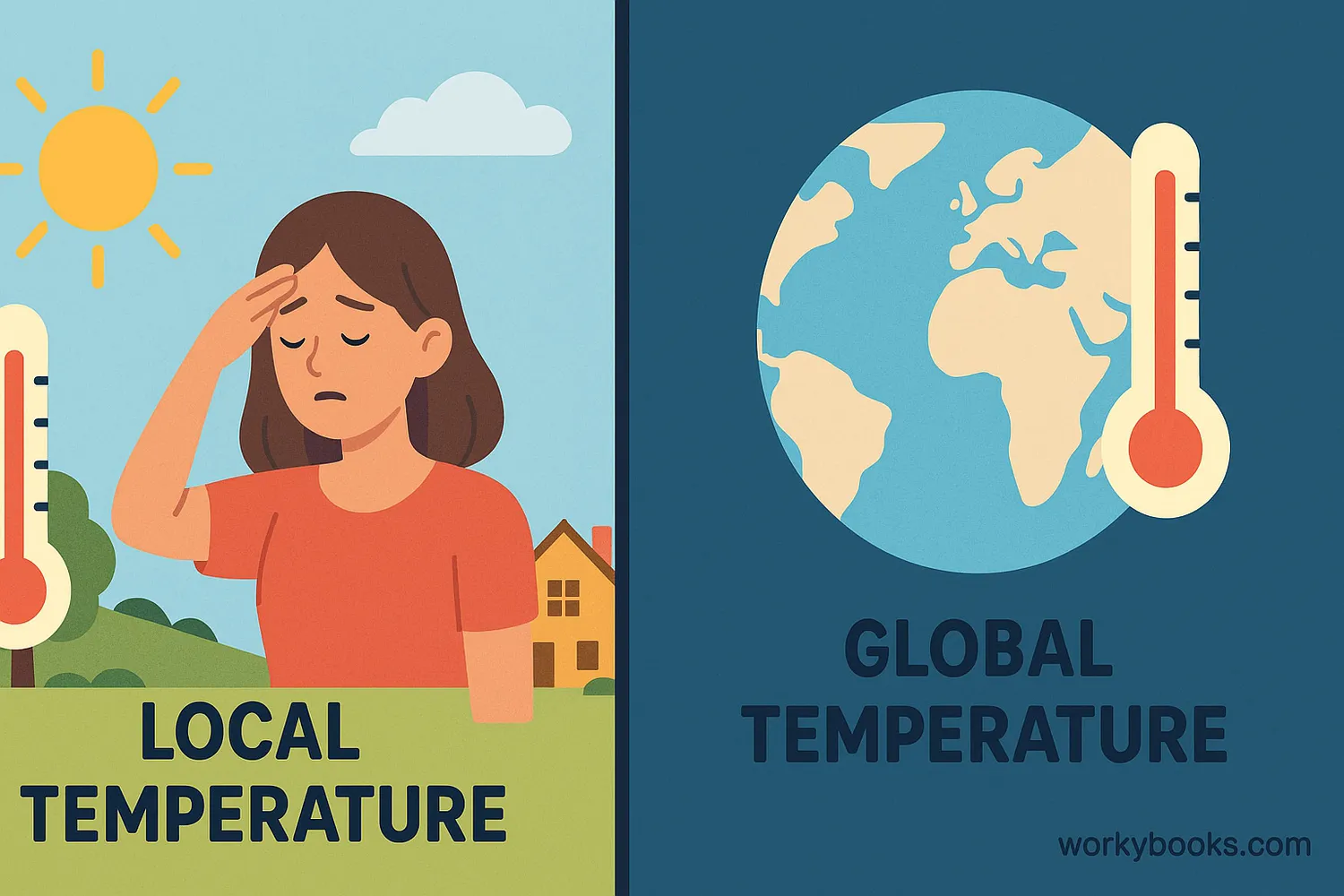
Imagine stepping outside on a sunny day. The air feels warm, and you might think about the heat. But is that feeling of warmth connected to the planet's overall temperature? The answer is both yes and no, and understanding the difference between global temperature and local temperature is key to understanding our changing world.
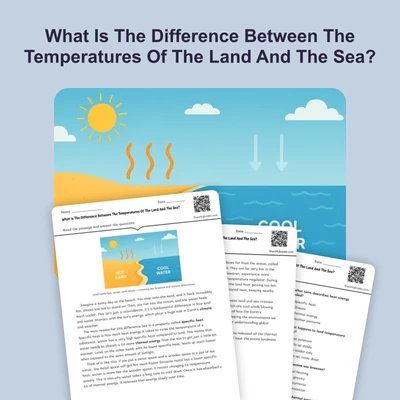
Let's start with local temperature. This is what you experience every day. It's the temperature in your town, your state, or even your backyard. Local temperature changes constantly. It can be hot one day and cold the next, sunny in the morning and rainy in the afternoon. These short-term atmospheric conditions, including temperature, precipitation, and wind, are what we call weather. Weather patterns are influenced by many factors like the time of day, the season, and geographic features like mountains or oceans.
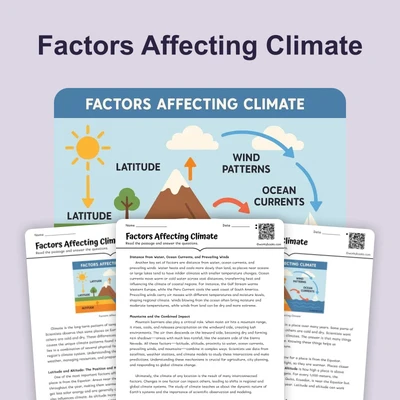
Now, think about global temperature. This isn't about one specific place on one specific day. Instead, it's the average temperature of the entire Earth over a long period, usually many years. Scientists calculate global temperature by gathering temperature readings from thousands of locations all over the world – land, oceans, and even the atmosphere. They then average these readings to get a single number that tells us how warm the planet is as a whole. This long-term average of weather patterns in a region is known as climate.
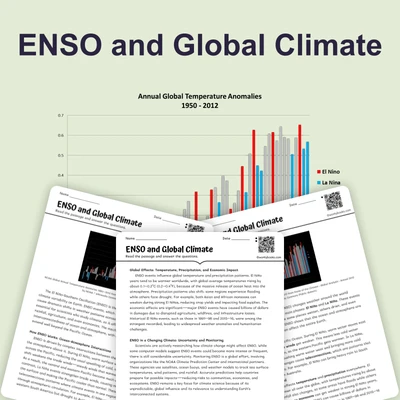
So, while a single cold day in your town doesn't mean global warming isn't happening, a long-term trend of rising average temperatures across the entire globe does. Global temperature is a much more stable and important indicator of long-term changes, like climate change. Human activities, such as burning fossil fuels, release greenhouse gases into the atmosphere. These gases trap heat, causing the Earth's average global temperature to rise, a phenomenon known as global warming. This sustained rise in global temperatures affects everything from sea levels to extreme weather events, which are distinct from everyday local weather fluctuations.
Interesting Fact: The warmest year on record for global average temperatures has occurred in the past decade, demonstrating a clear trend of global warming.
Comprehension quiz (10 questions)
1. What is local temperature?
2. How do scientists calculate global temperature?
3. Why is understanding global temperature important?
4. What is the primary difference between weather and climate?
5. Which human activity is linked to global warming?
6. What do greenhouse gases do in the atmosphere?
7. If your town has a colder-than-average winter, does it disprove global warming?
8. The rise in global temperature affects sea levels. True or False?
9. What term refers to the long-term average of weather patterns?
10. Global warming describes what specific phenomenon?
Perfect for the way you teach
- Build comprehension skills
- Auto-graded quiz
- Differentiated reading
- Read together at home
- Improve fluency
- Quiet reading time
- Reading curriculum support
- Independent practice
- Track Lexile growth