Chemical Weathering: The Breakdown of Rocks Through Chemical Reactions
Interactive passage with audio narration, comprehension questions, and printable PDF.
What's included
Chemical Weathering: The Breakdown of Rocks Through Chemical Reactions preview and details
About this printable Chemical Weathering: The Breakdown of Rocks Through Chemical Reactions science reading passage, NGSS-aligned (Grades 5-8)
Sample passage and quiz from Chemical Weathering: The Breakdown of Rocks Through Chemical Reactions
Reading passage and comprehension quiz preview
Chemical Weathering: The Breakdown of Rocks Through Chemical Reactions
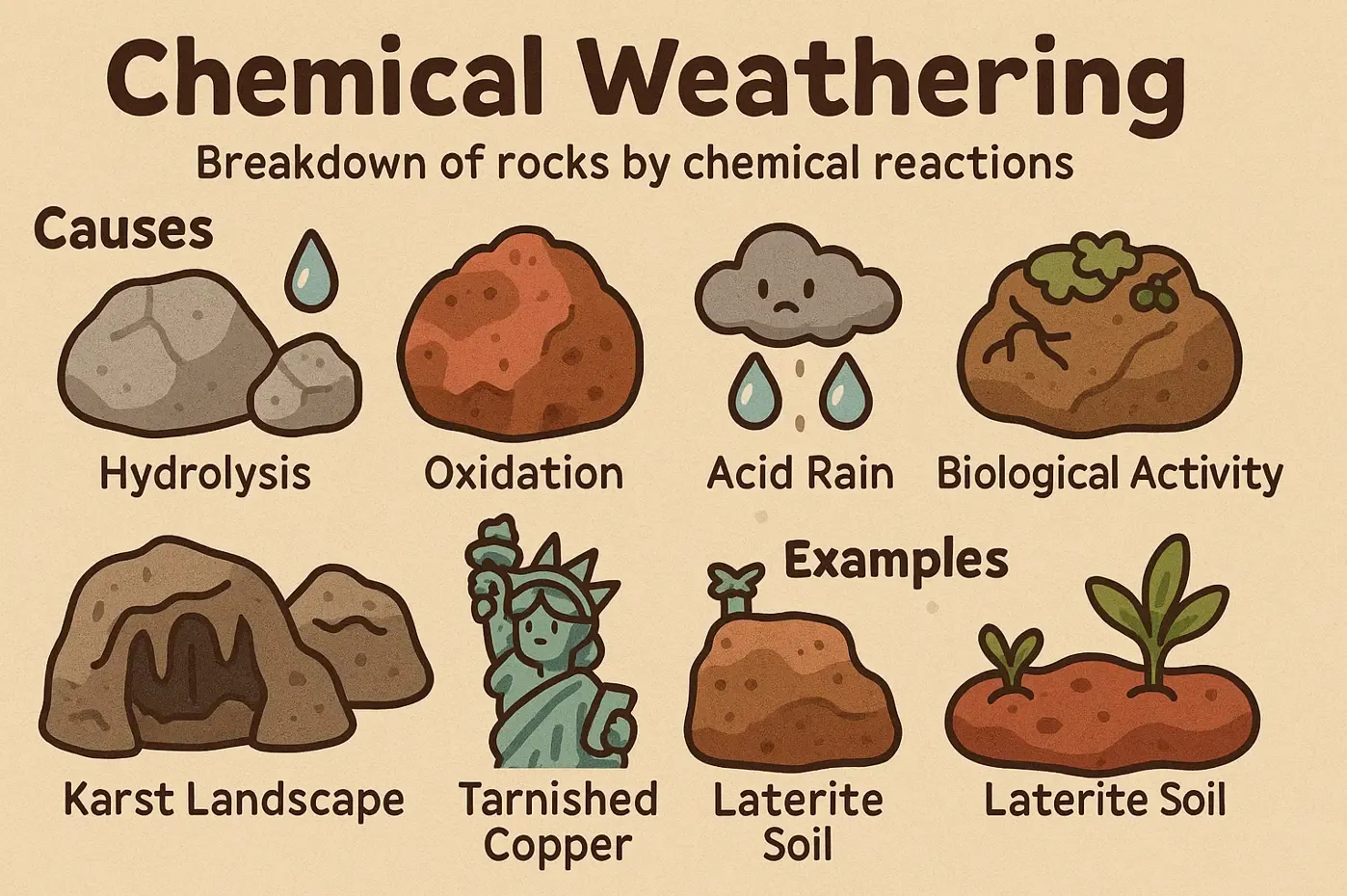
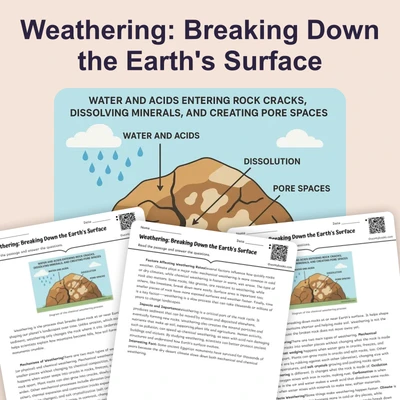
Chemical weathering occurs when rocks decompose or dissolve due to chemical reactions with water, gases, or biological agents. Unlike mechanical weathering, which breaks rocks into smaller pieces, chemical weathering alters their mineral composition, transforming them into new substances.
Causes of Chemical Weathering
- Hydrolysis: Minerals react with water, forming new compounds (e.g., feldspar turning into clay).
- Oxidation: Oxygen reacts with iron-rich minerals, causing rust (e.g., reddish-brown iron oxide in rocks).
- Carbonation: Carbon dioxide dissolves in rainwater, forming weak carbonic acid that dissolves limestone (e.g., cave formations).
- Acid Rain: Sulfur and nitrogen pollutants create strong acids that accelerate rock decay.
- Biological Activity: Lichens and plant roots release organic acids that dissolve minerals.
Examples of Chemical Weathering
● Karst Landscapes (e.g., Carlsbad Caverns): Limestone dissolves, forming caves and sinkholes.
● Tarnished Copper Statues (e.g., Statue of Liberty): Oxidation turns copper green.
● Laterite Soils (Tropical Regions): Heavy rainfall leaches minerals, leaving iron-rich soil.
Chemical weathering plays a crucial role in soil formation, nutrient cycling, and shaping Earth’s surface. It also contributes to climate regulation by absorbing CO₂ through carbonation.
Fun Fact: Acid rain can dissolve a marble statue 100 times faster than normal rain! This is why many ancient monuments and headstones develop a worn, eroded appearance over time as their minerals chemically react with acidic moisture in the air.
Comprehension quiz (8 questions)
1. What is the main difference between chemical and mechanical weathering?
2. Which process turns feldspar into clay?
3. What causes rust-colored stains on rocks?
4. How does carbonation weather limestone?
5. Where would you expect intense chemical weathering?
6. What human activity accelerates chemical weathering?
7. Which landmark shows oxidation effects?
8. How does chemical weathering benefit ecosystems?
Perfect for the way you teach
- Build comprehension skills
- Auto-graded quiz
- Differentiated reading
- Read together at home
- Improve fluency
- Quiet reading time
- Reading curriculum support
- Independent practice
- Track Lexile growth