What Is the Difference Between Magma and Lava?
Interactive passage with audio narration, comprehension questions, and printable PDF.
By completing this purchase you agree to our Terms of Use and Privacy Policy. Your subscription renews automatically until you cancel. You can cancel anytime from your account settings. All sales are final and non-refundable. Digital content is available for download in your account immediately upon purchase.
What's included
What Is the Difference Between Magma and Lava? preview and details
About this printable What Is the Difference Between Magma and Lava? science reading passage, NGSS-aligned (Grades 5-8)
Sample passage and quiz from What Is the Difference Between Magma and Lava?
Reading passage and comprehension quiz preview
What Is the Difference Between Magma and Lava?
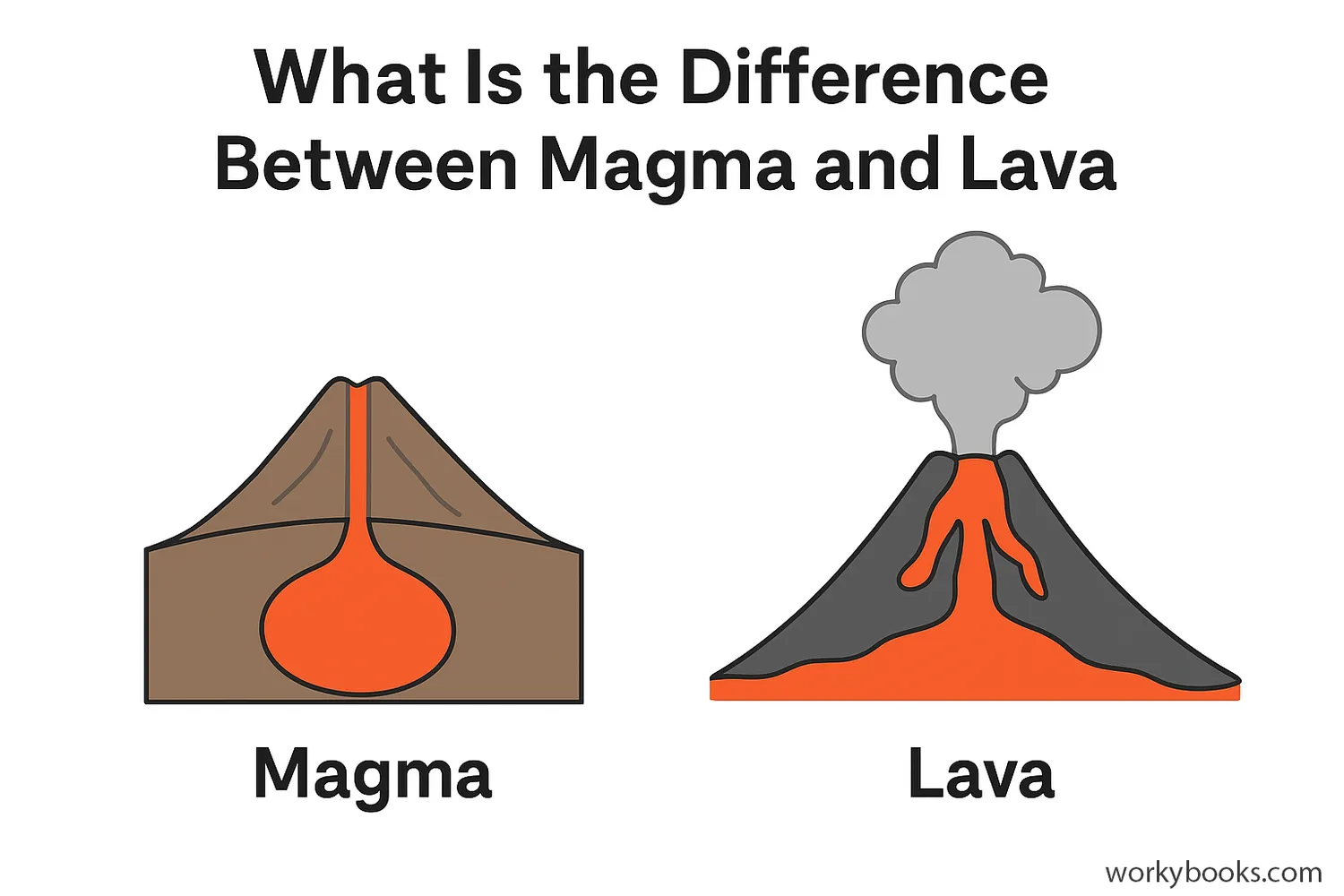
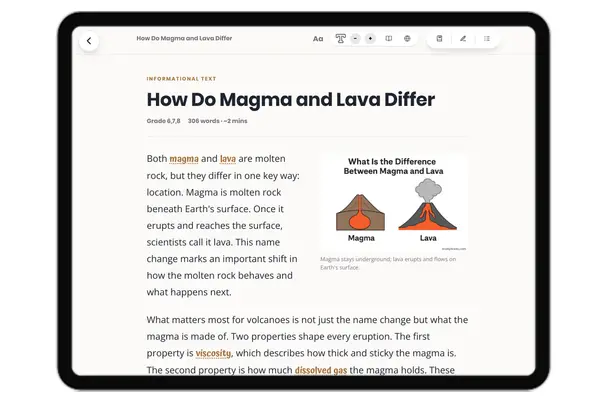
Have you ever wondered what the difference is between magma and lava? Many people use these words as if they mean the same thing. But to scientists who study volcanoes, these terms describe the same material at different stages.
Magma: The Underground Molten Rock
Magma is hot, melted rock that flows deep under the Earth's surface. It forms when rock gets so hot that it melts into a thick, flowing substance. This happens in the upper part of Earth's mantle and in the lower part of the crust.
Magma contains not only melted rock but also dissolved gases and some solid crystal pieces. These gases include water vapor, carbon dioxide, and sulfur dioxide. The temperature of magma ranges from 1,300°F to 2,400°F (700°C to 1,300°C.. That's hot enough to melt metal!
Magma moves upward through cracks in the Earth's crust because it is less dense than the solid rock around it. Think about how a beach ball rises to the surface when pushed underwater - magma rises in a similar way.
Lava: Magma That Reaches the Surface
When magma finally breaks through the Earth's surface, we call it lava. The key difference is simple: magma is underground, and lava is above ground.
Once magma becomes lava, it starts to cool and lose its gases. The gases bubble out, much like when you open a can of soda. This is why many volcanic eruptions are explosive.
Lava can flow quickly or slowly depending on its makeup. Some lava is thin and runny like honey, while other lava is thick and sticky like peanut butter. The runny type can flow for miles before cooling, but the sticky type doesn't get far before it hardens.
How Lava Changes as It Cools
As lava cools, it forms different types of rock based on how fast it solidifies. Fast-cooling lava forms a dark rock called basalt. Slow-cooling lava may form lighter-colored rocks like andesite or rhyolite.
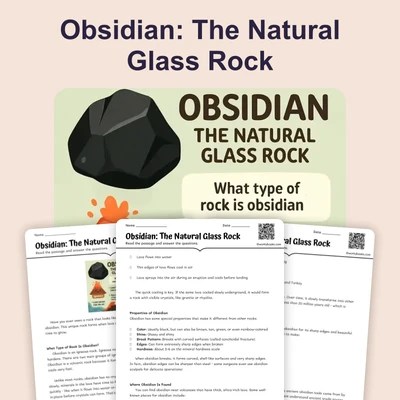
When lava cools very quickly - like when it erupts into the ocean - it can form volcanic glass called obsidian. This black, shiny rock breaks with very sharp edges.
The surface of a lava flow often cools first, creating a hard crust while the inside stays hot and keeps flowing. This can form interesting shapes like ropy "pahoehoe" lava or rough, blocky "aa" lava (pronounced "ah-ah").
Key Points to Remember:
● Magma is melted rock below Earth's surface
● Lava is magma that has erupted onto Earth's surface
● Both are extremely hot melted rock
● Lava forms different rocks depending on how it cools
● Scientists study both to understand and predict volcanic activity
Understanding the difference between magma and lava helps scientists predict volcanic eruptions. By studying the properties of magma underground, they can better understand what might happen when it becomes lava on the surface.
Fun Fact: The world's longest recorded continuous lava flow occurred in Hawaii, when Kilauea Volcano erupted for a staggering 35 years (1983-2018)! While the magma remained hidden underground throughout this period, the resulting lava flows added over 875 acres of new land to the Big Island.
Comprehension quiz (8 questions)
1. What is the main difference between magma and lava?
2. According to the passage, why does magma move upward through the Earth's crust?
3. What is the main idea of the passage?
4. Based on the passage, which statement about lava is TRUE?
5. In the passage, what does the word "dissolved" mean in the phrase "dissolved gases"?
6. The passage compares some lava to "honey" and other lava to "peanut butter." What characteristic is being described?
7. Which of these is NOT mentioned as a gas found in magma?
8. What happens when lava cools very quickly after erupting into the ocean?
Perfect for the way you teach
- Build comprehension skills
- Auto-graded quiz
- Differentiated reading
- Read together at home
- Improve fluency
- Quiet reading time
- Reading curriculum support
- Independent practice
- Track Lexile growth