Consumers and Decomposers
Interactive passage with audio narration, comprehension questions, and printable PDF.
By completing this purchase you agree to our Terms of Use and Privacy Policy. Your subscription renews automatically until you cancel. You can cancel anytime from your account settings. All sales are final and non-refundable. Digital content is available for download in your account immediately upon purchase.
What's included
Consumers and Decomposers preview and details
About this printable Consumers and Decomposers science reading passage, NGSS-aligned (Grades 5-8)
Sample passage and quiz from Consumers and Decomposers
Reading passage and comprehension quiz preview
Consumers and Decomposers
Ecosystems depend on complex interactions between living things to move energy and matter. In any forest, grassland, or pond, dead plants and animals do not simply pile up. Instead, a system of organisms—including consumers and decomposers—rapidly breaks down this material and keeps nutrients cycling. This cycle is essential for the health and stability of the entire ecosystem.
Consumers: Types and Functions
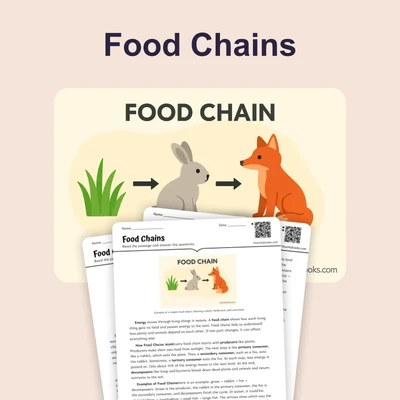
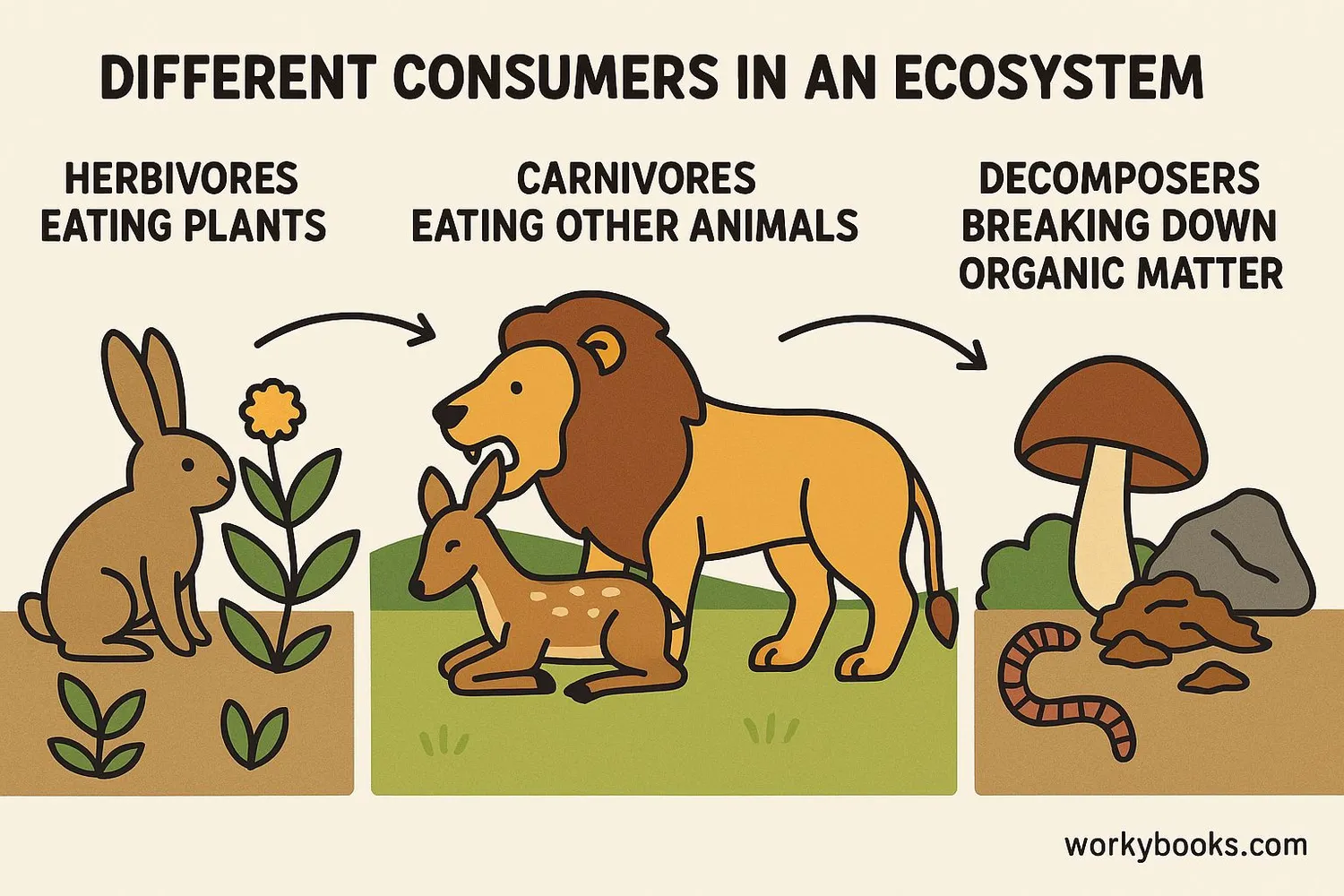
Consumers, also called heterotrophs, are organisms that cannot make their own food. Instead, they obtain energy by eating other organisms. There are several types of consumers. Herbivores eat only plants; examples include rabbits and deer. Carnivores eat only animals, such as wolves or hawks. Omnivores, like bears and humans, eat both plants and animals. Scavengers, such as vultures and hyenas, feed on dead animals. Each type of consumer plays a role in transferring energy through the food web. Scientists have studied food webs and found that, on average, only about 10% of energy is transferred from one level to the next, making the roles of consumers and decomposers even more critical for energy efficiency.
Decomposers and Detritivores: Recycling Matter
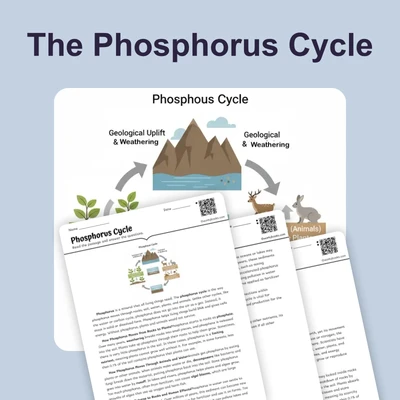
When plants and animals die, decomposers and detritivores begin their work. Decomposers—including bacteria and fungi—break down dead organic matter into simpler substances. Detritivores, like earthworms and millipedes, consume bits of dead material, further speeding up decomposition. This process returns essential nutrients such as nitrogen and phosphorus back to the soil, where they can be absorbed by plants. Without decomposers, nutrients would remain locked in dead matter, and new plant growth would eventually stop. Research has shown that in forests where decomposers are reduced, plant growth rates can drop by over 30%.
Interconnected Systems and Real-World Impact
Consumers and decomposers are connected in a continuous loop. When a carnivore dies, decomposers break down its body, and the nutrients help new plants grow. These plants then feed herbivores, and the cycle continues. Human activities, such as using pesticides or removing dead wood, can disrupt these cycles and threaten ecosystem balance. For example, if decomposer populations decline, soil fertility drops and food webs can collapse. Understanding these relationships helps scientists develop sustainable practices to protect our environment.
In summary, consumers and decomposers work together to keep ecosystems healthy. Consumers move energy through the food web, while decomposers recycle nutrients for new life. This ongoing exchange supports the survival of all organisms and connects to the greater principle of matter cycling in the biosphere.
Interesting Fact:
Some fungi can break down tough substances like plastic and oil, showing potential for cleaning up pollution as well as recycling nutrients in nature.
Comprehension quiz (10 questions)
1. What is the main role of decomposers in an ecosystem?
2. Which of the following is an example of a scavenger?
3. According to the passage, how much energy is typically transferred from one level to the next in a food web?
4. What is a detritivore?
5. What might happen if there were no decomposers in an ecosystem?
6. What does the term 'heterotroph' mean as used in the passage?
7. How are decomposers and detritivores similar?
8. Why is the work of decomposers important for plant growth?
9. True or False: Omnivores eat only plants.
10. True or False: Fungi are a type of decomposer.
Perfect for the way you teach
- Build comprehension skills
- Auto-graded quiz
- Differentiated reading
- Read together at home
- Improve fluency
- Quiet reading time
- Reading curriculum support
- Independent practice
- Track Lexile growth