Nitrogen Cycle
Interactive passage with audio narration, comprehension questions, and printable PDF.
What's included
Nitrogen Cycle preview and details
About this printable Nitrogen Cycle science reading passage, NGSS-aligned (Grades 5-8)
Sample passage and quiz from Nitrogen Cycle
Reading passage and comprehension quiz preview
The Nitrogen Cycle
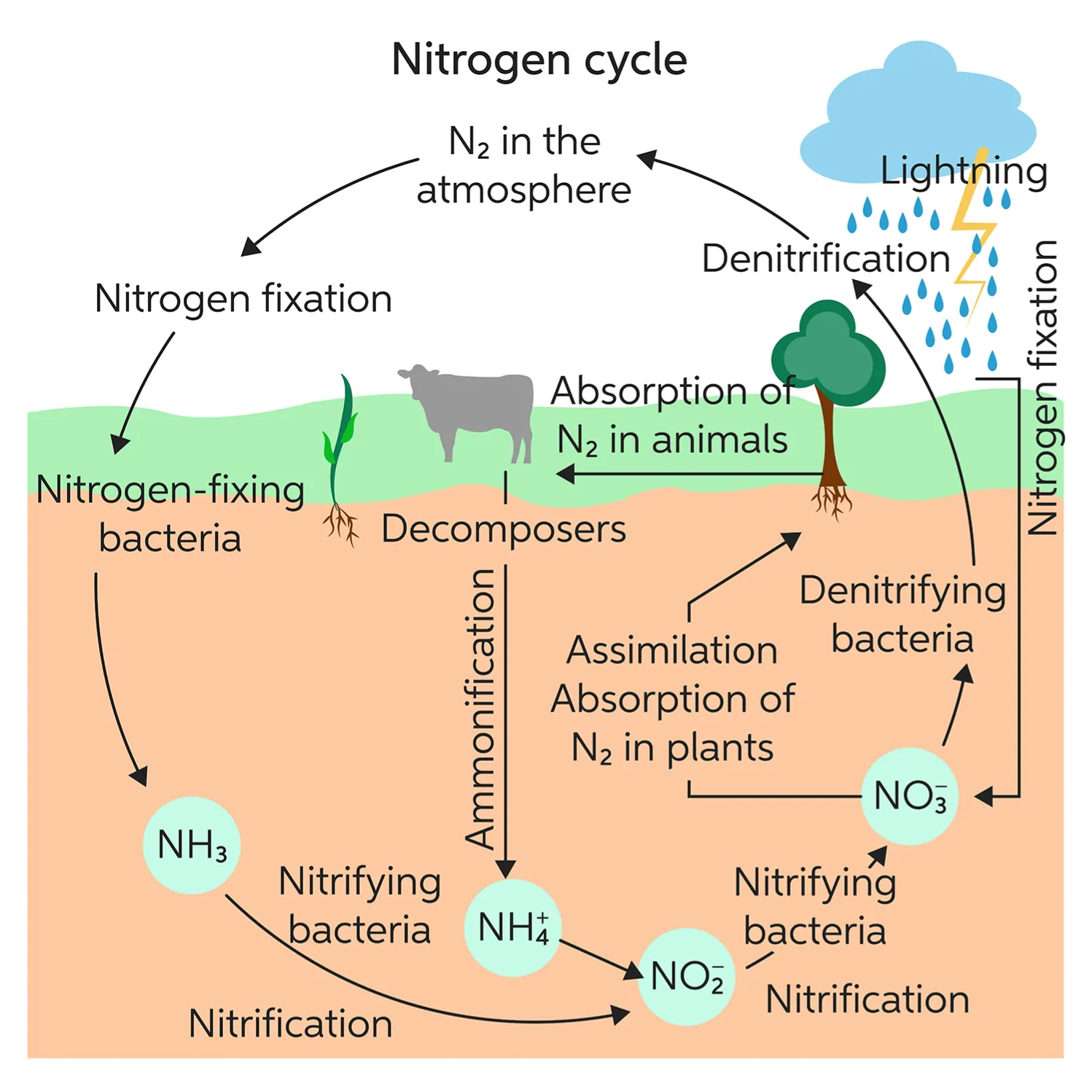
Nitrogen is a vital element that makes up about 78% of Earth's atmosphere, yet most organisms cannot use it directly from the air. The nitrogen cycle is a complex system that transforms nitrogen into forms usable by living things and returns it to the atmosphere. This cycle connects the atmosphere, soil, plants, animals, and bacteria, playing a key role in supporting life and maintaining healthy ecosystems.
How Nitrogen Moves Through Ecosystems
Although nitrogen gas (N2) is abundant in the air, most plants and animals cannot use it in this form. The process starts with nitrogen fixation, where special bacteria in the soil or in the roots of legume plants convert nitrogen gas into ammonia (NH3). This step makes nitrogen available to other living things. Next, other bacteria perform nitrification, turning ammonia into nitrates (NO3-), which plants can absorb through their roots. This process is essential because plants need nitrogen to build proteins and DNA, and animals obtain nitrogen by eating plants or other animals.
Connecting Processes: Assimilation, Decomposition, and Denitrification
Once plants absorb nitrates, they use them to grow and develop. When animals eat these plants, they assimilate nitrogen into their own bodies. After plants and animals die, decomposers like bacteria and fungi break down their remains, releasing nitrogen back into the soil as ammonia. Some bacteria carry out denitrification, converting nitrates back into nitrogen gas and releasing it into the atmosphere. This completes the cycle and maintains the balance of nitrogen in ecosystems.
Human Impacts and the Importance of Nitrogen Balance
Human activities, such as using synthetic fertilizers in agriculture, add extra nitrogen to the soil. While this can increase crop growth, too much nitrogen can wash into lakes and rivers, causing eutrophication. Eutrophication leads to rapid algal growth, or algal blooms, which block sunlight and reduce oxygen in water, harming aquatic life. Because nitrogen is often a limiting nutrient, even small changes can have big effects on ecosystems. Scientists study the nitrogen cycle using experiments and measurements of nitrogen compounds in air, soil, and water, helping us understand how natural and human factors affect this crucial process.
In summary, the nitrogen cycle is an example of how matter cycles through living and nonliving parts of the environment, supporting life and connecting different Earth systems. Understanding this cycle helps people make better decisions about land use, farming, and protecting ecosystems.
Interesting Fact: Some lightning strikes can naturally fix nitrogen gas in the atmosphere, turning it into compounds that plants can use!
Comprehension quiz (10 questions)
1. What percentage of Earth's atmosphere is made up of nitrogen gas?
2. Why can't most plants and animals use nitrogen gas (N2) directly from the air?
3. Which process turns nitrogen gas into ammonia in the soil?
4. What is the role of decomposers in the nitrogen cycle?
5. In the passage, what does the word 'limiting nutrient' mean?
6. What is eutrophication, as described in the passage?
7. How might using too much fertilizer affect a lake ecosystem?
8. Which of the following happens LAST in the nitrogen cycle?
9. True or False: Animals can absorb nitrates directly from the soil.
10. True or False: Lightning can help change nitrogen in the air into a form plants can use.
Perfect for the way you teach
- Build comprehension skills
- Auto-graded quiz
- Differentiated reading
- Read together at home
- Improve fluency
- Quiet reading time
- Reading curriculum support
- Independent practice
- Track Lexile growth