How Producers Make Food
Interactive passage with audio narration, comprehension questions, and printable PDF.
By completing this purchase you agree to our Terms of Use and Privacy Policy. Your subscription renews automatically until you cancel. You can cancel anytime from your account settings. All sales are final and non-refundable. Digital content is available for download in your account immediately upon purchase.
What's included
How Producers Make Food preview and details
About this printable How Producers Make Food science reading passage, NGSS-aligned (Grades 5-8)
Sample passage and quiz from How Producers Make Food
Reading passage and comprehension quiz preview
How Producers Make Food
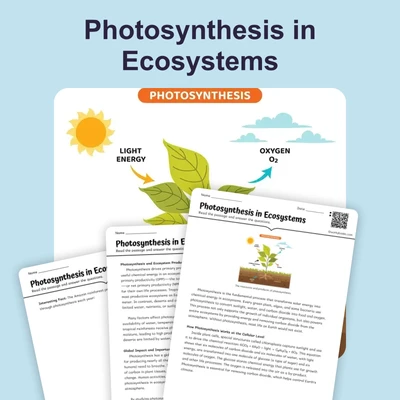
Photosynthesis is the fundamental process that transforms solar energy into chemical energy in ecosystems. Without producers, food webs would collapse because no other organisms can create energy-rich food from nonliving sources. Scientists know that autotrophs are the foundation of every ecosystem, supporting all other living things—known as consumers—by producing food through specific chemical processes. This passage explores how producers drive the flow of energy in nature and why their role is so essential.
How Producers Make Food: Photosynthesis and Chemosynthesis
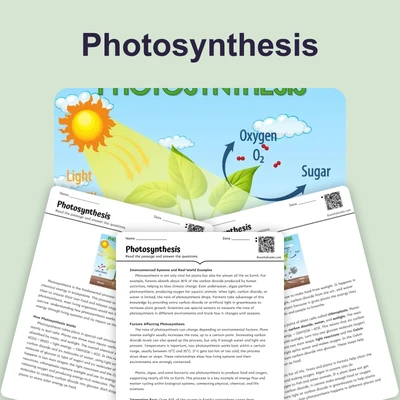
The most common type of producer is a green plant on land, but aquatic algae and phytoplankton also play major roles in oceans and lakes. All these organisms use photosynthesis to convert sunlight, water, and carbon dioxide into glucose, a simple sugar that stores energy. In photosynthesis, chlorophyll—a green pigment in plant cells—captures sunlight. The energy from sunlight powers a series of chemical reactions that combine water (H2O) and carbon dioxide (CO2) to create glucose (C6H12O6) and oxygen (O2). About 90% of the oxygen in Earth's atmosphere comes from photosynthetic organisms. In places where sunlight cannot reach, such as deep ocean vents, some bacteria perform chemosynthesis, using chemical energy from minerals instead of sunlight to make food.
Producers as the Entry Point of Energy
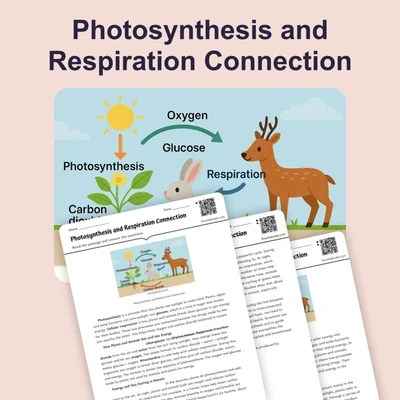
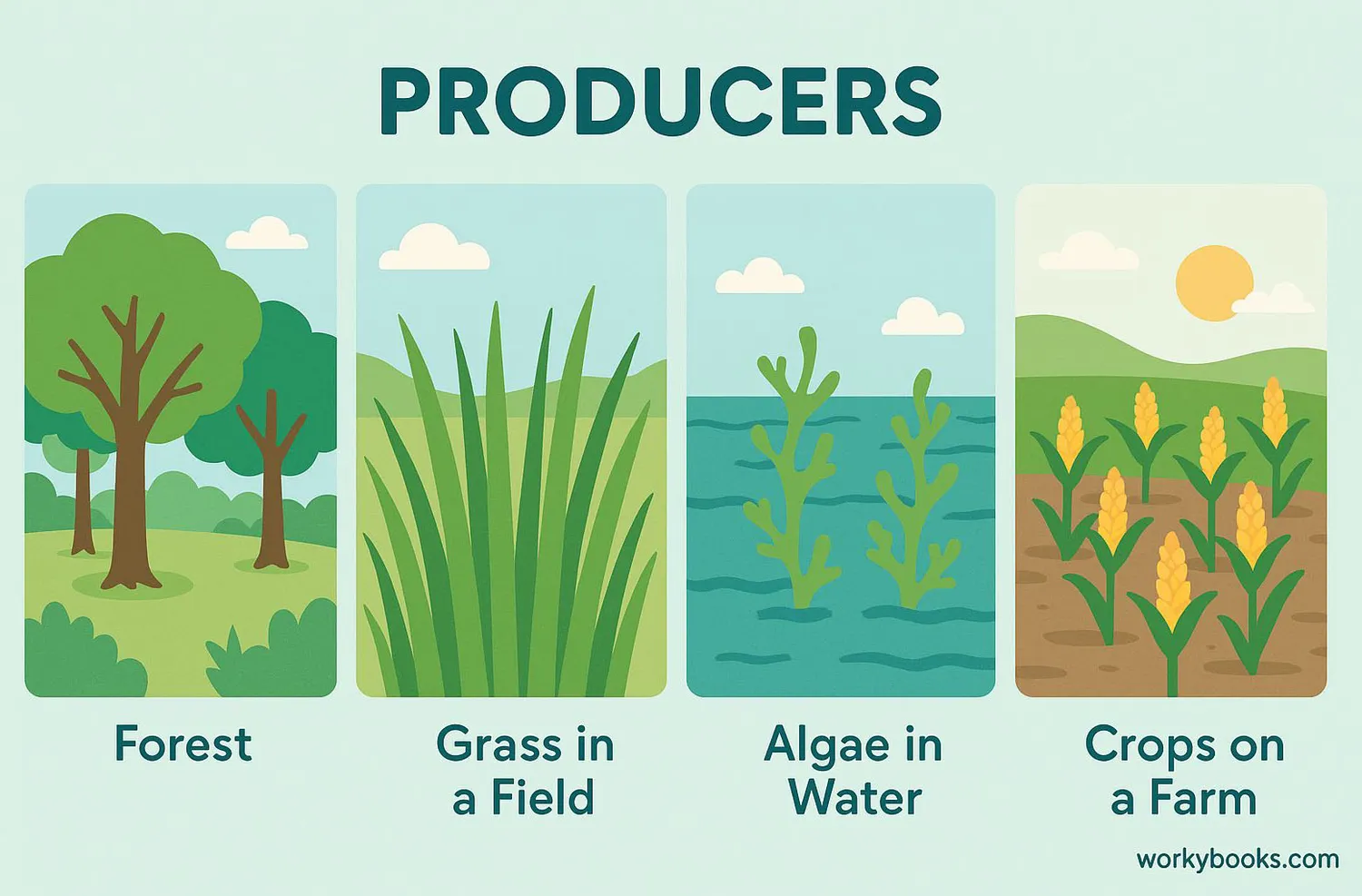
Producers are the entry point for energy into all ecosystems. Every food chain starts with a producer. Grass in a meadow, kelp in a sea forest, or chemosynthetic bacteria at a hydrothermal vent all provide the primary food source for herbivores or filter feeders. The energy stored in glucose created by producers transfers to consumers when they eat plants or algae. This energy then moves up the food chain to predators and decomposers. Scientific studies have shown that if producers disappear, entire ecosystems can collapse within months because no new energy enters the system. For example, a sharp decline in phytoplankton populations in the ocean can lead to massive drops in fish and marine mammal numbers.
Broader Impacts and Interconnected Systems
The importance of producers extends beyond just food. They help regulate the balance of gases in Earth's atmosphere by absorbing carbon dioxide and releasing oxygen. Human societies depend on producers for crops, oxygen, and even medicine. When humans damage producer populations—by deforestation, pollution, or climate change—they threaten the stability of entire ecosystems. Scientists use satellite data and experiments to measure rates of photosynthesis and track ecosystem health. This research helps us understand the global impacts of producer loss and guide conservation efforts.
In summary, producers are the foundation of every ecosystem because they convert nonliving energy into food that all other organisms need. Their activities drive energy flow, support life, and maintain Earth's environmental balance. Protecting producers is essential for the survival of every species, including our own.
Interesting Fact: One single tree can produce enough oxygen each year for up to four people to breathe!
Comprehension quiz (10 questions)
1. What is the main role of producers in an ecosystem?
2. Which process do most producers use to make food?
3. What is glucose?
4. What might happen if all producers in an ecosystem disappeared?
5. Which organisms perform chemosynthesis to make food?
6. What is the function of chlorophyll in photosynthesis?
7. In the passage, what is one real-world impact of losing producer populations?
8. Why do scientists use satellite data to study producers?
9. Photosynthesis is the process that converts sunlight into chemical energy. (True/False)
10. Consumers are organisms that make their own food. (True/False)
Perfect for the way you teach
- Build comprehension skills
- Auto-graded quiz
- Differentiated reading
- Read together at home
- Improve fluency
- Quiet reading time
- Reading curriculum support
- Independent practice
- Track Lexile growth