How Animals Use Their Senses
Interactive passage with audio narration, comprehension questions, and printable PDF.
By completing this purchase you agree to our Terms of Use and Privacy Policy. Your subscription renews automatically until you cancel. You can cancel anytime from your account settings. All sales are final and non-refundable. Digital content is available for download in your account immediately upon purchase.
What's included
Part of this bundle

How Animals Use Their Senses preview and details
About this printable How Animals Use Their Senses science reading passage, NGSS-aligned (Grades 3-5)
Sample passage and quiz from How Animals Use Their Senses
Reading passage and comprehension quiz preview
How Animals Use Their Senses
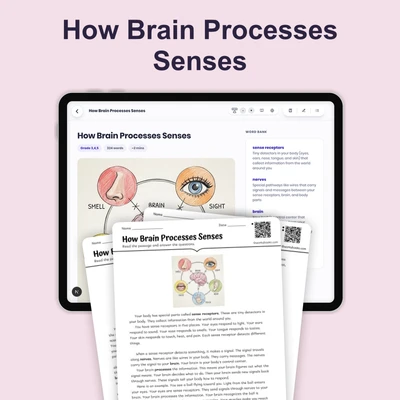
Animals have five main senses: sight, hearing, smell, taste, and touch. Senses are the ways animals collect information about the world around them. This information helps animals find food, avoid danger, and communicate with each other.
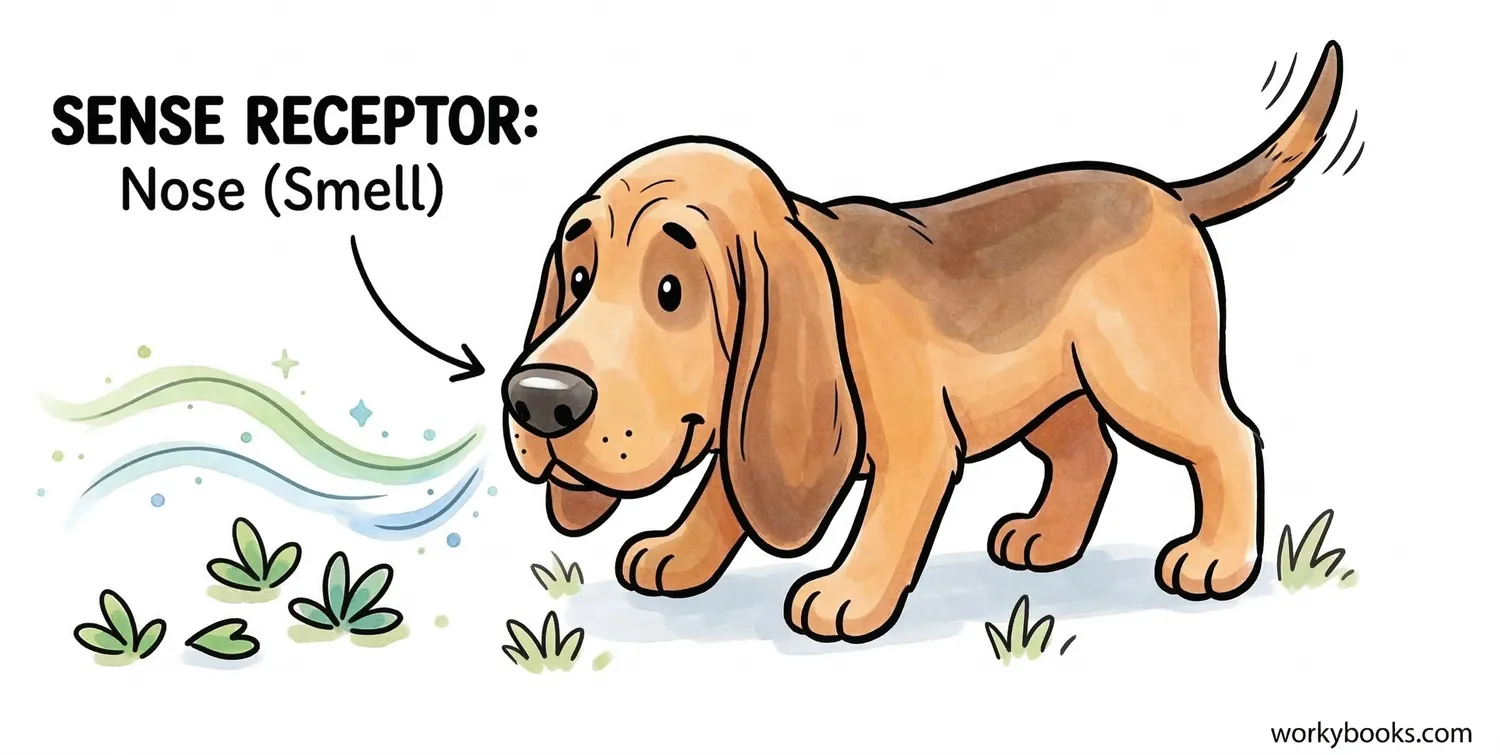
Different animals rely on different senses depending on where they live and what they need to survive. A dog has a powerful sense of smell that is much stronger than a human's sense of smell. Dogs can smell things that are far away or hidden underground. An eagle has incredibly sharp vision that allows it to spot a small mouse from high in the sky. A bat uses its excellent hearing to find insects in complete darkness. These animals have special sense receptors—body parts that detect information from the environment.
Each type of sense receptor is specialized for a particular kind of information. Eyes detect light and color. Ears detect sound waves. The nose detects chemicals in the air. The tongue detects chemicals in food. Skin detects pressure, temperature, and pain. When a sense receptor detects something, it sends a signal to the animal's brain. The brain then decides how the animal should respond. This is called the sense-process-respond model.
Think of sense receptors like different tools in a toolbox. Just as you use a hammer for nails and a screwdriver for screws, animals use different senses for different jobs. A bloodhound uses its nose to track people, while an owl uses its hearing to hunt at night.
Interesting Fact: A dog's nose has about 300 million smell receptors, while humans only have about 6 million. This is why dogs can be trained to find missing people or detect dangerous substances!
Comprehension quiz (8 questions)
1. What are the five main senses?
2. Which animal uses smell as its strongest sense?
3. What do sense receptors do?
4. Why does an eagle have sharp vision?
5. What happens after a sense receptor detects something?
6. How do bats find insects at night?
7. All animals rely on the same senses equally.
8. What does 'specialized' mean in this passage?
Perfect for the way you teach
- Build comprehension skills
- Auto-graded quiz
- Differentiated reading
- Read together at home
- Improve fluency
- Quiet reading time
- Reading curriculum support
- Independent practice
- Track Lexile growth