This learning resource is available in interactive and printable formats. The interactive worksheet can be played online and assigned to students. The Printable PDF version can be downloaded and printed for completion by hand.
This Grade 4 science reading passage introduces students to the nervous system as the body's communication network aligned with NGSS standard 4-LS1-2. Students learn how the brain, spinal cord, and nerves work together to send and receive messages throughout the body. The passage uses a relatable phone system analogy to help students understand how information travels from the brain to all parts of the body and back. Students explore how the nervous system helps the body sense and respond to the environment. This audio-integrated educational resource includes a simplified differentiated version, Spanish translations, glossary of key terms, multiple-choice comprehension questions, writing activities, and graphic organizers. The passage builds foundational understanding of LS1.A (Structure and Function) and LS1.D (Information Processing) disciplinary core ideas, preparing students for hands-on investigations about how organisms process information and respond to their environment.
CONTENT PREVIEW
Expand content preview
Your body’s fast communication network.
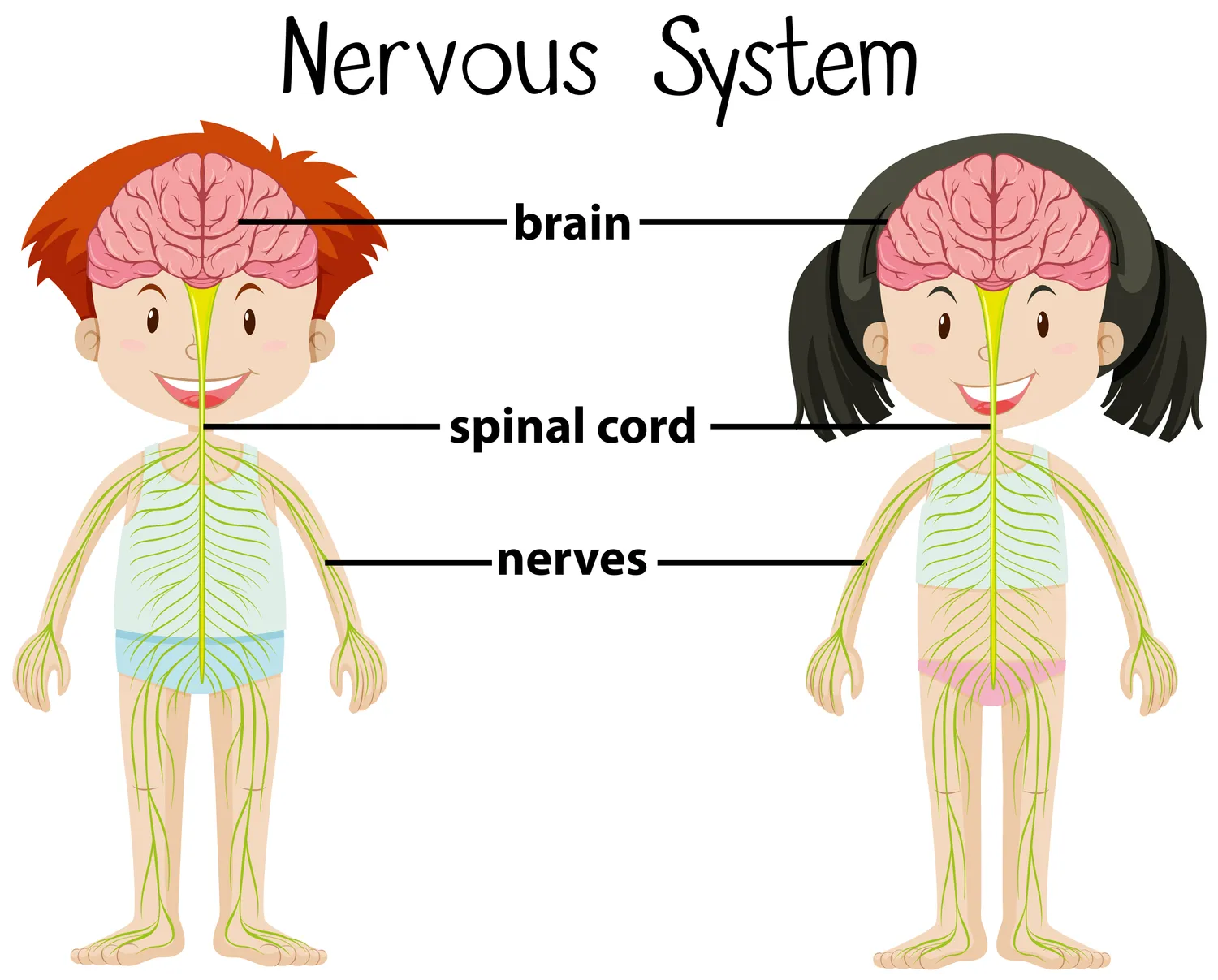
The nervous system is your body's communication network. A communication network is a system that sends and receives messages. Your nervous system helps all parts of your body work together by sending messages back and forth.
The nervous system has three main parts. The brain is the control center that makes decisions and sends out commands. The spinal cord is a thick bundle of nerves that runs down your back and connects your brain to the rest of your body. Nerves are thin fibers that reach every part of your body, like wires carrying messages.
Think of the nervous system like a phone system in a large building. The brain is like the main office where important decisions are made. The spinal cord is like the main cable that connects everything. The nerves are like phone wires reaching every room. When you touch something hot, nerves in your finger send a message through the spinal cord to your brain. Your brain quickly sends a message back telling your hand to move away.
This system works very fast. Messages can travel through your nervous system in less than a second. That is why you can pull your hand away from something hot before you even think about it. Your nervous system keeps you safe by helping your body sense what is happening and respond quickly.
Interesting Fact: Messages in your nervous system can travel as fast as 268 miles per hour—faster than a race car!
What is the nervous system?
The body's communication networkA system that pumps bloodThe bones in your bodyA system that digests food
What does the brain do?
Pumps blood through the bodyMakes decisions and sends commandsDigests food for energyHelps you breathe air
What connects the brain to the body?
Blood vesselsMusclesThe spinal cordBones
Why can you pull your hand away quickly?
Your muscles are very strongMessages travel fast through your nervous systemYour bones move quicklyYour heart pumps blood fast
How does the passage compare nerves?
To roads in a cityTo pipes carrying waterTo wires carrying messagesTo branches on a tree
What helps keep your body safe?
The digestive systemThe skeletal systemThe nervous systemThe muscular system
The nervous system sends messages in both directions.
TrueFalse
What is a communication network?
A system that moves your bonesA system that sends and receives messagesA system that makes energyA system that stores food
Perfect For:
👩🏫 Teachers
• Reading comprehension practice
• Auto-graded assessments
• Literacy skill development
👨👩👧👦 Parents
• Reading practice at home
• Comprehension improvement
• Educational reading time
🏠 Homeschoolers
• Reading curriculum support
• Independent reading practice
• Progress monitoring
Reading Features:
📖
Reading Passage
Engaging fiction or nonfiction text
❓
Comprehension Quiz
Auto-graded questions
📊
Instant Feedback
Immediate results and scoring
📄
Printable Version
Download for offline reading
🔊
Read Aloud
Voice-over with word highlighting
Reviews & Ratings
No reviews yet. Be the first to share your experience!
Related Content
What Are Bones Made Of
This engaging 250-word reading passage introduces Grade 4 students to the structure and function of bones, aligned with ...
NGSS 4-LS1-1LS1.A
How Bones Protect Organs
This engaging 250-word reading passage helps Grade 4 students understand how bones protect organs, aligned with NGSS sta...
NGSS 4-LS1-1LS1.A
How Joints Connect Bones
This 250-word reading passage teaches fourth-grade students about joints and their role in the human skeletal system. Al...
NGSS 4-LS1-1LS1.A
Layers of the Skin
This engaging 250-word reading passage introduces fourth-grade students to the three layers of skin and their functions....
NGSS 4-LS1-1LS1.A
Parts of Plant Stems
This engaging 250-word reading passage introduces fourth-grade students to the internal structure and function of plant ...
NGSS 4-LS1-1LS1.A
Parts of a Flower
This comprehensive 250-word reading passage introduces fourth-grade students to the essential parts of a flower and thei...
NGSS 4-LS1-1LS1.A
How Leaves Make Food
This engaging Grade 4 science reading passage explains how leaves make food through photosynthesis. Students discover th...
NGSS 4-LS1-1LS1.A
How Animal Hearts Work
This 250-word audio-integrated reading passage introduces fourth-grade students to the essential function of the heart a...
NGSS 4-LS1-1LS1.A
Animal Skeleton Structure
This 250-word reading passage introduces fourth grade students to animal skeleton structure, aligned with NGSS 4-LS1-1 a...
NGSS 4-LS1-1LS1.A
How Animal Lungs Work
This 250-word reading passage introduces fourth-grade students to how animal lungs work, aligned with NGSS standard 4-LS...
NGSS 4-LS1-1LS1.A
Parts of a Leaf
This 250-word reading passage introduces Grade 4 students to the internal structure of leaves, aligned with NGSS standar...
NGSS 4-LS1-1LS1.A
Stamen and Pistil
This 250-word reading passage introduces fourth-grade students to the stamen and pistil, the key reproductive structures...
NGSS 4-LS1-1LS1.A
How Internal Structures Help Plants Survive
This 250-word informational reading passage is designed for Grade 4 students and aligns with NGSS standard 4-LS1-1 (LS1....
NGSS 4-LS1-1LS1.A
How Stems Support Plants
This engaging 250-word reading passage helps Grade 4 students understand how stems support plants and contribute to thei...
NGSS 4-LS1-1LS1.A
How Plants Reproduce
This 250-word reading passage introduces fourth-grade students to plant reproduction aligned with NGSS 4-LS1-1 and the D...
NGSS 4-LS1-1LS1.A
How External Structures Help Plants Survive
This 250-word reading passage introduces fourth-grade students to how external plant structures help plants survive, gro...
NGSS 4-LS1-1LS1.A
How Internal Structures Keep Animals Alive
This engaging 250-word reading passage introduces fourth-grade students to the essential internal structures that keep a...
NGSS 4-LS1-1LS1.A
Animal External Structures
This engaging 250-word reading passage introduces fourth-grade students to the concept of animal external structures ali...
NGSS 4-LS1-1LS1.A
What Are Exoskeletons
This engaging 250-word reading passage introduces fourth-grade students to the concept of exoskeletons, aligning with NG...
NGSS 4-LS1-1LS1.A
How Skin Protects Animals
This engaging 250-word reading passage introduces fourth-grade students to the protective functions of skin, the largest...