How Our Eyes and Ears Work — Reading Comprehension
Rate this
Premium Resource
Present
Present in classroom. No work saved
Assign
Classroom with student accounts, Track progress
Quick Play
No student accounts, assign with a link
Grades
3
4
5
Standards
NGSS 4-LS1-2
DCI LS1.D
PRINT+DIGITAL RESOURCE
This learning resource is available in interactive and printable formats. The interactive worksheet can be played online and assigned to students. The Printable PDF version can be downloaded and printed for completion by hand.
This engaging 250-word reading passage introduces fourth-grade students to the specialized functions of sense organs, specifically eyes and ears, aligned with NGSS 4-LS1-2 and DCI LS1.D. Students discover how eyes are specially built to detect light and send messages to the brain, which processes these signals into the images we see. The passage also explains how ears detect sound vibrations in the air and transmit messages to the brain, which interprets them as sounds. Written at a Grade 4 reading level, this audio-integrated passage uses simple sentences and everyday vocabulary to help students understand that different sense receptors are specialized for particular kinds of information. The content focuses on observable phenomena—eyes see, ears hear, and both communicate with the brain—building foundational understanding without overwhelming students with complex details. This passage prepares students for hands-on investigations and classroom discussions about how our senses help us gather information about the world around us.
CONTENT PREVIEW
Expand content preview
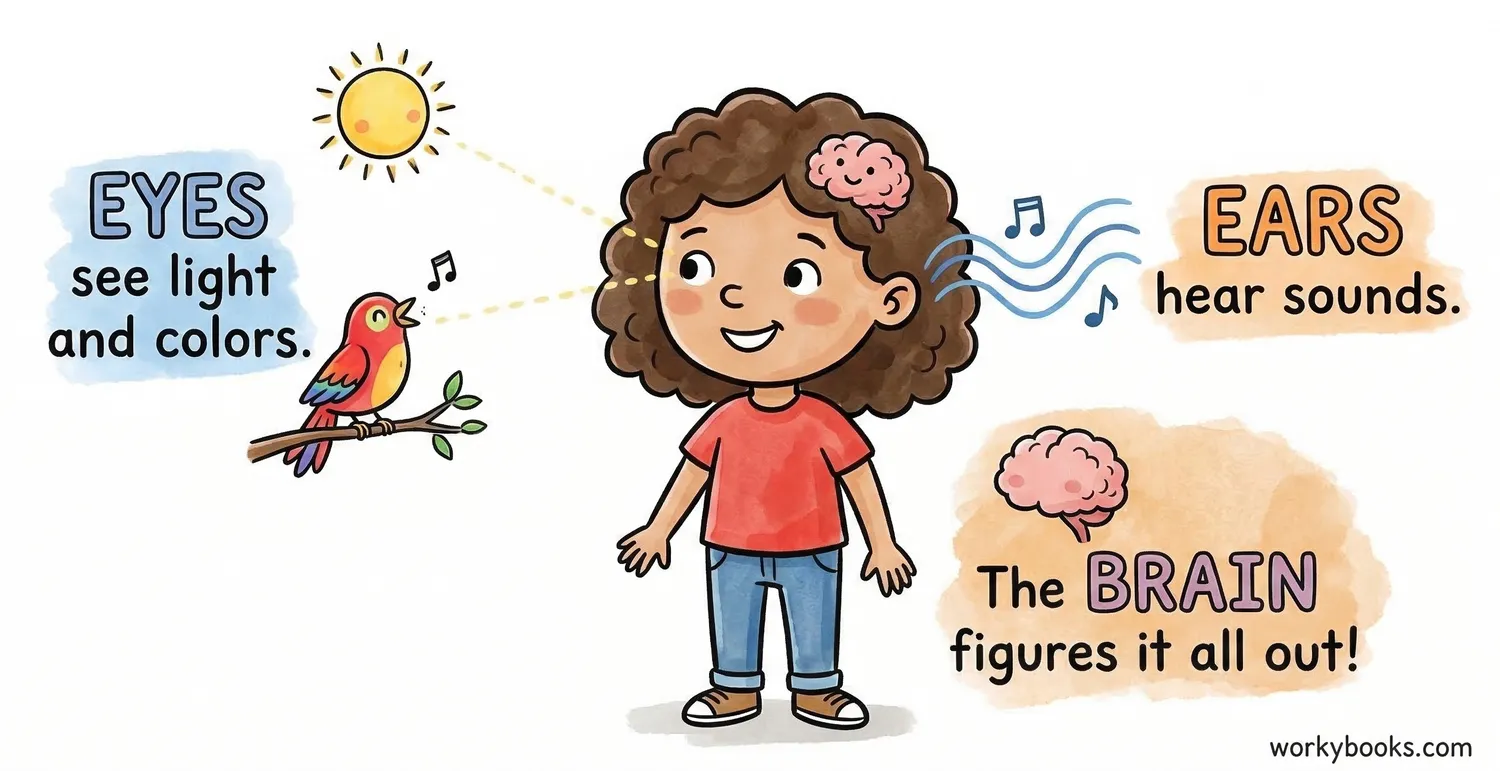
Our eyes see and ears hear, while the brain understands everything.
Your body has special organs called sense organs that collect information about the world around you. Sense organs are body parts designed to gather one specific type of information and send it to your brain. Two important sense organs are your eyes and ears. They help you see and hear everything happening around you.
Your eyes are built to detect light. Light is a form of energy that bounces off objects and enters your eyes. Inside each eye are special parts called receptors that can sense light. Receptors are like tiny messengers that notice when light hits them. When light enters your eye, these receptors send messages through nerves to your brain. Your brain reads these messages and turns them into the pictures you see. This is why you can see colors, shapes, and movement.
Your ears work in a similar way, but they detect sound instead of light. Sounds are made when objects vibrate, or move back and forth quickly. These vibrations travel through the air as sound waves. Sound waves are invisible ripples of energy that move through the air, like ripples on a pond. When sound waves enter your ear, special receptors inside detect them and send messages to your brain. Your brain turns these messages into all the sounds you hear, from music to voices to barking dogs.
Both your eyes and ears are specialized, which means each one is built to do one specific job very well. Your eyes only detect light, and your ears only detect sound. Neither organ can do the other's job. This specialization helps your brain receive clear, organized information about your surroundings.
Interesting Fact: Your eyes can detect about 10 million different colors! The receptors in your eyes are so sensitive that they can even see a candle flame from almost two miles away on a dark night.
What do sense organs do?
Collect information and send to brainMake your body move aroundHelp you eat and digest foodKeep your heart beating steadily
What type of energy do eyes detect?
Sound energy from vibrationsLight energy bouncing off objectsHeat energy from the sunElectrical energy from nerves
What are receptors in sense organs?
Large muscles that move organsBones that protect the organsTiny messengers that notice informationBlood vessels carrying oxygen
Why can't ears detect light?
Ears are too small insideLight doesn't enter the earEars are specialized for sound onlyThe brain blocks light messages
How do sound waves travel?
Through air as invisible ripplesThrough solid walls onlyAs visible colored lightsThrough water in your body
What happens after receptors detect information?
The information disappears completelyThey send messages to brainThey store it for laterThey send it to muscles
Eyes and ears both send to brain.
TrueFalse
What does specialized mean?
Very large in sizeBuilt for one specific jobMade of many partsLocated in the head
Perfect For:
👩🏫 Teachers
• Reading comprehension practice
• Auto-graded assessments
• Literacy skill development
👨👩👧👦 Parents
• Reading practice at home
• Comprehension improvement
• Educational reading time
🏠 Homeschoolers
• Reading curriculum support
• Independent reading practice
• Progress monitoring
Reading Features:
📖
Reading Passage
Engaging fiction or nonfiction text
❓
Comprehension Quiz
Auto-graded questions
📊
Instant Feedback
Immediate results and scoring
📄
Printable Version
Download for offline reading
🔊
Read Aloud
Voice-over with word highlighting
Reviews & Ratings
No reviews yet. Be the first to share your experience!
Related Content
What Is Spinal Cord
This engaging Grade 4 science reading passage introduces students to the spinal cord and its critical role in the human ...
NGSS 4-LS1-2LS1.ALS1.D
How We Smell, Taste, and Feel
This audio-integrated reading passage introduces fourth-grade students to the fundamental concept of how sensory organs ...
NGSS 4-LS1-2LS1.D
How the Body Responds
This 250-word reading passage introduces fourth-grade students to how the body responds to sensory information, aligned ...
NGSS 4-LS1-2LS1.D
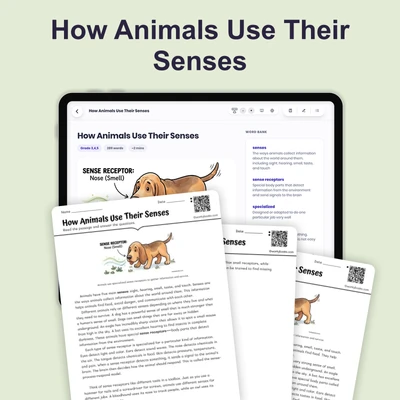
How Animals Use Their Senses
This Grade 4 science reading passage introduces students to how animals use their senses to receive information about th...
NGSS 4-LS1-2
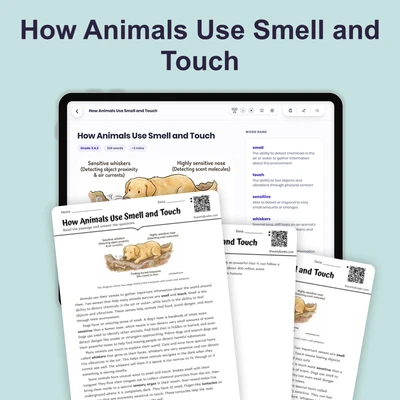
How Animals Use Smell and Touch
This engaging 250-word reading passage introduces fourth-grade students to how animals use smell and touch as critical s...
NGSS 4-LS1-2LS1.D
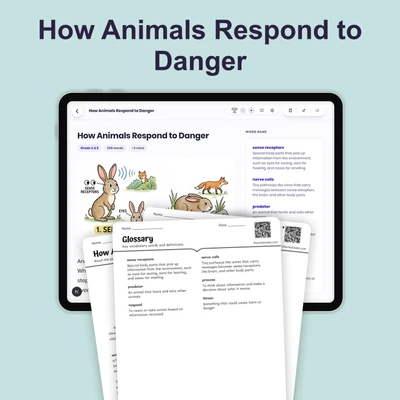
How Animals Respond to Danger
This engaging 250-word reading passage introduces fourth-grade students to the sense-process-respond chain in animals, a...
NGSS 4-LS1-2LS1.D
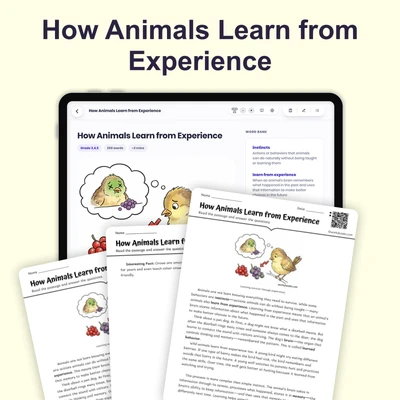
How Animals Learn from Experience
This engaging 250-word reading passage introduces fourth-grade students to the concept of animal learning and behavioral...
NGSS 4-LS1-2LS1.D
How Brain Processes Senses
This 250-word reading passage introduces fourth-grade students to the sense-process-respond model aligned with NGSS stan...
NGSS 4-LS1-2
What Is Nervous System
This Grade 4 science reading passage introduces students to the nervous system as the body's communication network align...
NGSS 4-LS1-2LS1.ALS1.D
Brain as Control Center
This engaging 250-word reading passage teaches fourth-grade students about the brain as the body's control center, align...
NGSS 4-LS1-2LS1.ALS1.D
How Nerves Carry Messages
This engaging 250-word reading passage introduces fourth-grade students to the nervous system and how nerves carry messa...
NGSS 4-LS1-2LS1.ALS1.D
How We Store Memories
How We Store Memories is an engaging Grade 4 science reading passage aligned with NGSS standard 4-LS1-2 (LS1.D). This 25...