Industrial Revolution Elementary Worksheets
Teaching the Industrial Revolution to elementary students opens a window into how our modern world came to be. Imagine a world with no cars, no electricity, no phones, and no stores filled with clothes and toys. If your family needed a shirt, someone had to spin the thread, weave the cloth, and sew it by hand. Everything took a long time because everything was made by hand.
Then something amazing happened. People invented machines that could do work faster than human hands ever could. Factories came up and cities grew. Trains roared across the land. Life changed forever. This was the Industrial Revolution—and it shaped the world your students live in today.
This comprehensive Industrial Revolution elementary guide gives teachers everything needed to bring this transformative era to life for young learners in grades 3-5.
What was the Industrial Revolution?
The Industrial Revolution was a time when people went from making things by hand to making things with machines. Before the revolution, families worked at home creating goods slowly, one at a time. After the revolution, workers ran machines in big factories that made hundreds of items in a single day.
It’s called a “revolution” because it changed almost everything about how people lived and worked. But unlike a war, this revolution happened through inventions and new ideas.
📚 Industrial Revolution Elementary resources: [Handmade to Machine-Made: The Rise of Industry] – Help students understand this fundamental shift with our reading passage exploring how production methods transformed.
When did the Industrial Revolution start?
The Industrial Revolution began in Britain around 1760. Britain had lots of coal and iron, rivers for power, and people with big ideas. The revolution spread to America in the early 1800s when inventors brought British ideas across the ocean.
The biggest changes happened over about 80 years, from 1760 to 1840. But the revolution kept going even longer, bringing new inventions like electric lights, telephones, and automobiles.
Key Dates for Kids:
- 1760s: Revolution begins in Britain
- 1790s: First American factories open
- 1800s: Steam trains change travel
- 1840s: Factories spread across America
Life Before Factories
Before the Industrial Revolution, most families lived on farms. They grew their own food, raised animals, and made many things they needed at home. Villages were small, and most people never traveled far from where they were born.
Work happened at home in what we call “cottage industry.” The whole family helped. Children might card wool while parents spun thread and wove cloth. A single piece of fabric could take weeks to make.
📚 Industrial Revolution Elementary resources: [Cottage Industry vs. Factories] – This reading passage helps students compare how goods were made at home versus in factories.
How Things Were Made
Making cloth shows how slow handwork was. First, someone had to clean the cotton or wool. Then they used a spinning wheel to twist fibers into thread—one thread at a time. Next, a weaver sat at a loom, passing thread back and forth to create fabric. Finally, someone cut and sewed the cloth into clothing.
A single shirt might take many hours to make. Only wealthy people could afford lots of clothes. Most children owned just one or two outfits.
Blacksmiths made tools by heating metal and hammering it into shape—one horseshoe, one nail, one hinge at a time. Carpenters built furniture piece by piece. Everything was unique because everything was handmade.
Amazing Inventions that Changed the World
The Steam Engine
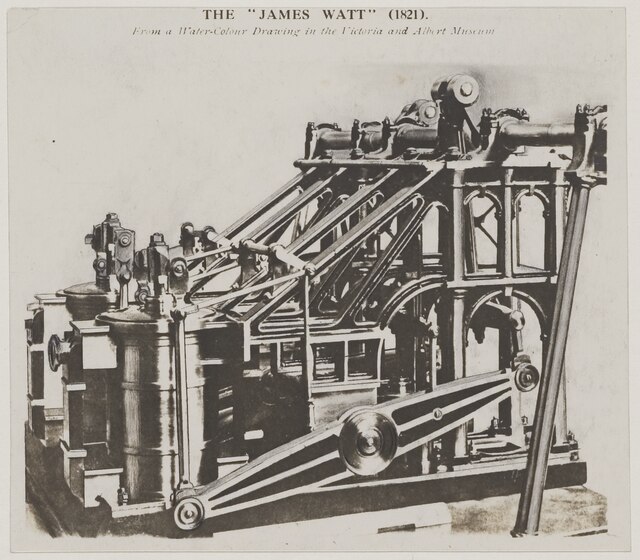
The steam engine was the most important invention of the Industrial Revolution. Earlier engines existed, but James Watt made the steam engine powerful and practical in the 1760s and 1770s.
How did it work? Water was heated until it became steam. The steam pushed against parts inside the engine, making them move. This movement could power machines, pump water from mines, or turn wheels.
Before steam engines, factories needed to be built next to rivers because water wheels provided power. With steam, factories could be built anywhere. Steam also powered trains and boats, making travel faster than ever before.
📚 WORKYBOOKS RESOURCE: [James Watt and the Steam Engine] – Explore how James Watt’s improvements revolutionized power and manufacturing.
Inventions for Making Cloth
Cloth and clothing production drove the early Industrial Revolution. Several inventions made cloth production incredibly fast.
The Spinning Jenny, invented by James Hargreaves in 1764, could spin eight threads at once instead of just one. Later versions spun even more. Suddenly, one worker could do the work of many.
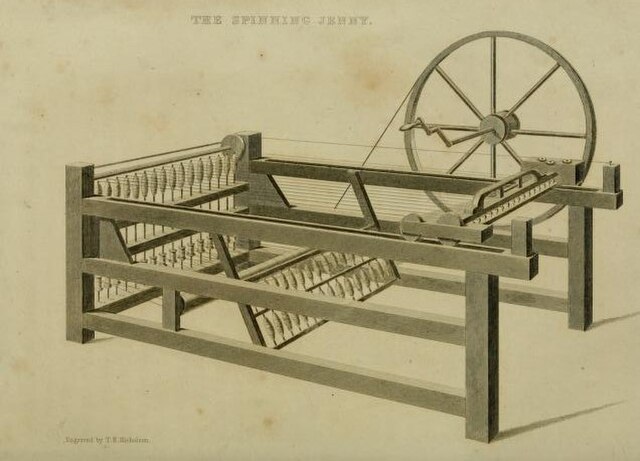
The “Spinning Jenny” spinning machine by James Hargreaves. Hargreaves patented his Jenny in Nottingham in 1770, and Arkwright patented his Jenny in the same location in 1769.
📚 WORKYBOOKS RESOURCE: [Spinning Jenny Invention] – Students discover how this simple machine multiplied thread production.
The Water Frame used water power to spin thread even faster. The Power Loom wove cloth by machine instead of by hand. Together, these inventions meant factories could produce cloth hundreds of times faster than workers at home.
The Cotton Gin
In America, Eli Whitney invented the cotton gin in 1793. “Gin” is short for “engine.” This machine quickly separated cotton fibers from their sticky seeds—work that had been slow and tedious by hand.
The cotton gin made cotton much cheaper to process. Cotton became America’s biggest crop, especially in the South. Factories in the North and in Britain turned that cotton into cloth.
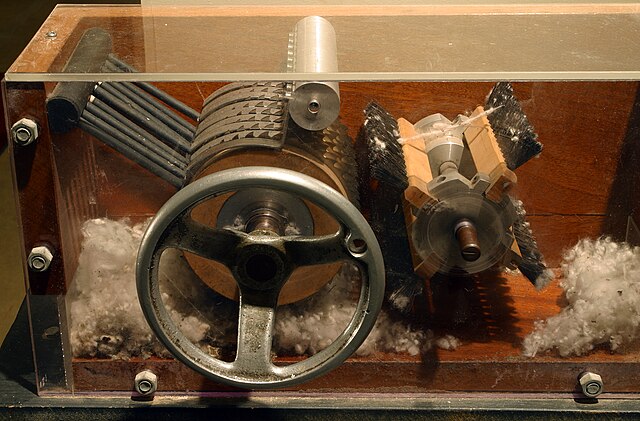
A cotton gin on display at the Eli Whitney Museum, Tom Murphy VII, Wikimedia Common
📚 WORKYBOOKS RESOURCE: [Eli Whitney and the Cotton Gin] – Learn how this American invention transformed cotton production.
The Factory System Comes to America
Samuel Slater brought the factory system to America. He had worked in British textile mills and memorized how the machines worked. In 1790, he built the first successful American factory in Rhode Island.
Slater’s factory used water power to run spinning machines. Soon, factories spread throughout New England. America began its own Industrial Revolution.
📚 Industrial Revolution Elementary resources: [Samuel Slater Factory System] – Discover how factories first came to America.
Communication Changes
The telegraph, invented by Samuel Morse, let people send messages almost instantly across long distances. Before the telegraph, news traveled only as fast as a horse or ship could carry it. Now messages clicked across wires in seconds.
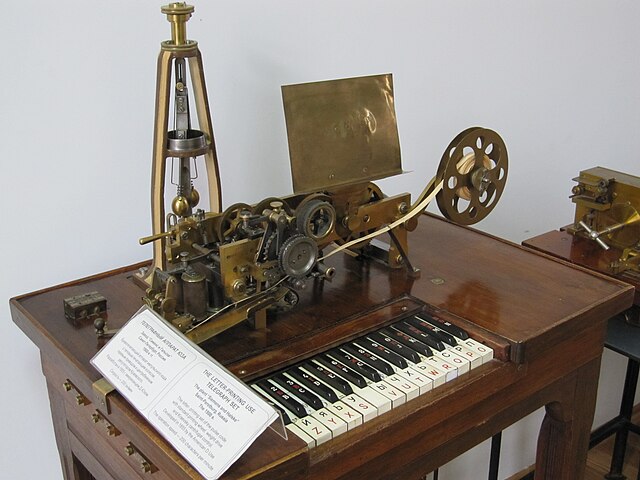
Hughes Letter-Printing Telegraph Set built by Siemens and Halske in Saint Petersburg, Russia, ca.1900, Ambanmba, Wikimedia Common
📚 WORKYBOOKS RESOURCE: [Telegraph Invention] – Explore how instant communication changed business and daily life.
Faster Production
As factories grew, owners looked for ways to make things even faster. The assembly line divided work into small, simple steps. Each worker did just one task, over and over. Products moved from worker to worker until they were finished.
📚 WORKYBOOKS RESOURCE: [Assembly Line Production] – Students learn how breaking work into steps made production lightning-fast.
Transportation Revolution
Railroads Change Everything
Steam engines didn’t just power factories—they powered trains. The first railroads appeared in Britain in the 1820s. By the mid-1800s, railroad tracks crisscrossed America and Europe.
Trains carried goods from factories to cities far away. They carried people faster than horses ever could. A trip that once took weeks by wagon now took days by train.
📚 WORKYBOOKS RESOURCE: [Railroad Industrial Revolution] – Explore how railroads connected factories to markets across the nation.
Railroad building became one of the biggest industries of the era. Thousands of workers laid tracks across mountains, deserts, and plains. In 1869, the Transcontinental Railroad connected America from coast to coast.
📚 WORKYBOOKS RESOURCE: [The Transcontinental Railroad] – This reading passage covers the epic construction that united America by rail.
Steamboats
Robert Fulton built the first successful steamboat in 1807. Before steam power, boats relied on wind, currents, or human rowing. Steamboats could travel upstream, against the current, carrying heavy loads.
Steamboats transformed river travel. They carried goods and passengers along the Mississippi, Ohio, and other major rivers. Shipping became faster, cheaper, and more reliable.
📚 WORKYBOOKS RESOURCE: [Industrial Revolution Steamboats] – Students discover how steam power revolutionized water travel.
From Horses to Trains
The change in transportation was dramatic. Before the Industrial Revolution, horses provided the fastest travel on land. Stagecoaches bounced along rough roads. Heavy goods moved slowly on wagons or canal boats.
After railroads spread, people could travel 30 miles per hour or faster—amazing speed for that time! Farmers could ship crops to distant cities. Factory goods reached customers across the country.
📚 WORKYBOOKS RESOURCE: [From Horses to Trains] – Compare how transportation changed during the Industrial Revolution.
What Is a Factory?
A factory is a large building where workers use machines to make products. Unlike home workshops, factories brought many workers together in one place. Machines did most of the heavy work, while workers tended the machines.
The first factories made cloth, but soon factories produced all kinds of goods: shoes, furniture, tools, dishes, and much more. Products that once took days to make by hand could be finished in hours.
A Factory Worker’s Day
Factory life was hard. Workers—including many children—often worked 12 to 16 hours a day, six days a week. They started before sunrise and worked until after dark.
Factory floors were noisy, dusty, and sometimes dangerous. Machines had spinning belts and gears that could catch loose clothing or hair. There was no air conditioning in summer or much heat in winter.
📚 WORKYBOOKS RESOURCE: [A Factory Worker’s Life] – Students experience what daily life was like for factory workers.
📚 WORKYBOOKS RESOURCE: [Life During the Industrial Revolution] – Explore how ordinary people lived during this transformative time.
Child Labor
Many children worked in factories during the Industrial Revolution. Some started as young as five or six years old. Factory owners liked hiring children because they could pay them less than adults and their small hands could reach into machines.
Children worked the same long hours as adults. They climbed under dangerous machines to fix jams. They breathed dusty air in textile mills. Many were injured, and some died.
Over time, people began fighting to protect children. Reformers pushed for laws limiting child labor and requiring children to attend school. Change came slowly, but eventually children’s lives improved.
📚 WORKYBOOKS RESOURCE: [Child Labor in the Industrial Revolution] – Help students understand this difficult topic with age-appropriate content.
How the Industrial Revolution Changed Life
Growing Cities
As factories grew, people moved from farms to cities seeking work. Cities grew faster than ever before. London, New York, and other industrial centers exploded in population.
This movement from rural areas to cities is called urbanization. City life was very different from farm life. People lived close together in crowded buildings. They bought food from shops instead of growing it themselves.
📚 WORKYBOOKS RESOURCE: [Industrial Revolution Cities] – Explore how cities grew and changed during industrialization.
Schools Change Too
Before the Industrial Revolution, many children never attended school. They learned from their parents at home. But as factories grew and reformers pushed back against child labor, schools became more important.
More children began attending school to learn reading, writing, and arithmetic. Education slowly became something most children experienced, not just wealthy ones.
📚 WORKYBOOKS RESOURCE: [Industrial Revolution Schools] – Discover how education changed during this era.
Problems: Pollution and Crowding
The Industrial Revolution created problems too. Factories burned coal, filling the air with black smoke. Rivers turned dirty with factory waste. Cities became crowded and unhealthy.
Many factory towns had terrible air quality. Soot covered buildings and made people sick. Clean water was hard to find. These problems took many years to solve.
📚 WORKYBOOKS RESOURCE: [Industrial Revolution Pollution] – Students learn about the environmental costs of industrialization.
Benefits of the Industrial Revolution
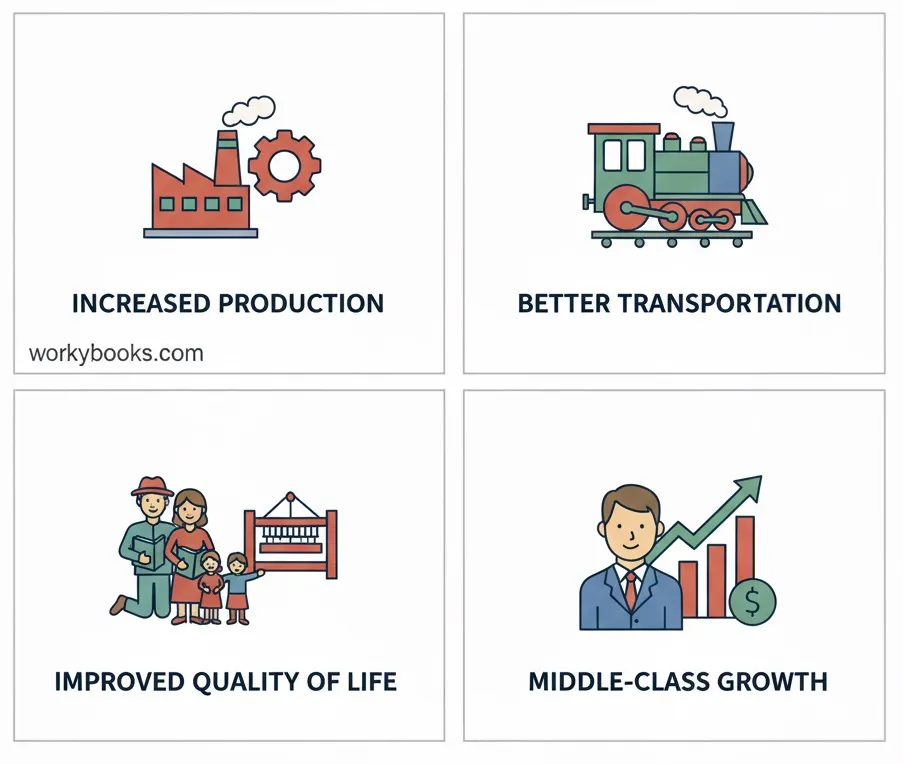
Despite its problems, the Industrial Revolution brought many benefits. Goods that once cost a lot became affordable. Families could buy more clothes, better tools, and new inventions.
Travel became faster and easier. Communication improved. New jobs appeared. Over time, many people’s lives improved because of industrial changes—though it took reforms and regulations to spread those benefits fairly.
📚 WORKYBOOKS RESOURCE: [Industrial Revolution Benefits] – Help students understand the positive changes industrialization brought.
Industrial Revolution Elementary Key People for Kids
| Person | What They Did |
|---|---|
| James Watt | Improved the steam engine, making it powerful enough for factories |
| Eli Whitney | Invented the cotton gin, making cotton processing fast |
| Samuel Slater | Brought the factory system from Britain to America |
| Robert Fulton | Built the first successful steamboat |
| George Stephenson | Built early steam locomotives for railroads |
| Samuel Morse | Invented the telegraph for instant communication |
Industrial Revolution Elementary Interactive Activities
Handmade vs. Machine-Made Comparison Bring in a handmade item and a factory-made version of the same thing (like a hand-knit scarf and a store-bought one). Have students compare quality, time to make, and cost.
Simple Machine Stations Set up stations where students experiment with levers, pulleys, wheels, and gears. Connect each to Industrial Revolution machines.
Factory Simulation Create an “assembly line” where students make simple paper products. Compare how many they make working alone versus in an assembly line. Discuss efficiency and worker experience.
Before and After Illustrations Students draw split pictures showing life before and after the Industrial Revolution—transportation, clothing, work, or cities.
Invention Timeline Create a classroom timeline of key inventions. Students add illustrations and facts as they learn about each one.
Industrial Revolution Elementary Multimedia Resources
Videos: Look for kid-friendly videos about steam engines, factory life, and inventions. Preview carefully for age-appropriate content.
Virtual Tours: Some museums offer virtual looks at historic factories and machines.
Interactive Timelines: Digital tools let students explore the era at their own pace.
Industrial Revolution Elementary Sample 5-Day Unit Plan
| Day | Focus | Key Activities | Workybooks Resources |
|---|---|---|---|
| Day 1 | Life Before Factories | Handmade vs. machine-made comparison, cottage industry introduction | [Cottage Industry vs. Factories], [Handmade to Machine-Made] |
| Day 2 | Amazing Inventions | Steam engine focus, spinning machines, invention cards | [James Watt and the Steam Engine], [Spinning Jenny Invention], [Eli Whitney and the Cotton Gin] |
| Day 3 | Factories and Workers | Factory simulation, daily life reading, discussion | [A Factory Worker’s Life], [Child Labor in the Industrial Revolution], [Samuel Slater Factory System] |
| Day 4 | Transportation Changes | Railroad and steamboat focus, map activities | [Railroads in the Industrial Revolution], [Industrial Revolution Steamboats], [From Horses to Trains] |
| Day 5 | Changes and Review | City growth, benefits and problems, timeline review | [Industrial Revolution Cities], [Industrial Revolution Benefits], [Industrial Revolution Pollution] |
Industrial Revolution Elementary Questions for Kids
Use these questions to guide student thinking:
- What was life like before machines did the work?
- How did inventions change the way people lived?
- Why did people move from farms to cities?
- How did machines make things faster and cheaper?
- What were good things about the Industrial Revolution?
- What problems did factories cause?
These questions work for discussions, journal prompts, or assessment.
Bringing It All Together
The Industrial Revolution can feel distant to modern students—after all, they’ve never known a world without machines. But helping them understand this transformation builds essential historical thinking skills. They learn that change happens through innovation, that progress brings both benefits and problems, and that the choices people made long ago still shape their world today.
The best units balance the excitement of invention with honest discussion of challenges like child labor and pollution. Students can handle age-appropriate information about difficult topics when presented thoughtfully. They often surprise teachers with their empathy and insight.
From handmade to machine-made, from farms to factories, from horses to trains—the Industrial Revolution changed everything. Help your students discover how.
Access Complete Teaching Resources
Ready to power up your Industrial Revolution unit? Explore our complete collection of elementary reading passages
Visit Workybooks to access our complete Industrial Revolution teaching collection and hundreds of other standards-aligned resources for K-8 educators.
Looking for more history teaching resources? Subscribe for monthly teaching tips, free resources, and the latest additions to our educational library.
Related Posts
Understanding Extreme Weather Events and Climate Change

Geometry in Daily Life: Why It Matters in 3rd Grade and Beyond