The Steam Engine Revolution — Reading Comprehension
Rate this
Present
Present in classroom. No work saved
Assign
Classroom with student accounts, Track progress
Quick Play
No student accounts, assign with a link
Grades
5
6
7
8
PRINT+DIGITAL RESOURCE
This learning resource is available in interactive and printable formats. The interactive worksheet can be played online and assigned to students. The Printable PDF version can be downloaded and printed for completion by hand.
This rigorous world history passage explores the origins and impact of the steam engine during the Industrial Revolution, highlighting James Watt's key improvements and how steam power transformed factories, transportation, and daily life. Students analyze historical cause and effect, change over time, and social change, supported by primary sources and evidence. The passage is accompanied by a glossary, comprehension questions, writing prompts, graphic organizers, and a timeline. A Spanish translation and read aloud audio are included for accessibility. Aligned with CA HSS Framework and Common Core standards, this resource helps learners develop historical thinking and ELA skills while examining one of history's most important technological revolutions.
CONTENT PREVIEW
Expand content preview
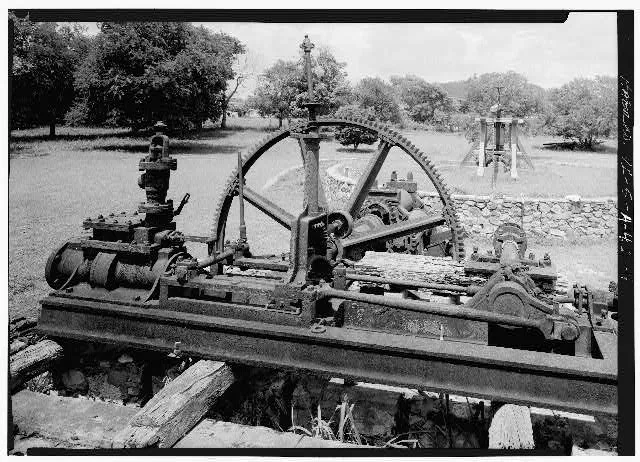
"4. GENERAL VIEW OF STEAM ENGINE - Estate Whim, Horizontal Steam Engine, Frederiksted vicinity, Frederiksted, St. Croix, VI" by Lowe, Jet Source: Library of Congress.
The Industrial Revolution of the 18th and 19th centuries marked a period of rapid change in technology and society. One invention, the steam engine, played a crucial role in powering this transformation. While earlier versions existed, it was James Watt’s improvements in the 1760s and 1770s that made the steam engine practical and efficient for widespread use.
Before the steam engine, most factories depended on waterwheels or human labor for power. These sources had limitations, such as requiring factories to be built near rivers. In 1712, Thomas Newcomen built a basic steam engine to pump water from mines in England, but it was slow and used a lot of fuel. James Watt, a Scottish engineer, studied Newcomen’s design and saw ways to improve its efficiency. By adding a separate condenser in 1765, Watt's engine used less coal and produced more power. This change allowed factories to move away from rivers and closer to cities, leading to the growth of urban industrial centers like Manchester and Birmingham.
Watt partnered with entrepreneur Matthew Boulton in Birmingham to manufacture and sell his engines. Historical records, such as Watt’s patent documents from 1769 and factory business ledgers, show how steam engines were adopted by many industries. By the 1780s, steam engines powered textile mills, ironworks, and breweries. This reliable power source helped factories increase production and lower costs, making goods more affordable for ordinary people. Inventions like George Stephenson’s steam locomotive (built in 1814) and Robert Fulton’s steamship (launched in 1807) further spread steam power to transportation, connecting distant cities and ports.
The steam engine’s impact on daily life was profound. Workers moved from rural areas to cities in search of factory jobs. Social hierarchies shifted, as new factory owners and inventors gained wealth and power. At the same time, many workers faced long hours and difficult conditions. Some critics, like poet William Blake, described factories as “dark satanic mills,” showing that not everyone agreed about the benefits of industrial change. Nevertheless, the steam engine made it possible to transport goods and people faster than ever before, supporting economic growth and the spread of new ideas across Europe and the world.
The steam engine is a prime example of how innovation can drive change over time. Its development was shaped by geographic context—Britain’s coal and iron resources—and the needs of a growing population. Its legacy can be seen today in how we use engines to power our modern world.
The steam engine’s revolution connects to broader themes in world history, such as technological progress, migration, and social change.
Interesting Fact: The world’s oldest working steam engine, built by Boulton & Watt in 1812, still operates today at Crofton Pumping Station in England.
Who improved the steam engine?
James WattGeorge StephensonRobert FultonThomas Edison
When did Watt patent his engine?
1769180718121712
Which city grew due to factories?
ManchesterParisRomeAthens
How did steam power affect factories?
Increased productionMade them smallerStopped machinesUsed less coal
What did some workers face?
Long hoursShorter workdaysMore holidaysNo changes
Why did factories move to cities?
Steam engines freed them from riversWaterwheels worked betterMore farmlandBetter weather
The first steam engine was built in 1712. True or false?
TrueFalse
What is 'efficiency'?
Doing a job with less wasteMaking more noiseUsing more workersBuilding bigger machines
Perfect For:
👩🏫 Teachers
• Reading comprehension practice
• Auto-graded assessments
• Literacy skill development
👨👩👧👦 Parents
• Reading practice at home
• Comprehension improvement
• Educational reading time
🏠 Homeschoolers
• Reading curriculum support
• Independent reading practice
• Progress monitoring
Reading Features:
📖
Reading Passage
Engaging fiction or nonfiction text
❓
Comprehension Quiz
Auto-graded questions
📊
Instant Feedback
Immediate results and scoring
📄
Printable Version
Download for offline reading
🔊
Read Aloud
Voice-over with word highlighting
Reviews & Ratings
No reviews yet. Be the first to share your experience!
Related Content
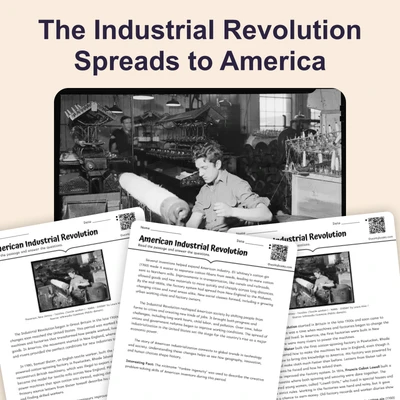
American Industrial Revolution
This World History reading passage explores the spread of the Industrial Revolution from Britain to the United States, f...
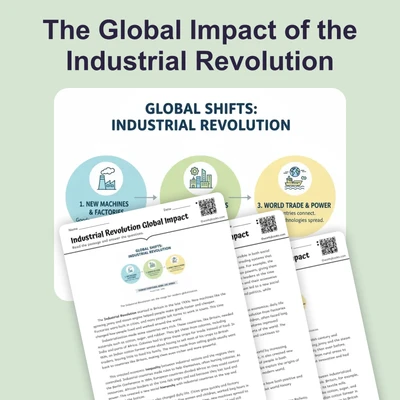
Industrial Revolution Global Impact
This world history reading passage examines the global impact of the Industrial Revolution, focusing on how industrializ...
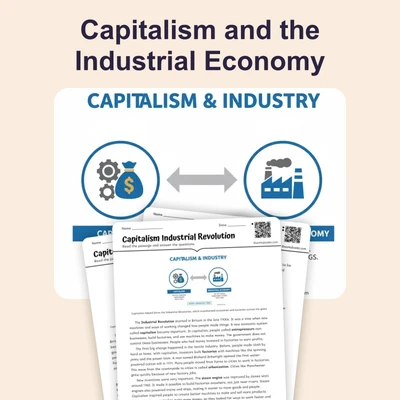
Capitalism Industrial Revolution
This engaging world history passage examines the rise of capitalism and its critical role in the Industrial Revolution. ...
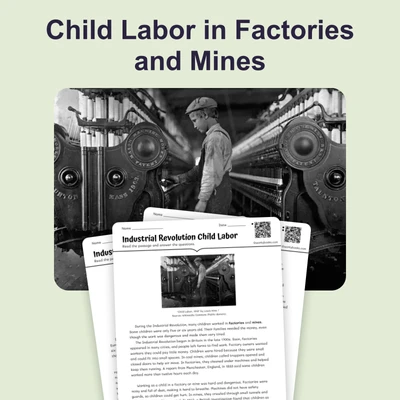
Industrial Revolution Child Labor
This rigorous world history reading passage examines the harsh reality of child labor in factories and mines during the ...
Industrial Revolution Working Conditions
This world history reading passage examines the working conditions and workers' struggles during the Industrial Revoluti...
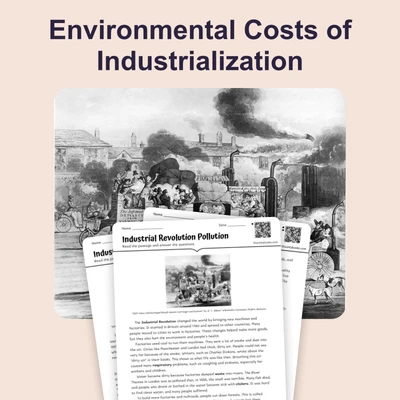
Pollution and the Industrial Revolution
This passage explores the environmental costs of industrialization during the Industrial Revolution, focusing on air and...
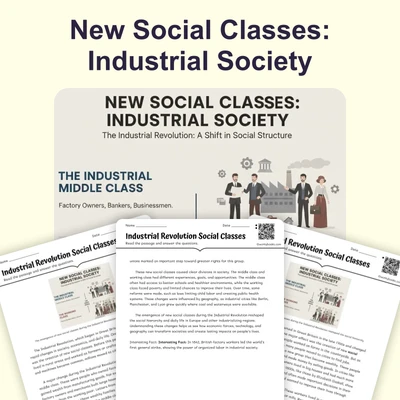
New Social Classes: Industrial Society
This reading passage examines how the Industrial Revolution led to the development of new social classes and changed the...
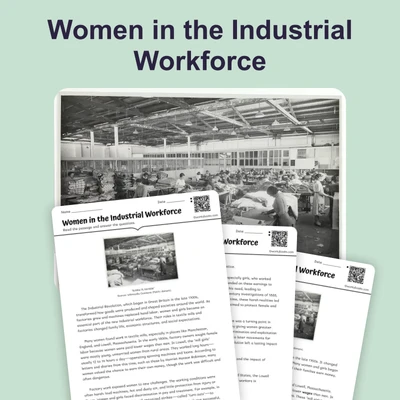
Women in the Industrial Workforce
This rigorous world history reading passage explores the key role women and girls played in the industrial workforce dur...
The Growth of Factory Towns and Industrial Cities
This history reading passage examines how the Industrial Revolution caused the rapid growth of factory towns and industr...
Steamboat Industrial Revolution
This engaging passage introduces students to the impact of steamboats during the Industrial Revolution in U.S. history. ...
D2.HIS.1.3-5D2.HIS.2.3-5RI.4.3RI.4.4
Industrial Revolution Cities
This engaging U.S. history passage explores the growth and transformation of American cities during the Industrial Revol...
D2.HIS.2.3-5D2.HIS.3.3-5RI.4.3RI.4.4
Industrial Revolution Pollution
This reading passage explores the impact of the Industrial Revolution on pollution in the United States, focusing on the...
D2.HIS.2.3-5D2.HIS.3.3-5RI.4.3RI.4.4
Industrial Revolution Benefits
This engaging reading passage explores the positive effects of the Industrial Revolution in the United States, highlight...
D2.HIS.3.3-5D2.HIS.14.3-5RI.4.3RI.4.4
Child Labor in the Industrial Revolution
This engaging history reading passage introduces students to the topic of child labor during the Industrial Revolution i...
D2.HIS.2.3-5D2.HIS.16.3-5RI.4.3RI.4.4
Industrial Revolution Schools
This engaging reading passage explores how schools changed during the Industrial Revolution and Progressive Era in the U...
D2.HIS.2.3-5D2.HIS.3.3-5RI.4.3RI.4.4
American Revolution Global Influence
This engaging U.S. History reading passage explores how the American Revolution influenced revolutions around the world,...
D2.HIS.2.3-5D2.HIS.3.3-5RI.4.3RI.4.4
The Industrial Revolution in America
This engaging history reading passage explores the Industrial Revolution in America, a time of great change and innovati...
D2.HIS.1-6.3-5RI.4.3RI.4.4
From Farms to Factories
This engaging passage, "From Farms to Factories," delves into the profound changes brought by the Industrial Revolution ...
Textiles Industry Revolution
This history reading passage examines how the spinning jenny, water frame, and power loom revolutionized textile product...