This learning resource is available in interactive and printable formats. The interactive worksheet can be played online and assigned to students. The Printable PDF version can be downloaded and printed for completion by hand.
This engaging U.S. history passage explores the growth and transformation of American cities during the Industrial Revolution, a key part of the Progressive Era. Students will learn how new machines and factories changed the way people lived and worked, drawing millions to cities in search of jobs. The passage discusses the challenges families faced, including crowded housing and child labor, as well as the efforts of reformers to improve city life. The content also explains how these changes shaped modern America, highlighting important vocabulary and cause-and-effect relationships. Activities include a multiple-choice quiz, writing prompts, a timeline, and a graphic organizer, all designed to meet C3 Framework and Common Core standards. A Spanish translation and read aloud audio are provided to support diverse learners. This resource is perfect for building foundational literacy and history skills while learning about an important era in U.S. history.
CONTENT PREVIEW
Expand content preview
The Industrial Revolution changed many cities in the United States.
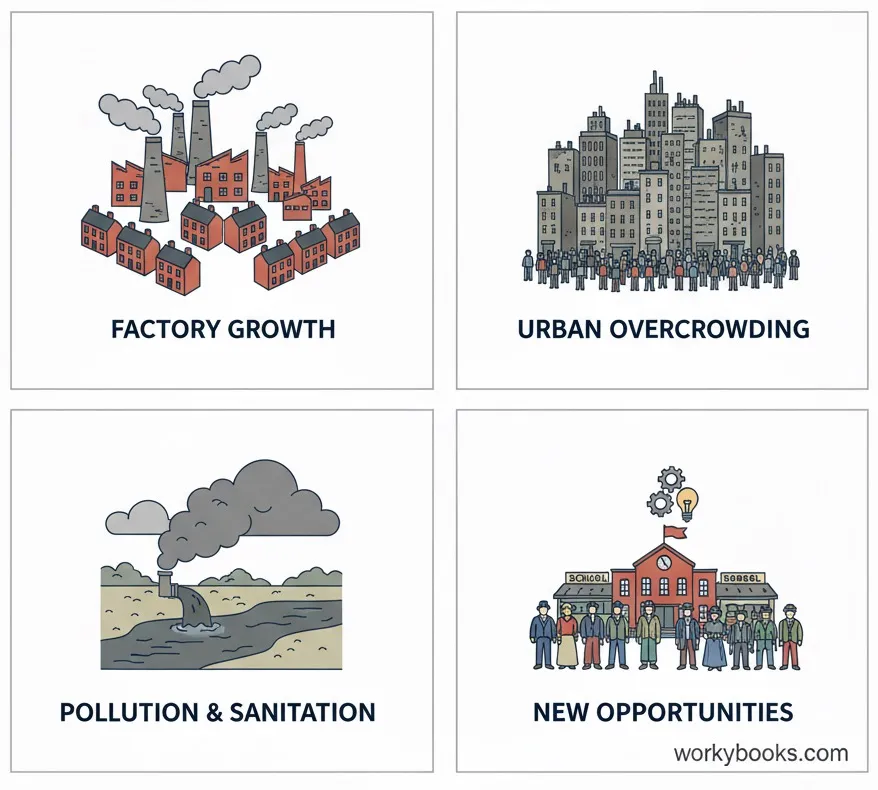
The Industrial Revolution changed American cities in many ways. In the late 1800s and early 1900s, people moved from farms and small towns to cities. They came looking for jobs in new factories that were being built.
These cities grew very fast. This growth is called urbanization. People wanted steady pay and a better life. Factories needed many workers, so families moved into city neighborhoods. The city population increased quickly, sometimes faster than the cities could handle.
As more people arrived, cities became crowded. Many families lived in small apartments called tenements. These buildings were often old and not well cared for. Sometimes, several families had to share one bathroom. Streets were packed with people, horses, and carts. There was little space or privacy. This overcrowding caused many problems.
With so many people, cities found it hard to provide enough homes. There were not enough services like clean water, garbage collection, or police. Streets were often dirty, and disease spread easily. Getting clean water was difficult because water pipes and sewers could not keep up with the city’s growth. Children often had to help their families by working in factories instead of going to school.
Some people saw these problems and wanted to help. Reformers worked to improve city life. They started organizations to help families find better housing and jobs. City leaders built new water systems and cleaned up the streets. Over time, laws were made to protect workers and children.
Even though life in Industrial Revolution cities was hard, people found ways to solve problems and help each other. The growth of cities also brought new ideas, inventions, and cultures together. These changes shaped the modern cities we know today.
Interesting Fact: New York City’s population grew from about 500,000 in 1850 to over 3 million by 1900!
Why did people move to cities?
To find factory jobsTo buy farmsTo visit familyTo go on vacation
What is urbanization?
City growthFarm workTraveling by trainBuilding roads
What are tenements?
Crowded apartmentsSchoolsStoresFactories
What problem did overcrowding cause?
Spread of diseaseMore parksCleaner waterLess people
How did reformers help cities?
Improved homesBuilt more storesClosed schoolsStopped factories
Why was clean water hard to get?
Pipes and sewers too smallToo many riversToo many parksNo one needed water
Cities grew slowly in the Industrial Revolution. True or false?
TrueFalse
What is a reformer?
Someone who helps improve thingsA store ownerA train driverA building
Perfect For:
👩🏫 Teachers
• Reading comprehension practice
• Auto-graded assessments
• Literacy skill development
👨👩👧👦 Parents
• Reading practice at home
• Comprehension improvement
• Educational reading time
🏠 Homeschoolers
• Reading curriculum support
• Independent reading practice
• Progress monitoring
Reading Features:
📖
Reading Passage
Engaging fiction or nonfiction text
❓
Comprehension Quiz
Auto-graded questions
📊
Instant Feedback
Immediate results and scoring
📄
Printable Version
Download for offline reading
🔊
Read Aloud
Voice-over with word highlighting
Reviews & Ratings
No reviews yet. Be the first to share your experience!
Related Content
Native American Tribes Across America
This engaging history reading passage introduces students to Native American tribes across America, focusing on their da...
D2.HIS.1.3-5D2.HIS.2.3-5RI.4.1RI.4.2
Teepees: Homes on the Great Plains
This engaging history reading passage introduces students to teepees, the unique homes of Native American tribes on the ...
D2.HIS.2.3-5D2.HIS.14.3-5RI.4.1RI.4.2RI.4.4
Traditional Native American Clothing
This engaging history passage explores traditional Native American clothing and how it reflected the environment, values...
D2.HIS.2.3-5D2.HIS.3.3-5RI.4.3RI.4.4
The Iroquois Confederacy: A System of Peace
This engaging U.S. History reading passage introduces students to the Iroquois Confederacy, a powerful alliance of Nativ...
D2.HIS.2.3-5D2.HIS.3.3-5RI.4.3RI.4.4
The Cherokee Nation: History and Culture
This reading passage explores the rich history and culture of the Cherokee Nation, one of the largest Native American tr...
D2.HIS.2.3-5D2.HIS.14.3-5RI.4.3RI.4.4RI.4.10
The Sioux: Warriors and Tribal Leaders
This history reading passage explores the Sioux Nation, focusing on their roles as warriors and tribal leaders. Students...
D2.HIS.1.3-5D2.HIS.2.3-5RI.4.1RI.4.3
Native American Respect for Nature
This engaging history reading passage explores Native American respect for nature, emphasizing the close relationship be...
D2.HIS.2.3-5D2.HIS.3.3-5RI.4.3RI.4.4
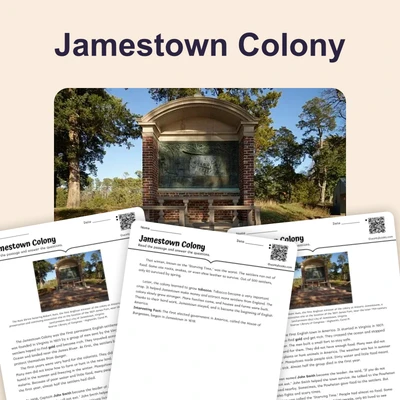
Jamestown: The First Permanent English Colony
This engaging history passage explores the founding of Jamestown, the first permanent English colony in America. Aligned...
D2.HIS.1.3-5D2.HIS.2.3-5RI.4.3RI.4.4
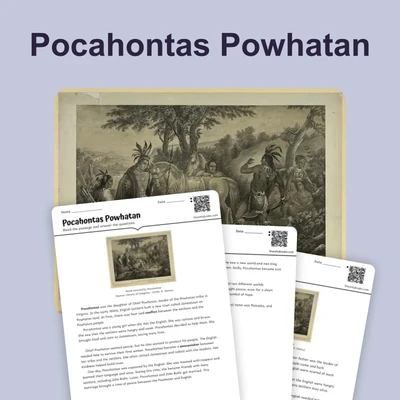
Pocahontas and the Powhatan People
This engaging reading passage explores the life of Pocahontas and the Powhatan people and their important role in early ...
D2.HIS.1.3-5D2.HIS.2.3-5RI.4.1RI.4.3
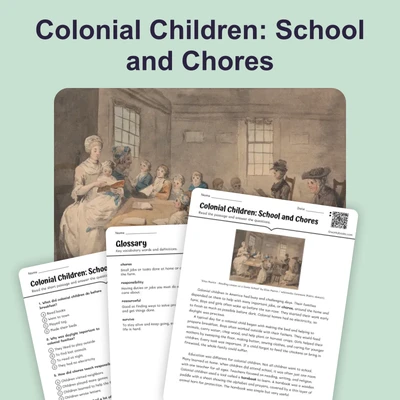
Colonial Children: School and Chores
This reading passage explores the daily lives of colonial children, focusing on their experiences at school and their ma...
D2.HIS.2.3-5D2.HIS.3.3-5RI.4.1RI.4.2RI.4.4
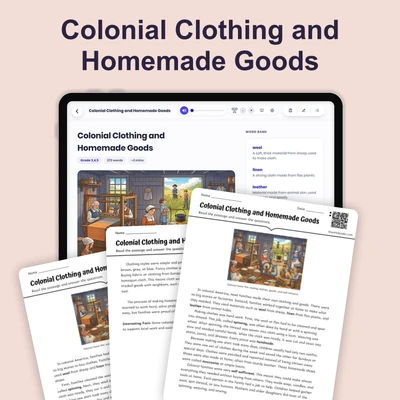
Colonial Clothing and Homemade Goods
This engaging U.S. history passage explores the daily life of early American colonists with a focus on colonial clothing...
D2.HIS.2.3-5RI.4.3RI.4.4
Colonial Jobs: Blacksmiths, Bakers, and Craftsmen
This engaging history reading passage explores the vital roles of blacksmiths, bakers, and craftsmen in colonial America...
D2.HIS.2.3-5D2.HIS.3.3-5RI.4.3RI.4.4
Colonial Towns and Village Life
This engaging history reading passage explores the daily life, work, and unity found in colonial towns and villages. Ali...
D2.HIS.1.3-5D2.HIS.2.3-5RI.4.3RI.4.4
Colonial Trade with England and Africa
This history reading passage explores colonial trade between the American colonies, England, and Africa, focusing on the...
D2.HIS.2.3-5D2.HIS.14.3-5RI.4.3RI.4.4
Benjamin Franklin: Printer, Inventor, and Leader
This history reading passage explores the life and achievements of Benjamin Franklin, one of America's most important ea...
D2.HIS.2.3-5D2.HIS.3.3-5RI.4.1RI.4.3
George Washington Leads the Army
This engaging history reading passage explores how George Washington bravely led the Continental Army during the America...
D2.HIS.1.3-5D2.HIS.2.3-5RI.4.3RI.4.4
Women and Children During the Revolutionary War
This reading passage explores the important roles women and children played during the Revolutionary War. Students will ...
D2.HIS.2.3-5RI.4.3RI.5.3
African Americans Fight for Freedom
This educational passage explores the brave and inspiring story of how African Americans fought for freedom in the Unite...
D2.HIS.2.3-5D2.HIS.3.3-5RI.4.3RI.4.4
The Battle of Yorktown Ends War
This engaging U.S. history reading passage explores the Battle of Yorktown, a key event that ended the American Revoluti...
D2.HIS.1.3-5D2.HIS.2.3-5RI.4.1RI.4.3
Loyalists vs. Patriots: Divided Families
This engaging U.S. history reading passage explores the division between Loyalists and Patriots during the American Revo...