18th Amendment
Interactive passage with audio narration, comprehension questions, and printable PDF.
By completing this purchase you agree to our Terms of Use and Privacy Policy. Your subscription renews automatically until you cancel. You can cancel anytime from your account settings. All sales are final and non-refundable. Digital content is available for download in your account immediately upon purchase.
What's included
18th Amendment preview and details
About this printable 18th Amendment reading passage (Grades 6-8)
Sample passage and quiz from 18th Amendment
Reading passage and comprehension quiz preview
18th Amendment
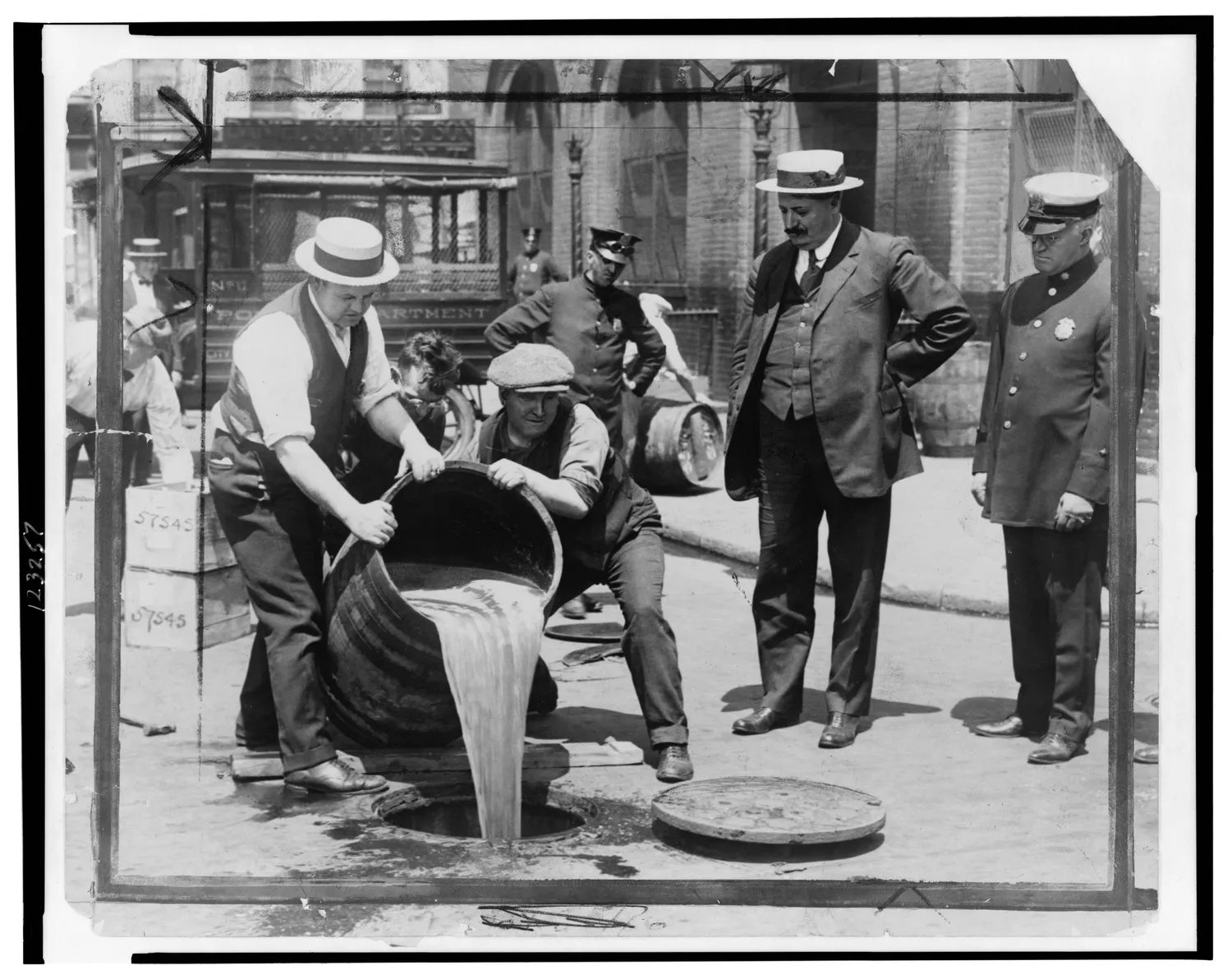
"5 Prohibition Disposal(9)" by Unknown authorUnknown author.
Sourece: Wikimedia Commons (Public domain).
The 18th Amendment to the United States Constitution was ratified in 1919 and went into effect in 1920. This amendment made it illegal to manufacture, sell, or transport alcoholic beverages across the country. This period, known as Prohibition, was a major social experiment in American history. Reformers argued that banning alcohol would reduce crime, strengthen families, and improve society. However, the results were far more complex than many expected.
Prohibition arose during the Progressive Era, a time when citizens and lawmakers sought to solve social problems and improve life for all Americans. Organizations such as the Anti-Saloon League and the Women’s Christian Temperance Union believed that alcohol was at the root of poverty, violence, and other social ills. They lobbied Congress and built public support for a nationwide ban on alcoholic drinks.
The amendment required Congress to pass laws for its enforcement. The Volstead Act defined what was considered an alcoholic beverage and set penalties for breaking the law. However, the government struggled to enforce Prohibition. There were not enough federal agents, and many local police ignored violations. Smugglers and criminal organizations took advantage, creating a vast black market for illegal alcohol, known as "bootlegging."
The rise of bootleggers and speakeasies (secret bars) led to more organized crime. Gangsters like Al Capone became famous for controlling the illegal alcohol trade in cities like Chicago. This unintended consequence made Prohibition controversial. While some Americans supported the ban, others openly defied it, creating tensions between different groups in society.
Prohibition’s impact was significant. Some reformers saw temporary improvements in public health, but the increase in criminal activity and violence worried many citizens. The government lost tax revenue from alcohol sales, which became a serious problem during the Great Depression. Eventually, growing dissatisfaction led to calls for change.
In 1933, the 21st Amendment was passed, repealing Prohibition and ending the nationwide ban on alcohol. This marked the first and only time in U.S. history that an amendment was completely overturned by another. The failure and unintended consequences of Prohibition taught lawmakers important lessons about how laws can affect society in unexpected ways.
Interesting Fact: During Prohibition, doctors could prescribe medicinal whiskey, making pharmacies one of the few legal places to purchase alcohol.
Comprehension quiz (8 questions)
1. When was the 18th Amendment ratified?
2. What did Prohibition make illegal?
3. Who was a famous gangster during Prohibition?
4. Why did reformers support Prohibition?
5. How did Prohibition affect organized crime?
6. What was the Volstead Act’s purpose?
7. Prohibition lasted until 1933. True or false?
8. What is an amendment?
Perfect for the way you teach
- Build comprehension skills
- Auto-graded quiz
- Differentiated reading
- Read together at home
- Improve fluency
- Quiet reading time
- Reading curriculum support
- Independent practice
- Track Lexile growth