Crispus Attucks
Interactive passage with audio narration, comprehension questions, and printable PDF.
By completing this purchase you agree to our Terms of Use and Privacy Policy. Your subscription renews automatically until you cancel. You can cancel anytime from your account settings. All sales are final and non-refundable. Digital content is available for download in your account immediately upon purchase.
What's included
Crispus Attucks preview and details
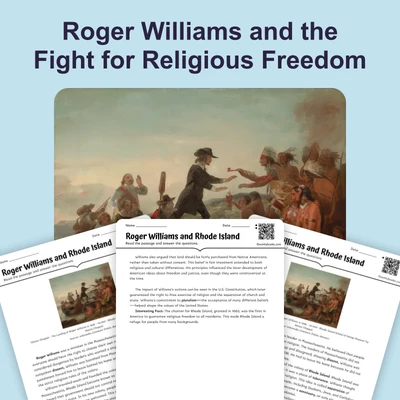
About this printable Crispus Attucks reading passage (Grades 6-8)
Sample passage and quiz from Crispus Attucks
Reading passage and comprehension quiz preview
Crispus Attucks
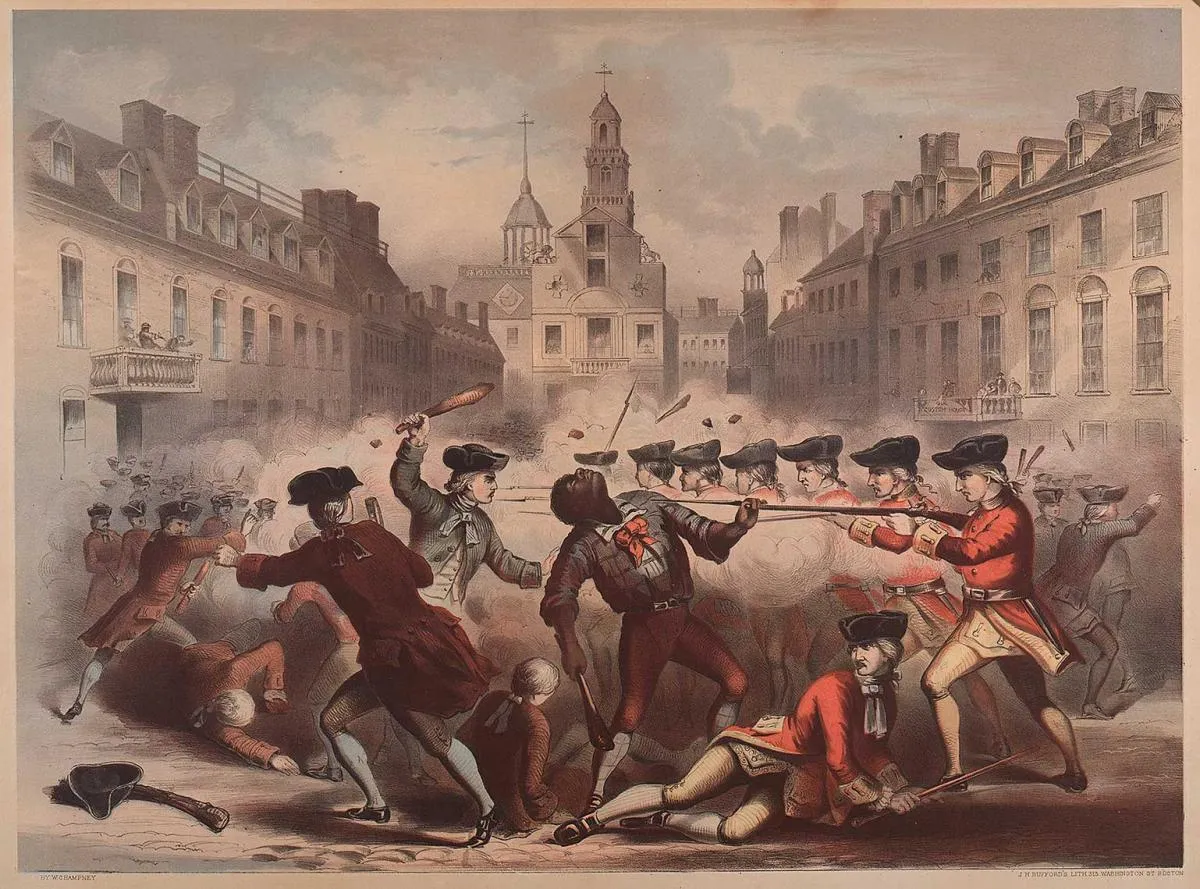
"William L. Champney The Boston Massacre, March 5, 1770 by William L. Champney (artist); J. H. Bufford (litographer) / Wikimedia Commons
Crispus Attucks was a sailor of African and Native American descent who became the first person killed during the Boston Massacre on March 5, 1770. Attucks’s death made him a martyr for the cause of American liberty. His story highlights the complex reality that people from many backgrounds played vital roles in the fight for independence.
The Boston Massacre occurred at a time of great tension between American colonists and British soldiers stationed in Boston. Colonists were angry about unfair taxes and the presence of British troops, which caused frequent conflicts. On the night of March 5, a crowd gathered near the Customs House. Eyewitnesses described a heated exchange, with colonists throwing snowballs and shouting at soldiers. Suddenly, the soldiers fired into the crowd, killing five colonists, including Attucks, who was struck by two bullets in the chest. The event quickly became a symbol of British oppression, fueling calls for resistance.
Attucks’s background as both African and Native American made his role especially significant. He was not only a victim but also a participant in the rising movement for liberty. While some colonists viewed him as a troublemaker, others saw him as a courageous patriot willing to risk his life for justice. This contrast shows how interpretations of history can differ, depending on perspective and evidence.
Following the massacre, colonial leaders like Samuel Adams used the event to unite people against British rule. Crispus Attucks became a powerful symbol of the struggle for freedom, representing both the sacrifices and the diversity of Americans involved. His death was widely publicized in newspapers and speeches, and he was honored in annual remembrance ceremonies.
Over time, the story of Attucks has been debated and re-examined. Some historians argue that he intentionally led the crowd, while others believe he was an innocent bystander. What is clear, however, is that his legacy endures. Attucks’s sacrifice reminds us that the American Revolution was not a simple story of heroes and villains. Rather, it was a conflict shaped by complex motives, difficult choices, and the involvement of people from many different backgrounds.
Attucks’s role as the first to fall in the Boston Massacre continues to inspire discussions about justice, equality, and the meaning of citizenship. His life and death encourage us to examine how history is remembered and whose stories are celebrated.
Interesting Fact: After his death, Crispus Attucks was buried with honor in Boston’s Granary Burying Ground—a rare tribute for a Black man in colonial America.
Comprehension quiz (8 questions)
1. Who was Crispus Attucks?
2. What happened on March 5, 1770?
3. Where was Crispus Attucks buried?
4. Why did colonists dislike British soldiers in Boston?
5. How did Attucks become a symbol?
6. What does 'martyr' mean?
7. Crispus Attucks was a patriot. True or false?
8. Which word means 'rights and duties in a country'?
Perfect for the way you teach
- Build comprehension skills
- Auto-graded quiz
- Differentiated reading
- Read together at home
- Improve fluency
- Quiet reading time
- Reading curriculum support
- Independent practice
- Track Lexile growth