Pocahontas: Myth vs. Historical Reality
Interactive passage with audio narration, comprehension questions, and printable PDF.
By completing this purchase you agree to our Terms of Use and Privacy Policy. Your subscription renews automatically until you cancel. You can cancel anytime from your account settings. All sales are final and non-refundable. Digital content is available for download in your account immediately upon purchase.
What's included
Pocahontas: Myth vs. Historical Reality preview and details
About this printable Pocahontas: Myth vs. Historical Reality reading passage (Grades 6-8)
Sample passage and quiz from Pocahontas: Myth vs. Historical Reality
Reading passage and comprehension quiz preview
Pocahontas
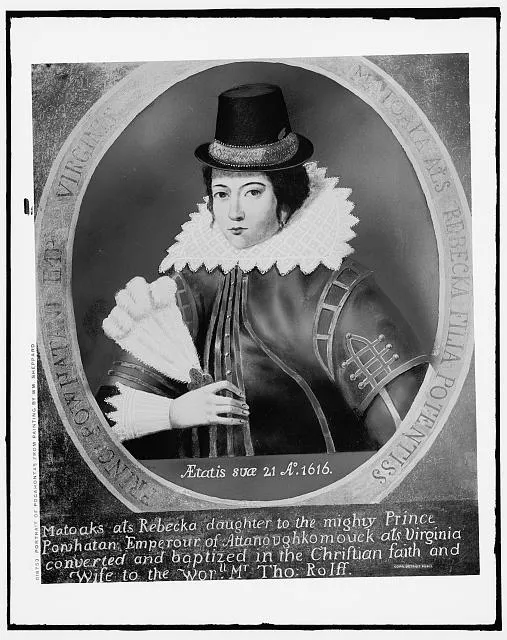
Source: Library of Congress - Detroit Publishing Co.
Pocahontas, a young woman of the Powhatan people, is a figure often surrounded by legend and myth. Many Americans know her mainly from movies and stories that focus on romance and adventure, but her true story is far more complex. By comparing the myth of Pocahontas to the historical reality, we can better understand her significance as a diplomatic bridge between cultures during a time of conflict and change in early American history.
The popular myth suggests that Pocahontas saved the English settler John Smith from execution and that she fell in love with him. However, historians who study primary sources—original documents from the time—find little evidence to support this narrative. Instead, the relationship between Pocahontas and John Smith was more likely one of cautious interaction and cultural exchange. Some interpretations of Smith's writings suggest that the "rescue" story may have been symbolic or misunderstood because of differences in Powhatan and English customs.
Pocahontas was born around 1596 as the daughter of Chief Powhatan, the powerful leader of a network of Algonquian-speaking tribes in what is now Virginia. Her real name was Matoaka, but she was called "Pocahontas," meaning "playful one." When English colonists established Jamestown in 1607, relations with the Powhatan confederacy were tense and sometimes violent. Food shortages, misunderstandings, and the threat of war made peace difficult. Pocahontas, still a young girl, sometimes acted as an ambassador between her people and the English, delivering messages, bringing food, and helping to negotiate exchanges.
In 1613, Pocahontas was captured by the English during a conflict and held for ransom. During her captivity, she learned English customs and converted to Christianity, taking the name Rebecca. She married John Rolfe, an English tobacco farmer, in 1614. This marriage helped to create a period of peace known as the "Pocahontas Peace." Yet, historians debate whether her marriage was truly voluntary or influenced by her situation as a captive. Such questions show the challenges of interpreting history when sources are limited or biased.
Pocahontas traveled to England in 1616, where she became a symbol of the "civilized" Native American. The English used her image to promote the success of their colony. Sadly, Pocahontas died in 1617 at about 21 years old, just as she was preparing to return to Virginia. Her legacy, however, continues to be discussed and re-examined by historians today. By studying her life through multiple perspectives and evidence, we see how history can be shaped by both fact and myth.
The story of Pocahontas teaches us about the importance of analyzing historical context, questioning sources, and understanding how people become symbols in the stories nations tell. Her real-life role as a mediator and cultural bridge was far more important—and complicated—than the simple tales often repeated.
Interesting Fact: The only written record of the famous "rescue" comes from John Smith himself, written years after the event, making historians question its accuracy.
Comprehension quiz (8 questions)
1. What was Pocahontas's real name?
2. Who did Pocahontas marry?
3. What year was Jamestown founded?
4. Why was Pocahontas important to both groups?
5. What is a primary source?
6. What event led to the 'Pocahontas Peace'?
7. Pocahontas died in England. True or false?
8. Which word means 'helps different groups communicate'?
Perfect for the way you teach
- Build comprehension skills
- Auto-graded quiz
- Differentiated reading
- Read together at home
- Improve fluency
- Quiet reading time
- Reading curriculum support
- Independent practice
- Track Lexile growth