ABO and Rh Blood Group Systems
Interactive passage with audio narration, comprehension questions, and printable PDF.
By completing this purchase you agree to our Terms of Use and Privacy Policy. Your subscription renews automatically until you cancel. You can cancel anytime from your account settings. All sales are final and non-refundable. Digital content is available for download in your account immediately upon purchase.
What's included
ABO and Rh Blood Group Systems preview and details
About this printable ABO and Rh Blood Group Systems science reading passage, NGSS-aligned (Grade 6)
Sample passage and quiz from ABO and Rh Blood Group Systems
Reading passage and comprehension quiz preview
ABO and Rh Blood Group Systems
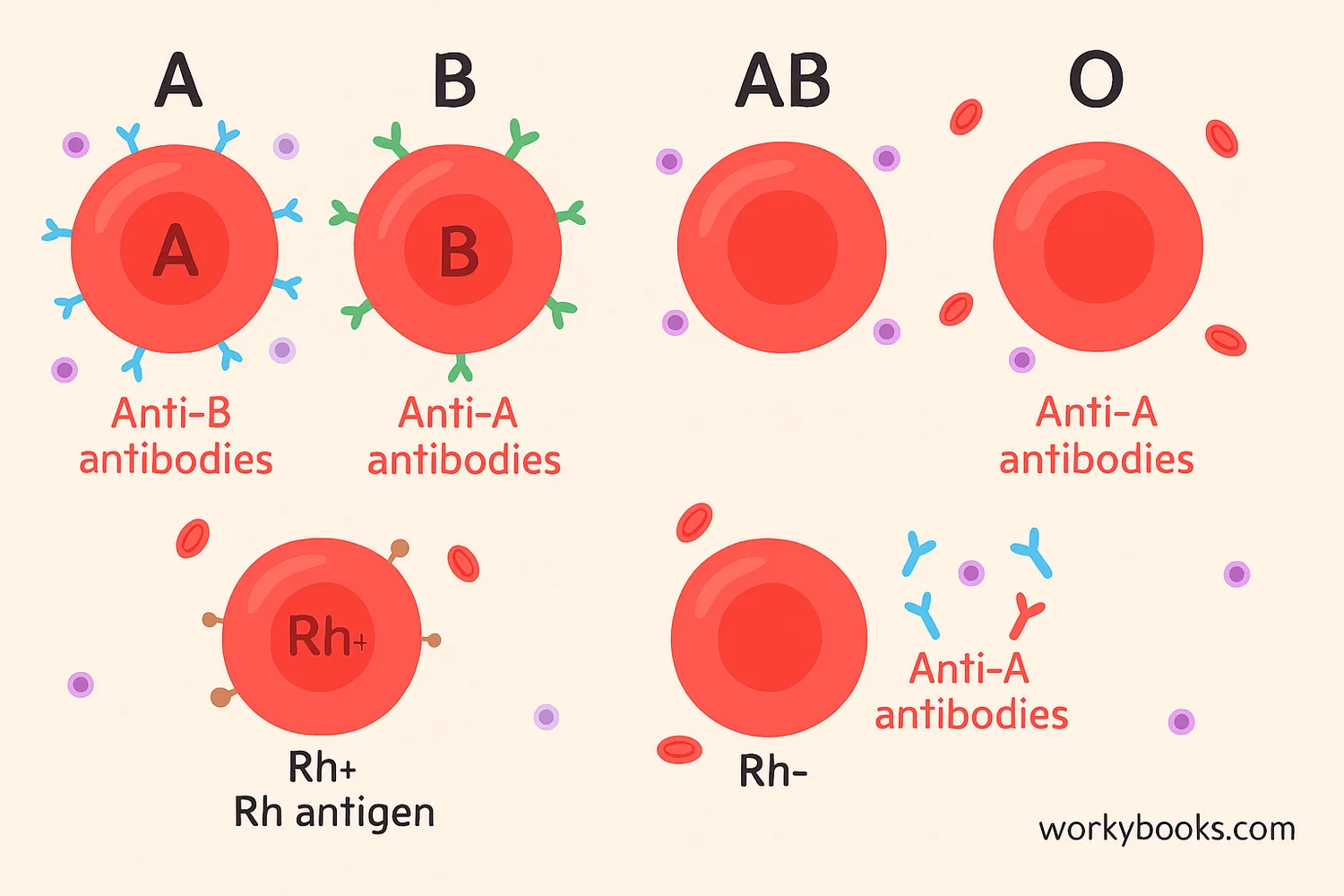
Imagine a world where your blood could save a life, but only if it's the right kind. Your blood isn't all the same; it has a special identity called your blood type. This identity is determined by tiny markers on the surface of your red blood cells. These markers are like tiny flags that tell your body, and others, what type of blood you have. We'll explore two important blood typing systems: the ABO system and the Rh system.
The ABO blood group system is the most well-known. It classifies blood into four main types: A, B, AB, and O. These types are determined by special proteins called antigens found on the surface of your red blood cells. If you have A antigens, you have type A blood. If you have B antigens, you have type B blood. If you have both A and B antigens, you have type AB blood. And if you have neither A nor B antigens, you have type O blood.
Why are these antigens important? Your body's immune system makes proteins called antibodies. Antibodies are like tiny defenders that protect you from foreign invaders. If you have type A blood, your body has anti-B antibodies. These antibodies would attack type B blood if it entered your body. This is why blood transfusions, where someone receives blood from another person, must be carefully matched. Type O blood is often called the "universal donor" because it has no A or B antigens, so it usually won't be attacked by antibodies in other blood types. Type AB blood is the "universal recipient" because it has both A and B antigens and no anti-A or anti-B antibodies.
Besides the ABO system, there's another crucial factor called the Rh factor. This is another type of antigen that can be present on your red blood cells. If you have the Rh antigen, you are Rh positive (Rh+). If you don't have it, you are Rh negative (Rh-). So, your complete blood type might be A+ or O-, for example. The Rh factor is also important for safe blood transfusions and during pregnancy, as a mismatch can cause health issues.
Your blood type is inherited from your parents through genes, which are instructions found in your DNA. These genes determine which antigens you will have. Understanding blood types is vital for medicine, especially for blood transfusions and knowing your personal health profile. It's a fantastic example of how our unique traits are passed down through generations!
Interesting Fact: Type O negative blood is considered the universal donor because it can be given to people of any blood type without causing a reaction, making it incredibly valuable in emergencies.
Comprehension quiz (10 questions)
1. Which blood type has A antigens?
2. What does Rh+ mean?
3. Why is type O blood a "universal donor"?
4. What would happen if type A blood received type B blood?
5. Which blood type is the "universal recipient"?
6. How do genes relate to blood type?
7. Why is matching blood types crucial for transfusions?
8. A person with Type B blood has anti-A antibodies.
9. If a person with type O- blood donates, who can receive it?
10. What are "antigens" in the passage?
Perfect for the way you teach
- Build comprehension skills
- Auto-graded quiz
- Differentiated reading
- Read together at home
- Improve fluency
- Quiet reading time
- Reading curriculum support
- Independent practice
- Track Lexile growth