Tools and Technology for Life Scientists
Interactive passage with audio narration, comprehension questions, and printable PDF.
By completing this purchase you agree to our Terms of Use and Privacy Policy. Your subscription renews automatically until you cancel. You can cancel anytime from your account settings. All sales are final and non-refundable. Digital content is available for download in your account immediately upon purchase.
What's included
Tools and Technology for Life Scientists preview and details
About this printable Tools and Technology for Life Scientists science reading passage, NGSS-aligned (Grades 5-8)
Sample passage and quiz from Tools and Technology for Life Scientists
Reading passage and comprehension quiz preview
Tools and Technology for Life Scientists
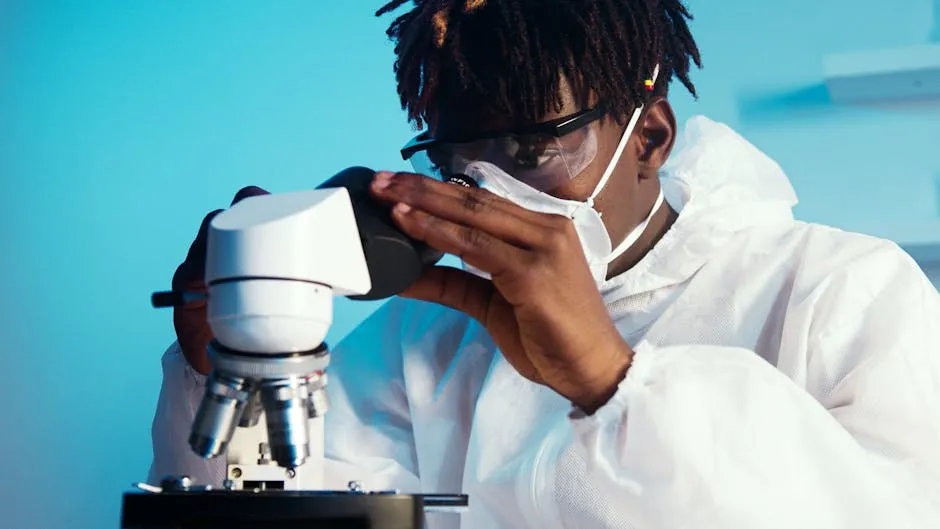
Cells are the basic units of life, but most are too small to see without special equipment. Life scientists rely on a variety of tools and technologies to investigate living things, from single-celled bacteria to complex animals. These instruments allow scientists to observe, measure, and analyze the structures and processes that make life possible. By using these tools, researchers answer important questions about health, the environment, and how living systems work. The development of scientific technology has transformed our understanding of biology and opened up new frontiers in research.
Microscopes: Revealing the Invisible World
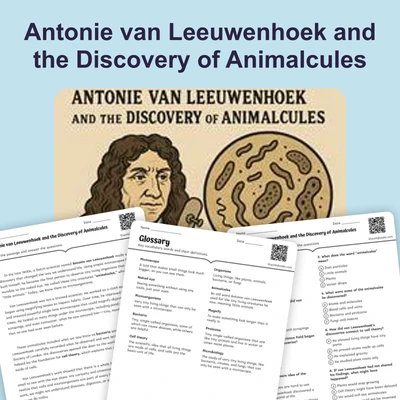
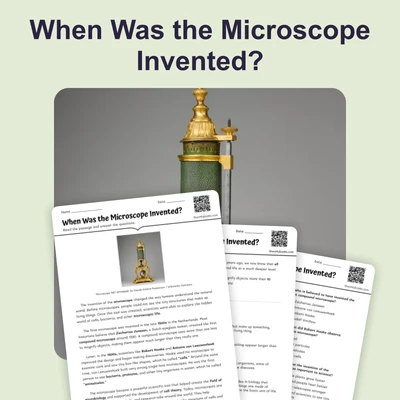
Microscopes are perhaps the most important tool in life science. The first simple microscopes, created by Antonie van Leeuwenhoek in the 1600s, allowed scientists to see cells for the first time. Today, light microscopes are used to magnify cells up to 1,000 times, making it possible to study bacteria, plant cells, and even the movement of tiny organisms. More advanced electron microscopes, including scanning electron microscopes (SEM) and transmission electron microscopes (TEM), can magnify objects up to 2 million times and reveal details as small as 0.1 nanometers. Scientists also use slides and staining techniques to highlight specific cell parts, making them easier to identify under the microscope.
Tools for Studying and Experimenting
To grow and study microorganisms, researchers use petri dishes filled with nutrient-rich agar and incubators that keep conditions just right for growth. A centrifuge spins samples at high speeds, separating substances in a mixture based on their density. This is important for collecting DNA, proteins, or cell parts. Gel electrophoresis is a technique that uses electricity to separate DNA fragments by size, helping scientists identify genetic differences and similarities. These methods allow scientists to answer questions about genetics, disease, and evolution.
Modern Technology: Expanding Possibilities
Newer technologies have expanded what life scientists can study. DNA sequencing machines read the genetic code of organisms, providing millions of data points about heredity and traits. Computer modeling helps scientists predict how cells or entire ecosystems behave under different conditions. Satellite tracking devices attached to wildlife allow ecologists to monitor animal movements across continents, revealing migration patterns and habitat needs. Each of these technologies helps scientists make discoveries that were impossible in the past.
Doctors, microbiologists, ecologists, geneticists, and biomedical researchers all use these tools in their daily work. For example, a geneticist might use gel electrophoresis and DNA sequencing to diagnose genetic diseases, while an ecologist could use satellite data to help protect endangered species. The interaction between different tools and technologies allows for deeper investigations and more accurate conclusions in life science.
As scientific tools become more advanced, our ability to solve problems in medicine, agriculture, and conservation grows. These technologies also raise important questions about ethics, safety, and the impact of science on society. The future of life science will depend on how these powerful tools are used to improve lives and understand the living world.
Interesting Fact:
The human genome contains over 3 billion DNA base pairs, and modern DNA sequencers can read them all in just a few days!
Comprehension quiz (10 questions)
1. What is the main purpose of microscopes in life science?
2. Which tool is used to separate substances in a mixture by spinning at high speed?
3. What do petri dishes and incubators help scientists do?
4. What is the function of gel electrophoresis?
5. What does DNA sequencing allow scientists to do?
6. What does the word 'incubator' mean as used in the passage?
7. In the passage, what does 'computer modeling' help scientists do?
8. Which of the following careers might use satellite tracking?
9. True or False: Light microscopes can magnify objects up to 1,000 times.
10. True or False: Gel electrophoresis uses heat to separate DNA fragments.
Perfect for the way you teach
- Build comprehension skills
- Auto-graded quiz
- Differentiated reading
- Read together at home
- Improve fluency
- Quiet reading time
- Reading curriculum support
- Independent practice
- Track Lexile growth