Cryptobiosis: Pausing Life to Survive
Interactive passage with audio narration, comprehension questions, and printable PDF.
By completing this purchase you agree to our Terms of Use and Privacy Policy. Your subscription renews automatically until you cancel. You can cancel anytime from your account settings. All sales are final and non-refundable. Digital content is available for download in your account immediately upon purchase.
What's included
Cryptobiosis: Pausing Life to Survive preview and details
About this printable Cryptobiosis: Pausing Life to Survive science reading passage, NGSS-aligned (Grade 6)
Sample passage and quiz from Cryptobiosis: Pausing Life to Survive
Reading passage and comprehension quiz preview
Cryptobiosis: Pausing Life to Survive
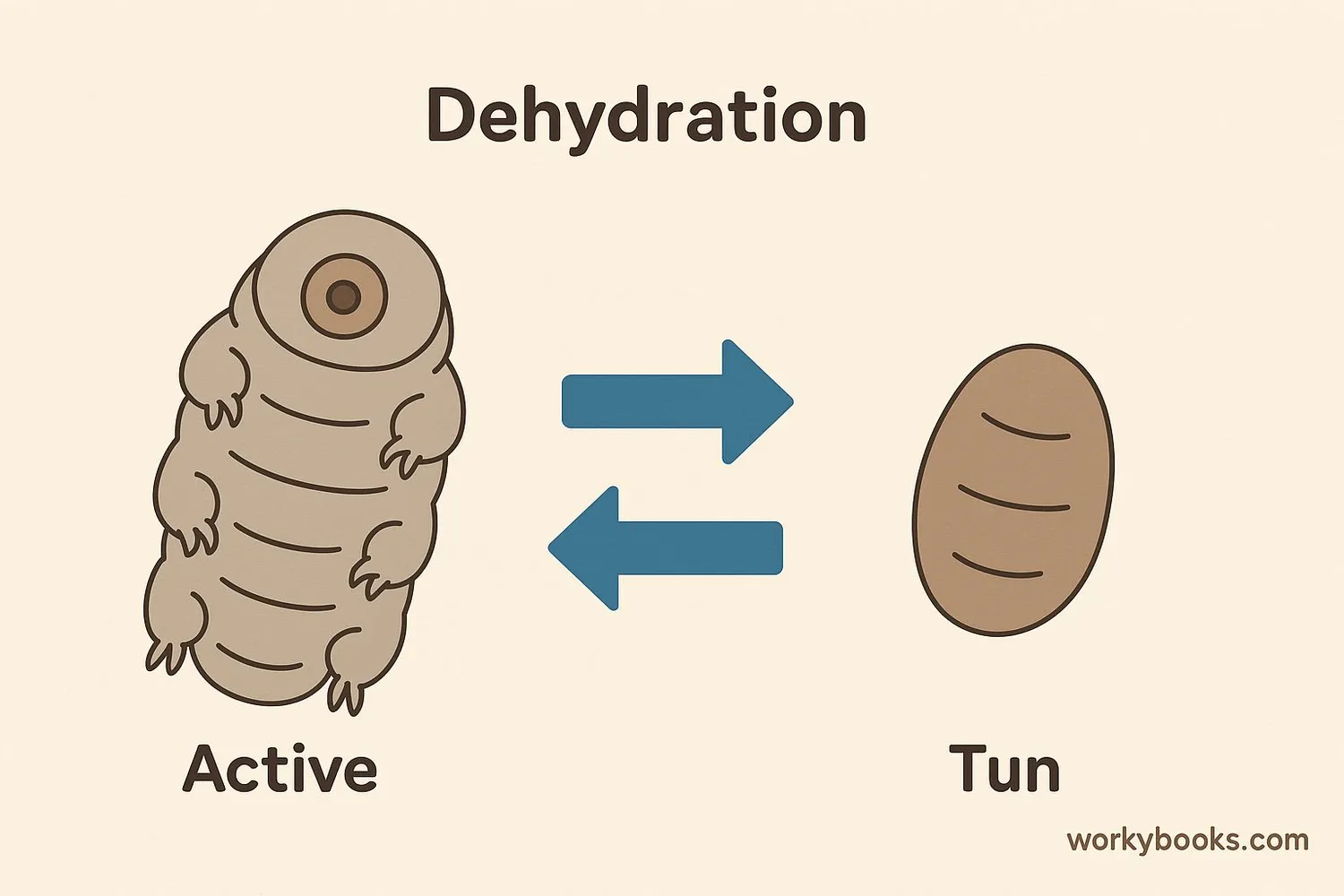
Some organisms have an extraordinary survival strategy that allows them to endure extreme conditions by entering a state called cryptobiosis. During cryptobiosis, an organism’s metabolic activity—the chemical processes necessary for life—slows down to nearly undetectable levels. This state functions like a form of suspended animation, enabling the organism to survive until conditions improve, at which point normal life processes resume.
This incredible survival strategy allows organisms to withstand conditions that would normally kill them. These extreme conditions can include freezing temperatures, intense heat, total lack of water, or even high radiation. Organisms that can enter cryptobiosis are often found in environments where these harsh changes happen regularly. They have specialized processes to maintain internal stability despite external changes, a key concept in understanding how life adapts.
One of the most famous masters of cryptobiosis is the tardigrade, also known as a 'water bear' or 'moss piglet.' These tiny, eight-legged creatures are incredibly resilient. When their environment becomes too dry, tardigrades can shrivel up into a tiny, almost indestructible ball called a 'tun.' In this state, their bodies replace water with a special sugar called trehalose, which protects their cells from damage. This specific type of cryptobiosis, triggered by a lack of water, is called anhydrobiosis. They can stay in this tun state for years, even decades, and then spring back to life when water returns.
Other forms of cryptobiosis exist too. For example, some organisms can survive extreme cold through cryobiosis, where their cells prevent ice crystals from forming. Others endure oxygen deprivation with anoxybiosis. The ability to enter a dormant state is a remarkable example of evolution in action, showcasing how life finds ways to persist against all odds. Understanding cryptobiosis helps us learn more about the limits of life and how living systems can maintain their structure and function under the toughest challenges. It's a true marvel of biological adaptation and survival in extreme environments.
Interesting Fact: Tardigrades have been known to survive the vacuum of space, making them one of the toughest animals on Earth!
Comprehension quiz (10 questions)
1. What is cryptobiosis?
2. Which animal is a master of cryptobiosis?
3. Why do organisms enter cryptobiosis?
4. What is a 'tun' state for a tardigrade?
5. Anhydrobiosis specifically helps organisms survive what?
6. What special sugar protects tardigrade cells?
7. Which condition is NOT mentioned as a trigger for cryptobiosis?
8. If an organism can survive in conditions of no oxygen, what type of cryptobiosis is it using?
9. Tardigrades can survive in space. Is this statement True or False?
10. What does 'metabolic activity' mean in the passage?
Perfect for the way you teach
- Build comprehension skills
- Auto-graded quiz
- Differentiated reading
- Read together at home
- Improve fluency
- Quiet reading time
- Reading curriculum support
- Independent practice
- Track Lexile growth