Ancient Humans Adapt to Different Climates — Reading Comprehension
Rate this
Premium Resource
Present
Present in classroom. No work saved
Assign
Classroom with student accounts, Track progress
Quick Play
No student accounts, assign with a link
Grades
6
7
8
PRINT+DIGITAL RESOURCE
This learning resource is available in interactive and printable formats. The interactive worksheet can be played online and assigned to students. The Printable PDF version can be downloaded and printed for completion by hand.
This engaging ancient history reading passage explores how early humans adapted to different climates, especially during the Ice Ages. Students analyze archaeological evidence and primary sources to learn how Homo sapiens and Neanderthals survived harsh environments, migrated across continents, and used tools and clothing to thrive. The passage addresses cause-and-effect relationships, change over time, and the human connection to geography. Activities include a comprehension quiz, writing prompts, and graphic organizers aligned to CA HSS 6.1.1 and TEKS 113.18.b.1 standards. The resource includes a Spanish translation and read aloud audio, supporting diverse learners. Key vocabulary is highlighted, and the passage ends with an intriguing historical fact. This resource helps students develop historical thinking skills as they explore the resilience and ingenuity of early humans in the face of environmental challenges.
CONTENT PREVIEW
Expand content preview
Early humans demonstrated remarkable ability to adapt to different environments.
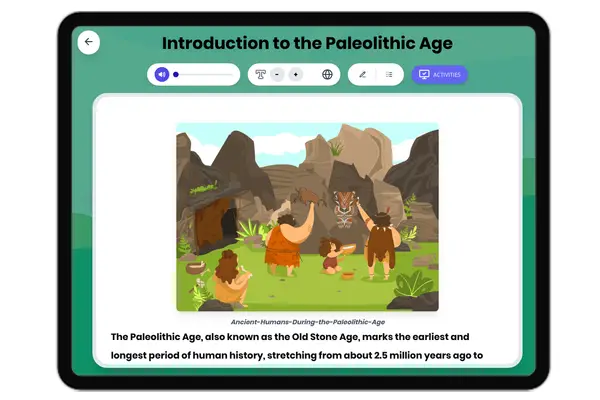
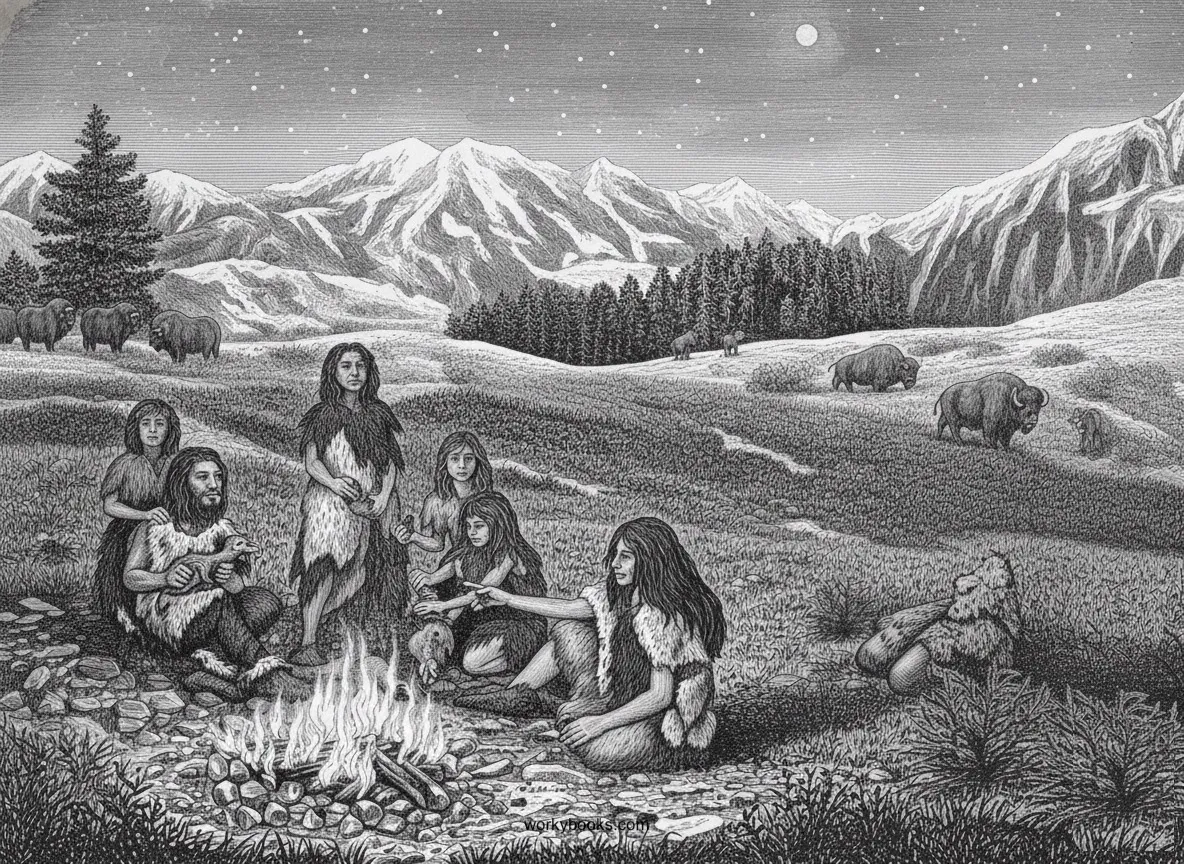
Throughout prehistory, early humans demonstrated remarkable ability to adapt to different environments, especially during the Ice Ages. The Ice Ages were periods of time, starting around 2.6 million years ago, when glaciers covered large parts of Earth. This era presented major challenges for survival, as temperatures were extremely cold and resources were scarce. Scientists study archaeological sites, such as caves and ancient campsites, to learn how early humans adjusted to these harsh climates.
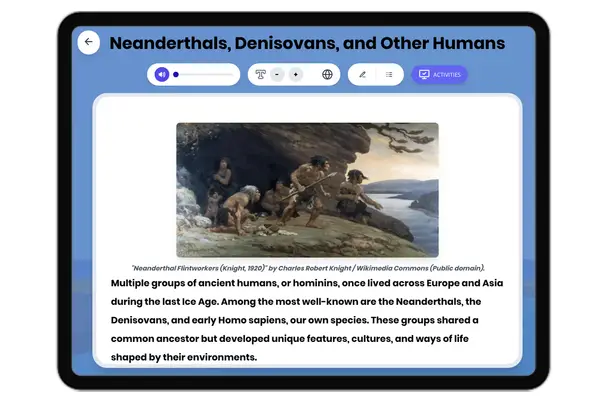
One key example comes from the Neanderthals, a species of ancient human who lived in Europe and western Asia. Neanderthals survived cold Ice Age winters by making warm clothing from animal skins and building sturdy shelters. Archaeologists have found evidence of carefully constructed hearths and tools designed for scraping hides. In the Shanidar Cave in Iraq, researchers discovered the remains of Neanderthals alongside pollen from flowers, suggesting that these early people cared for each other and perhaps even practiced burial rituals. This reveals how social cooperation helped them survive.
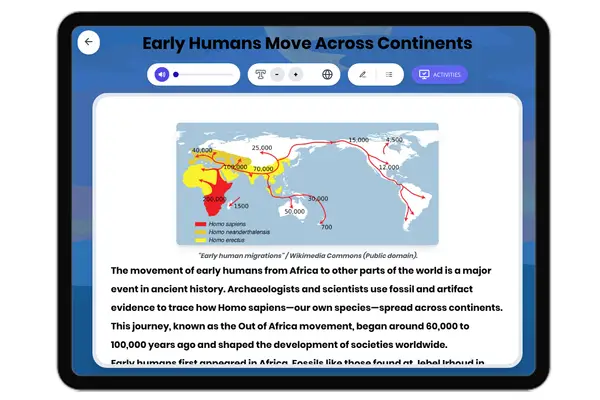
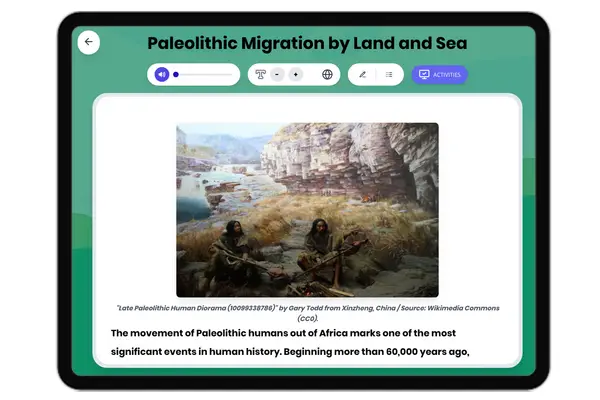
Another example is the migration of Homo sapiens, our own species, out of Africa about 60,000 years ago. As climates changed, early humans traveled across deserts, mountains, and frozen tundra. They developed new technologies like tailored clothing, bone needles, and more effective stone tools. Archaeological finds at sites such as Dolní Věstonice in the Czech Republic show evidence of mammoth bone huts and clay figurines, indicating creative solutions to environmental obstacles. These adaptations allowed Homo sapiens to spread into Europe, Asia, and eventually the Americas.
Geography played a critical role in shaping daily life. In cold regions, early humans relied on large Ice Age animals for food, clothing, and materials. In warmer environments, they gathered plants and hunted smaller game. Archaeologists use artifacts like spear points and cave paintings to reconstruct how people lived. For example, the famous Lascaux Cave in France contains paintings of bison and horses, showing how humans recorded their surroundings and perhaps shared important knowledge.
The ability to adapt to different climates was essential for the survival and success of early humans. Through innovation, cooperation, and resourcefulness, our ancestors learned to overcome environmental challenges and thrive. Their story demonstrates how geography and climate shape human development, a theme that continues throughout world history.
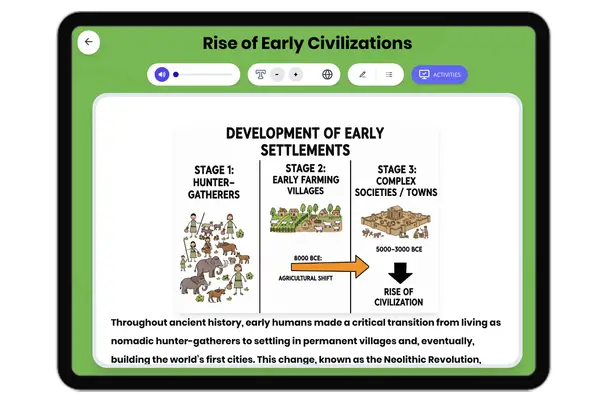
This adaptability set the stage for the rise of agriculture and the founding of the first civilizations.
Interesting Fact: Some Ice Age humans made jewelry and artworks from mammoth ivory, showing that creativity existed even in harsh times.
When did the Ice Ages begin?
About 2.6 million years ago5,000 years ago1,000 years ago10 million years ago
Where did Neanderthals mainly live?
Europe and western AsiaAfrica onlySouth AmericaNorth America
What did Homo sapiens use mammoth bones for?
Building hutsCooking foodMaking jewelry onlyWriting messages
Why did early humans develop new tools?
To adapt to new environmentsTo travel fasterFor decoration onlyTo farm crops
How did geography affect daily life?
It influenced food and shelterIt made everyone richIt caused warsIt stopped all migration