How Paleolithic People Changed the Environment — Reading Comprehension
Rate this|
1
Premium Resource
Present
Present in classroom. No work saved
Assign
Classroom with student accounts, Track progress
Quick Play
No student accounts, assign with a link
Grades
6
7
8
PRINT+DIGITAL RESOURCE
This learning resource is available in interactive and printable formats. The interactive worksheet can be played online and assigned to students. The Printable PDF version can be downloaded and printed for completion by hand.
This passage explores how Paleolithic people, or early humans, shaped their environment through the use of fire, hunting, land clearing, and resource extraction. Aligned to CA HSS 6.1 and CCSS RH.6-8.2, it examines archaeological and primary evidence, analyzes cause-and-effect relationships, and investigates the significance of early human actions in ancient history. Students will learn about environmental change, adaptation, and the impact of human activity on ecosystems. The resource includes a rigorous reading passage, multiple-choice and writing activities, graphic organizers, glossary, and both English and Spanish versions, with read aloud audio supported. Designed to support history and literacy skill development.
CONTENT PREVIEW
Expand content preview
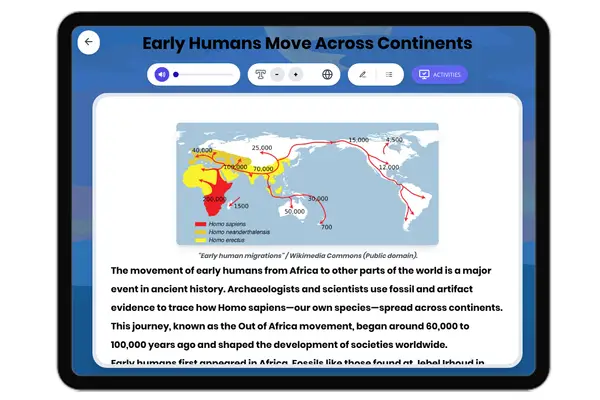
Paleolithic people, also known as early humans, significantly changed their environments through their daily activities and survival strategies. During the Paleolithic period, which lasted from approximately 2.5 million years ago to about 10,000 BCE, humans lived as hunter-gatherers across Africa, Europe, Asia, and beyond. Their actions left lasting marks on landscapes, animal populations, and ecosystems.
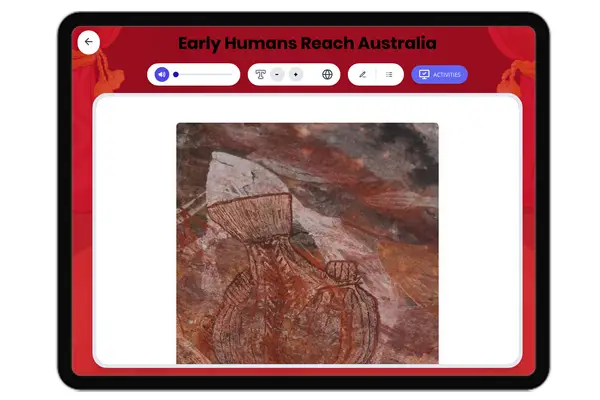
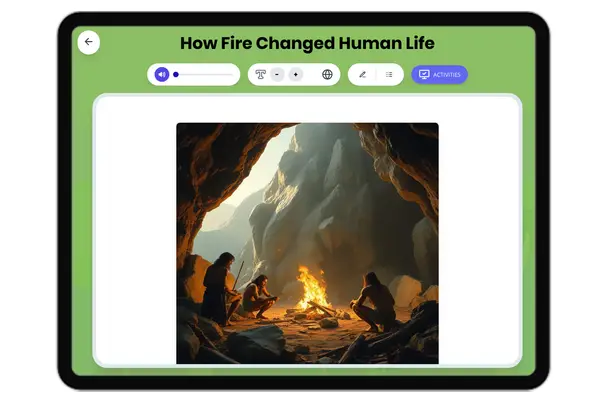
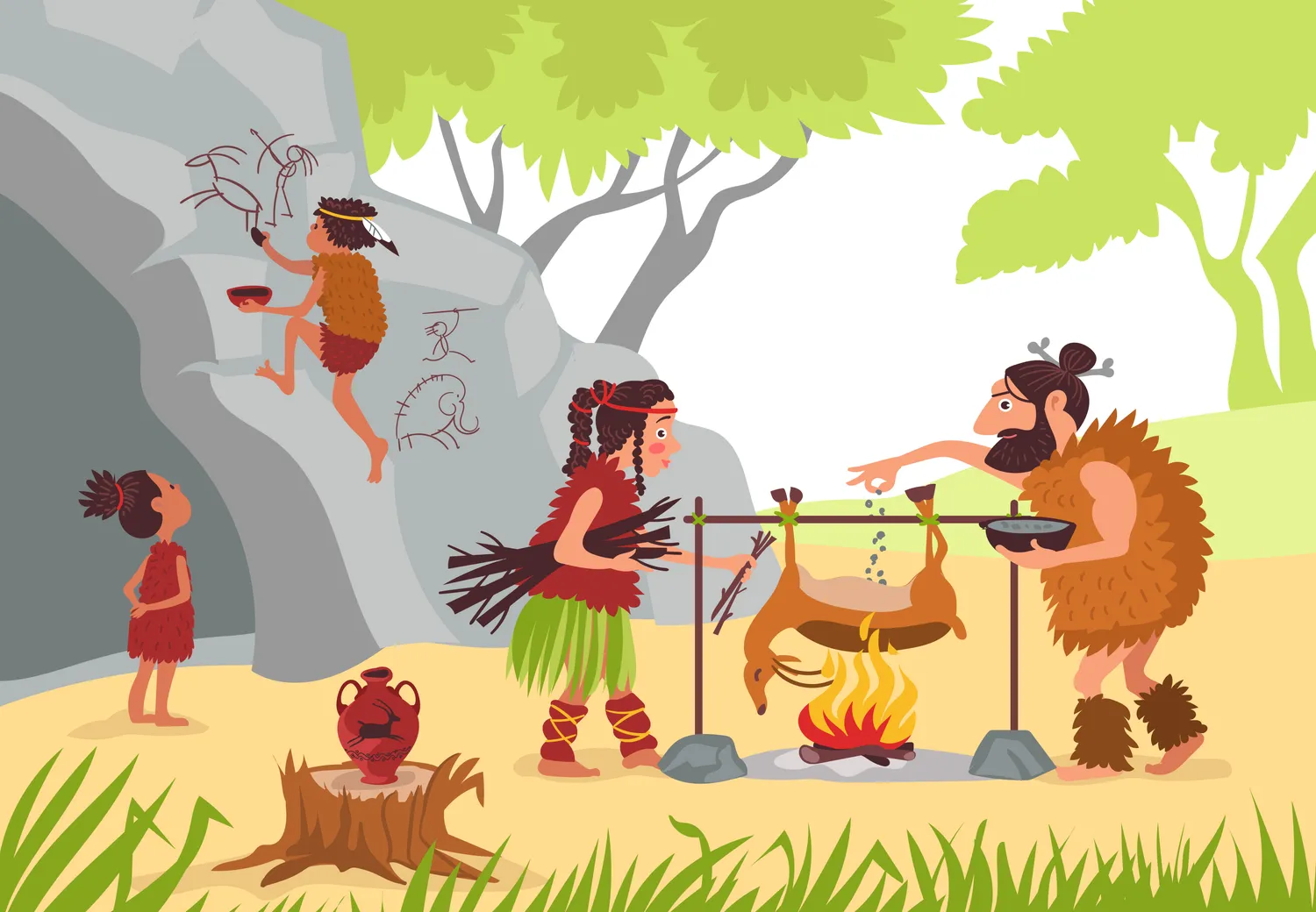
One of the most important ways early humans shaped the environment was through the controlled use of fire. Archaeological sites such as Wonderwerk Cave in South Africa, dating back over 1 million years, show evidence of early humans using fire for warmth, cooking, and protection. Fire allowed Paleolithic people to clear land, making it easier to travel and hunt. By burning underbrush, they could encourage the growth of certain plants, which attracted animals they hunted. This method, known as "fire-stick farming" by modern scholars, changed the types of plants and animals that lived in an area and is still observed in some Indigenous Australian communities today.
Hunting practices also had a major impact. Paleolithic humans used tools made of stone, bone, and wood to hunt large animals like mammoths, bison, and reindeer. Sites like the Dolní Věstonice settlement in the Czech Republic, dating to around 26,000 BCE, provide evidence of organized hunts and butchering. Over time, intense hunting led to the decline or extinction of some large animal species, such as the woolly mammoth and giant ground sloth. This loss changed ecosystems, as these animals played important roles in shaping plant life and soil.
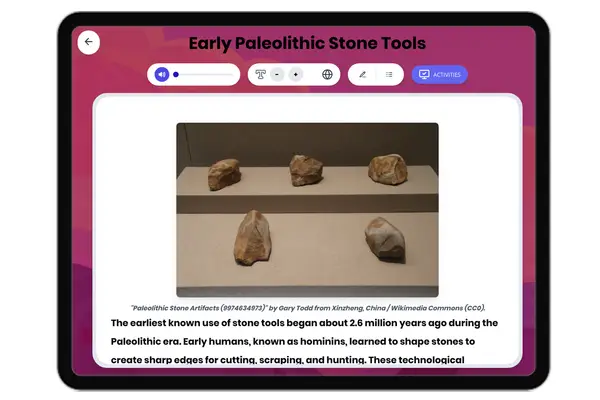
In addition to fire and hunting, early humans altered their environment through resource extraction. They gathered wood, stones, and plant materials to build shelters and make tools. Archaeologists have found evidence of stone quarries, such as those at Mount Carmel in Israel, where flint was collected for toolmaking. Land clearing for campsites and the repeated movement of groups across the land gradually changed local environments, leading to new patterns of vegetation growth and animal movement.
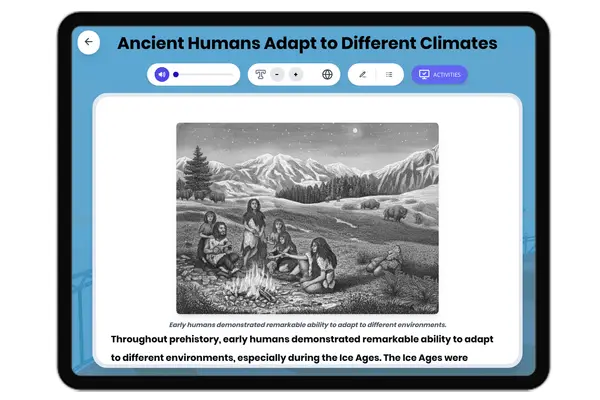
These environmental changes had both positive and negative effects. While fire and hunting allowed humans to survive and expand into new regions, they also contributed to habitat loss and the disappearance of some species. Paleolithic people adapted to these changes by developing new technologies, social structures, and migration patterns. Over thousands of years, their actions set the stage for later developments in agriculture and permanent settlements. Studying how early humans interacted with their environment helps historians understand the long-term relationship between humans and nature.
This topic connects to broader themes in ancient history, such as adaptation, innovation, and the lasting impact of human choices on the natural world.
Interesting Fact: Archaeologists believe that the use of fire by early humans may have helped shape the modern African savanna by maintaining open grasslands and reducing forests.
Where was fire use found over 1 million years ago?