Butterfly Food
Interactive passage with audio narration, comprehension questions, and printable PDF.
By completing this purchase you agree to our Terms of Use and Privacy Policy. Your subscription renews automatically until you cancel. You can cancel anytime from your account settings. All sales are final and non-refundable. Digital content is available for download in your account immediately upon purchase.
What's included
Butterfly Food preview and details
About this printable Butterfly Food science reading passage, NGSS-aligned (Grades 1-3)
Sample passage and quiz from Butterfly Food
Reading passage and comprehension quiz preview
Butterfly Food
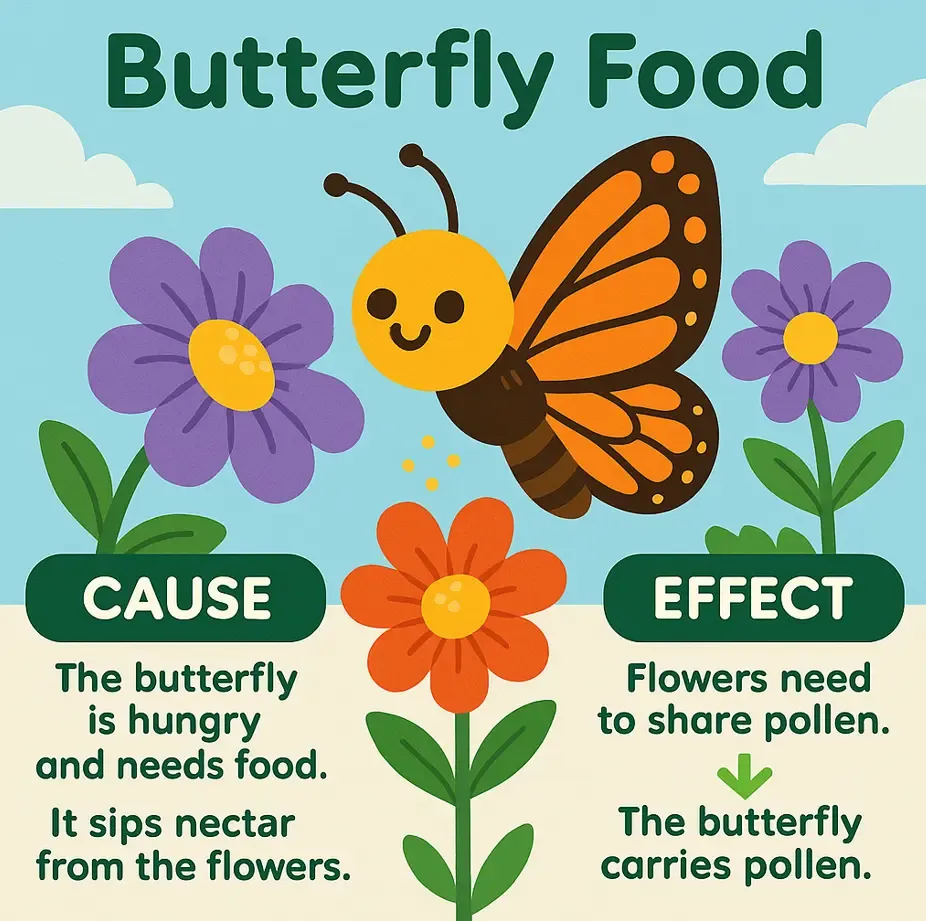
It was a warm summer afternoon, and a bright, colorful butterfly fluttered past. It landed on a purple flower and unrolled a long, thin tongue to sip something sweet. Then it flew to another flower, and another, doing the same thing.
Why was this beautiful butterfly so busy visiting all those flowers? Let's look for the causes of its actions and the effects we can observe.
- Observable Pattern 1: The butterfly flies from flower to flower, landing on each one.
- Cause: The butterfly is hungry and needs food.
- Effect: It sips sweet nectar from the flowers. This gives the butterfly energy to fly.
- Observable Pattern 2: As the butterfly sips nectar, tiny yellow dust (pollen) from the flower sticks to its body. Then, when it flies to a new flower, some of that pollen rubs off.
- Cause: Flowers need help to share pollen with other flowers so they can make seeds.
- Effect: The butterfly carries pollen from one flower to another, helping the flowers grow new seeds. This is how flowers make more flowers!
So, the butterfly's hunger (a cause) makes it visit flowers (an effect). And its visits (a cause) help flowers make new seeds (an effect). Every flap of its wings, every sip of nectar, has a reason and creates an observable pattern in nature.
Comprehension quiz (8 questions)
1. What did the butterfly do on the purple flower?
2. What is the cause for the butterfly flying from flower to flower?
3. What does the butterfly sip from the flowers?
4. What is the effect of the butterfly sipping nectar from flowers?
5. What sticks to the butterfly's body as it sips nectar?
6. What is the main idea of this passage?
7. If a plant has many flowers, what is a likely cause for many butterflies visiting it?
8. Which of these is an example of an observable pattern from the story?
Perfect for the way you teach
- Build comprehension skills
- Auto-graded quiz
- Differentiated reading
- Read together at home
- Improve fluency
- Quiet reading time
- Reading curriculum support
- Independent practice
- Track Lexile growth