This learning resource is available in interactive and printable formats. The interactive worksheet can be played online and assigned to students. The Printable PDF version can be downloaded and printed for completion by hand.
This reading passage, 'The Sun, the Rain, and the Tiny Seed', is designed to illustrate the core concepts of NGSS LS2.A: Interdependent Relationships in Ecosystems. It explains in simple terms how plants, starting from a tiny seed, depend on non-living components like water and light from their environment to grow. The passage emphasizes the interconnectedness within an ecosystem, highlighting that plants provide essential resources like food and oxygen in return for what they receive. This resource supports reading comprehension while introducing foundational concepts in life science and ecosystem dynamics for elementary students.
CONTENT PREVIEW
Expand content preview
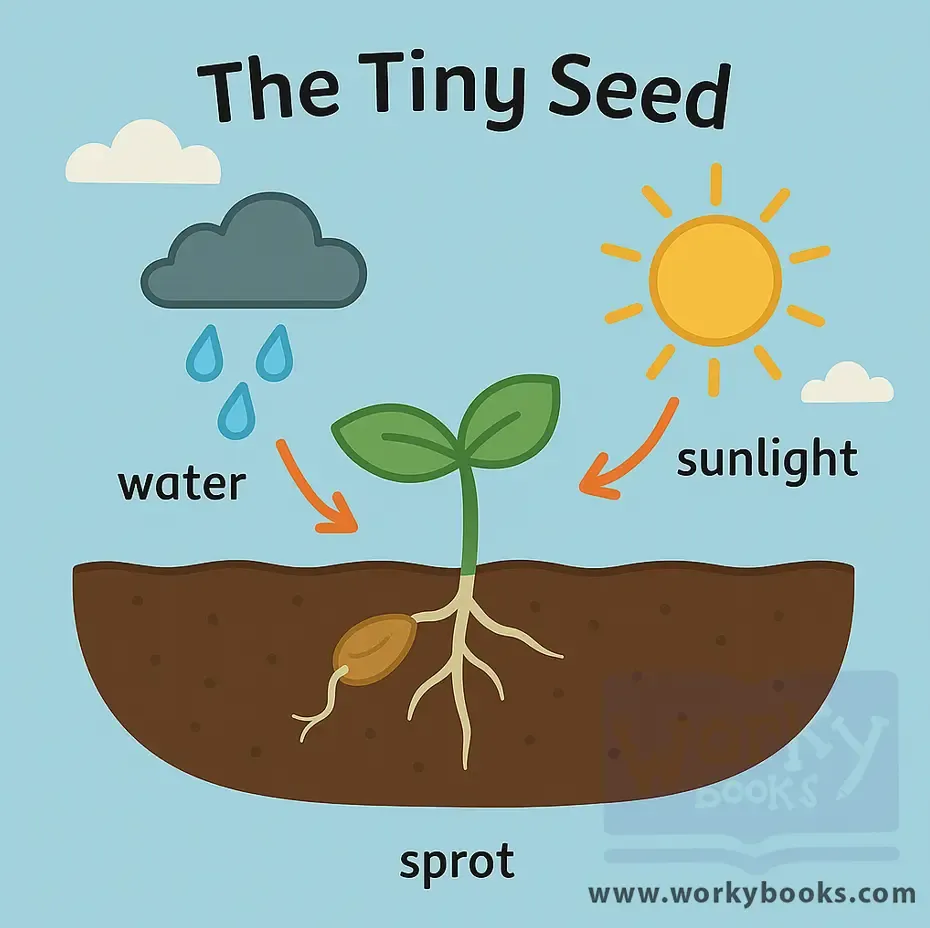
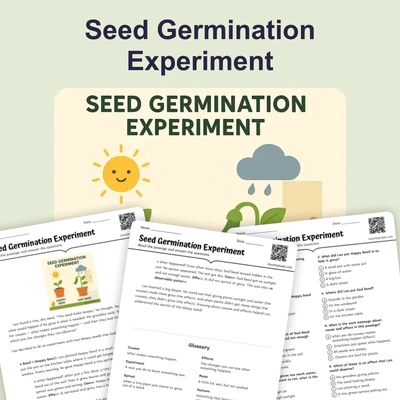
In a sunny field, a tiny seed lay buried in the soil. It was waiting. It needed just the right things to wake up and start growing. The seed couldn't move, so it depended on its surroundings for what it needed.
First, it needed water. A gentle rain began to fall, soaking into the ground. The seed happily soaked up the moisture. Water helps the seed soften and allows the little plant inside to begin to sprout. Without water, the seed would just stay a seed, sleeping forever.
Next, it needed sunlight. When the sun came out, its warm rays touched the soil. The tiny sprout, once it peeked out of the ground, began to reach for the light. Sunlight gives plants the energy they need to make their own food and grow taller and stronger. Without sunlight, even with plenty of water, a plant would be pale and weak, unable to grow big.
So, you see, the little seed, and then the growing plant, depends on both the water from the rain and the light from the sun. These are important interdependent relationships in nature. Plants need water and light, and in return, healthy plants help the ecosystem by providing food and oxygen for other living things. Everything is connected!
What was waiting in the soil at the beginning of the story?
A big treeA tiny seedA small animalA puddle of water
What is the first thing the seed needed to wake up?
SunlightWarmthWaterSoil
What does sunlight give plants?
WaterEnergySoilRain
What happens if a seed does not get water?
It grows very bigIt stays a seedIt gets lots of sunlightIt makes its own food
What happens to a plant that has water but no sunlight?
It grows very strongIt makes lots of foodIt stays pale and weakIt helps other animals
What is the main idea of this passage?
How to plant a seedWhy rain is importantHow plants depend on water and lightWhat animals eat plants
What does "interdependent relationships" mean in this story?
Things that don't need each otherThings that live aloneThings that depend on each otherThings that are very strong
Which of these is an example of a plant depending on something in its environment?
A plant growing tallA plant soaking up rainA plant making its own foodA plant's leaves are green
Perfect For:
👩🏫 Teachers
• Reading comprehension practice
• Auto-graded assessments
• Literacy skill development
👨👩👧👦 Parents
• Reading practice at home
• Comprehension improvement
• Educational reading time
🏠 Homeschoolers
• Reading curriculum support
• Independent reading practice
• Progress monitoring
Reading Features:
📖
Reading Passage
Engaging fiction or nonfiction text
❓
Comprehension Quiz
Auto-graded questions
📊
Instant Feedback
Immediate results and scoring
📄
Printable Version
Download for offline reading
🔊
Read Aloud
Voice-over with word highlighting
Reviews & Ratings
No reviews yet. Be the first to share your experience!
Related Content
Where Does My Food Come From?
This reading passage, 'Where Does My Food Come From?', aligns with NGSS LS2.A: Interdependent Relationships in Ecosystem...
2-LS2-1
Meadow Ecosystem
This reading passage, 'Life in the Meadow', is designed for elementary students to understand NGSS LS2.A: Interdependent...
2-LS2-1
What do Tadpoles Eat?
This reading passage, 'The Pond's Busy Life', vividly describes a pond ecosystem to illustrate NGSS LS2.A: Interdependen...
2-LS2-1
What do Plants Need to Thrive?
This science passage, 'Growing Green!', is designed for second-grade students and aligns with the NGSS standard 2-LS2-1....
2-LS2-1
The Bean Plant
This reading passage, 'The Mystery of the Green Bean Plant', is designed for second-grade students to understand cause a...
2-LS2-1
Robin's Nest
This NGSS passage, 'The Mystery of the Chirping Robin', is designed for second-grade students to explore cause and effec...
2-LS2-1
Butterfly Food
This science passage, 'The Butterfly's Busy Day', is crafted for second-grade students to understand cause and effect re...
2-LS2-1
The Amazing Axolotl
This science reading passage, titled "The Amazing Axolotl," introduces young learners to one of Earth's most fascinating...
2-LS2-1
The Beaver Creek
This science reading passage, 'The Beaver's Big Build', explores cause and effect relationships in animal behavior for s...
2-LS2-1
Seed Germination Experiment
This reading passage, 'The Sleepy Seed's Big Surprise', targets second-grade students and reinforces NGSS 2-LS2-1 by foc...
2-LS2-1
Squirrel Nuts
This science passage, 'Why Did the Squirrel Bury the Nut?', introduces second-grade students to cause and effect relatio...