This learning resource is available in interactive and printable formats. The interactive worksheet can be played online and assigned to students. The Printable PDF version can be downloaded and printed for completion by hand.
This science passage, 'Why Did the Squirrel Bury the Nut?', introduces second-grade students to cause and effect relationships through observing animal behavior, aligning with NGSS 2-LS2-1. It details a squirrel's actions (effects) like burying nuts and links them to underlying causes such as preparing for winter or needing food. The narrative highlights how watching animals reveals clear, observable patterns that explain their behavior. This resource strengthens reading comprehension while fostering an understanding of basic ecological principles and scientific observation in a relatable context.
CONTENT PREVIEW
Expand content preview
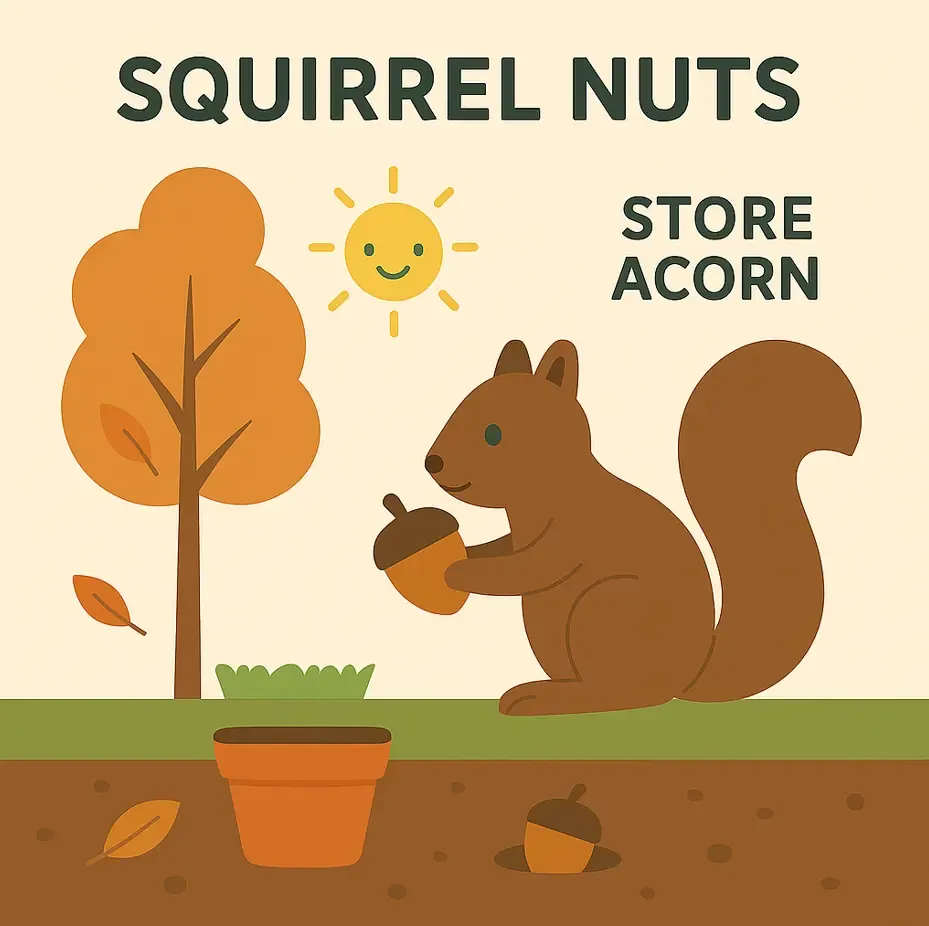
One sunny autumn morning, Maya was watching a busy squirrel in her backyard. The squirrel was running around, picking up acorns and then quickly digging little holes in the ground. It would drop an acorn in, cover it up, and then run off to find another.
"Why is the squirrel doing that?" Maya asked her dad.
"Good question, Maya!" her dad replied. "In nature, animals do things for a reason. There's a cause for every effect, and often we can see observable patterns if we watch carefully."
They watched the squirrel for a long time.
Observable Pattern 1: The squirrel gathered many nuts in autumn.
Cause: Winter is coming, and food will be hard to find.
Effect: The squirrel is collecting and burying nuts to store food for later.
Observable Pattern 2: The squirrel often dug its holes near the base of trees or under bushes.
Cause: These spots are easy to remember and offer some protection for the buried nuts.
Effect: The squirrel buries its food in safe, memorable places so it can find them when it's hungry.
Observable Pattern 3: Sometimes, the squirrel dug up a nut from an old spot and ate it.
Cause: The squirrel was hungry and needed food.
Effect: It remembered where it had buried food and dug it up to eat.
Maya realized that the squirrel wasn't just playing; it was preparing for the future! Its actions (effects) were caused by its need for food and safety, and by watching, she could see these clear patterns.
What was the squirrel doing in Maya's backyard?
Climbing a treePlaying with leavesGathering and burying nutsChasing a bird
What time of year was it in the story?
SummerSpringWinterAutumn
What is the cause for the squirrel collecting and burying nuts?
It is boredWinter is comingIt likes to digIt is playing games
Where did the squirrel often dig its holes?
In the middle of the grassNear the sidewalkNear trees or under bushesRight by the house
What was the effect of the squirrel being hungry?
It climbed a treeIt dug up a buried nutIt ran awayIt found new nuts
What is the main idea of this passage?
How squirrels play games. What kind of nuts squirrels like.How a squirrel's actions are caused by its needs.Why autumn leaves fall.
If you see birds flying south in the autumn, what is a likely cause?
They are looking for warmer weather.They are tired of flying.want to see new places.They are looking for friends.
Which of these is an example of an observable pattern from the story?
Maya asking her dad a question.The squirrel gathering many nuts in autumn.Maya's dad explaining things.The squirrel feeling hungry.
Perfect For:
๐ฉโ๐ซ Teachers
โข Reading comprehension practice
โข Auto-graded assessments
โข Literacy skill development
๐จโ๐ฉโ๐งโ๐ฆ Parents
โข Reading practice at home
โข Comprehension improvement
โข Educational reading time
๐ Homeschoolers
โข Reading curriculum support
โข Independent reading practice
โข Progress monitoring
Reading Features:
๐
Reading Passage
Engaging fiction or nonfiction text
โ
Comprehension Quiz
Auto-graded questions
๐
Instant Feedback
Immediate results and scoring
๐
Printable Version
Download for offline reading
๐
Read Aloud
Voice-over with word highlighting
Reviews & Ratings
No reviews yet. Be the first to share your experience!
Related Content
The Tiny Seed
This reading passage, 'The Sun, the Rain, and the Tiny Seed', is designed to illustrate the core concepts of NGSS LS2.A:...
2-LS2-1
Where Does My Food Come From?
This reading passage, 'Where Does My Food Come From?', aligns with NGSS LS2.A: Interdependent Relationships in Ecosystem...
2-LS2-1
Meadow Ecosystem
This reading passage, 'Life in the Meadow', is designed for elementary students to understand NGSS LS2.A: Interdependent...
2-LS2-1
What do Tadpoles Eat?
This reading passage, 'The Pond's Busy Life', vividly describes a pond ecosystem to illustrate NGSS LS2.A: Interdependen...
2-LS2-1
What do Plants Need to Thrive?
This science passage, 'Growing Green!', is designed for second-grade students and aligns with the NGSS standard 2-LS2-1....
2-LS2-1
The Bean Plant
This reading passage, 'The Mystery of the Green Bean Plant', is designed for second-grade students to understand cause a...
2-LS2-1
Robin's Nest
This NGSS passage, 'The Mystery of the Chirping Robin', is designed for second-grade students to explore cause and effec...
2-LS2-1
Butterfly Food
This science passage, 'The Butterfly's Busy Day', is crafted for second-grade students to understand cause and effect re...
2-LS2-1
The Amazing Axolotl
This science reading passage, titled "The Amazing Axolotl," introduces young learners to one of Earth's most fascinating...
2-LS2-1
The Beaver Creek
This science reading passage, 'The Beaver's Big Build', explores cause and effect relationships in animal behavior for s...
2-LS2-1
Seed Germination Experiment
This reading passage, 'The Sleepy Seed's Big Surprise', targets second-grade students and reinforces NGSS 2-LS2-1 by foc...