The Bean Plant
Interactive passage with audio narration, comprehension questions, and printable PDF.
By completing this purchase you agree to our Terms of Use and Privacy Policy. Your subscription renews automatically until you cancel. You can cancel anytime from your account settings. All sales are final and non-refundable. Digital content is available for download in your account immediately upon purchase.
What's included
The Bean Plant preview and details
About this printable The Bean Plant science reading passage, NGSS-aligned (Grades 1-3)
Sample passage and quiz from The Bean Plant
Reading passage and comprehension quiz preview
The Bean Plant
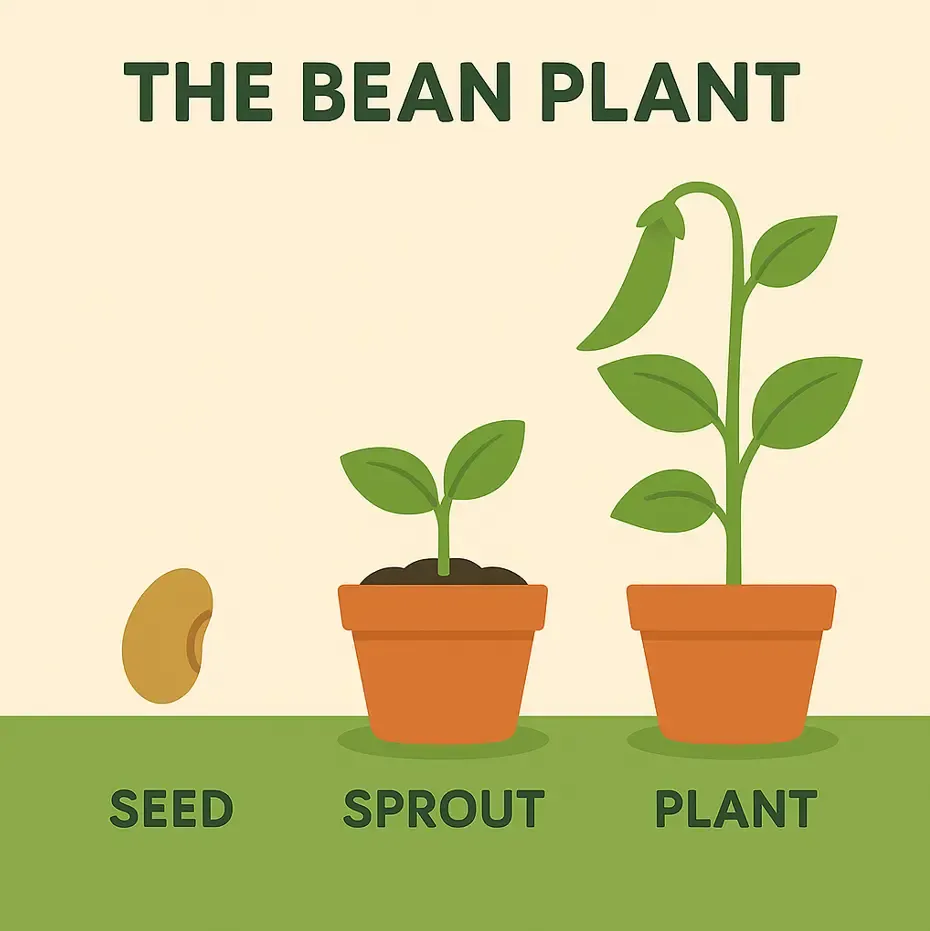
Leo had a tiny bean seed. He planted it in a pot with some soil and put it on his kitchen table. Every day, he watched it. A little green sprout poked through the dirt! "Wow!" he thought. "It's growing!"
His older sister, Maya, saw him looking at the sprout. "What do you think made it grow, Leo?" she asked.
Leo thought for a moment. "The soil?" he guessed. "And maybe the water I gave it!"
Maya smiled. "Those are good ideas. But how could we be sure that the plant really needs water? Or that it really needs sunlight? What if it could grow without them?"
Leo's eyes widened. "We could try it!" he said, remembering what his teacher said about being a scientist. "We need to test just one thing at a time to see what happens."
So, they decided to get two more small bean plants, just like Leo's first one.
- Plant 1 (Leo's original): This plant would get sunlight from the window and regular water. This would be their comparison plant – what a healthy plant usually looks like.
- Plant 2: This plant would get sunlight from the window, but no water. They would watch it closely to see what happened without water.
- Plant 3: This plant would get water, but no sunlight. They would put it inside a closed box, away from any light.
"Every morning," Maya explained, "we'll check all three plants. We'll draw what we see in our science notebooks. Are the leaves green? Are they wilting? Is the plant getting taller? By comparing them, we'll solve the mystery of what the bean plant needs to grow!"
Leo couldn't wait to be a plant detective and uncover the secrets of healthy plant growth.
Comprehension quiz (8 questions)
1. What did Leo plant at the beginning of the story?
2. Where did Leo put his first plant?
3. Who helped Leo think about what plants need?
4. What did Plant 2 get in the experiment?
5. Why did they test only one thing at a time?
6. What is the main purpose of this story?
7. If you wanted to see if plants grow faster with music, what would you do?
8. Which plant was used for comparison in the experiment?
Perfect for the way you teach
- Build comprehension skills
- Auto-graded quiz
- Differentiated reading
- Read together at home
- Improve fluency
- Quiet reading time
- Reading curriculum support
- Independent practice
- Track Lexile growth