Where Does My Food Come From? โ Reading Comprehension
Rate this
Premium Resource
Present
Present in classroom. No work saved
Assign
Classroom with student accounts, Track progress
Quick Play
No student accounts, assign with a link
Grades
1
2
3
Standards
2-LS2-1
PRINT+DIGITAL RESOURCE
This learning resource is available in interactive and printable formats. The interactive worksheet can be played online and assigned to students. The Printable PDF version can be downloaded and printed for completion by hand.
This reading passage, 'Where Does My Food Come From?', aligns with NGSS LS2.A: Interdependent Relationships in Ecosystems. It explores the vital role of sunlight and water in plant growth, explaining how plants use these non-living components to create their own food. The passage highlights the interconnectedness within an ecosystem by showing how healthy plants then provide food for other living things, including humans. This resource aids in reading comprehension while introducing fundamental concepts about plant needs and the intricate relationships within natural environments for elementary science students.
CONTENT PREVIEW
Expand content preview
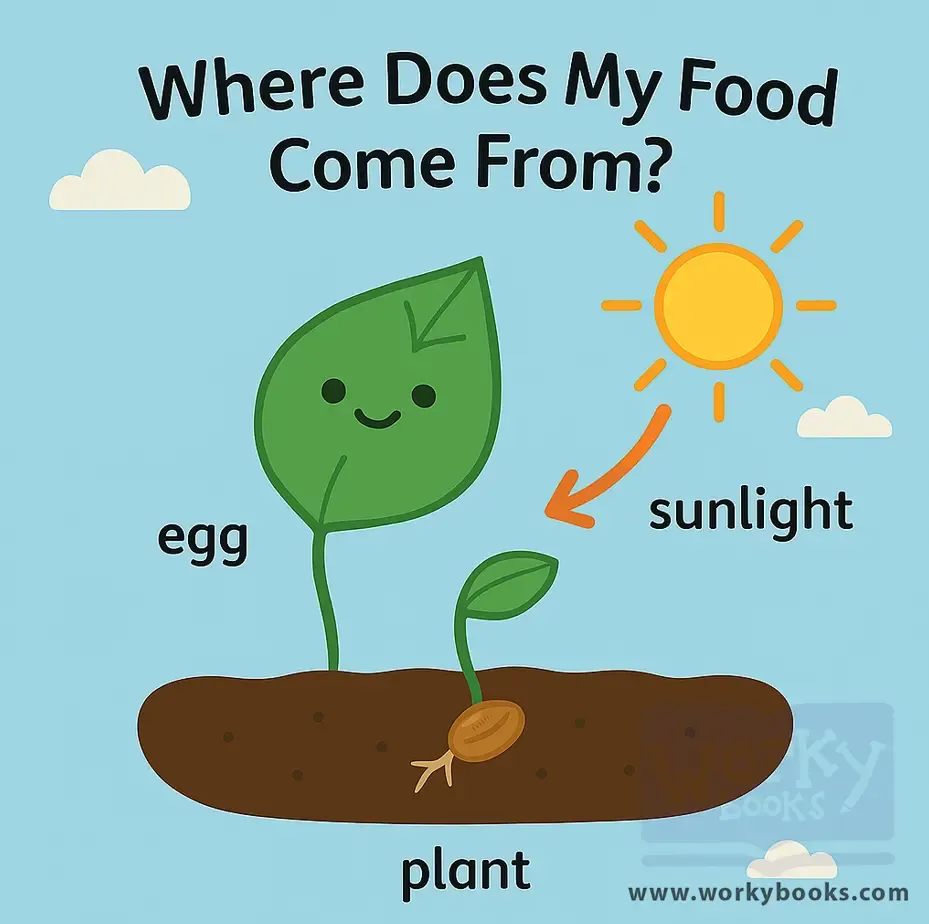
Have you ever eaten a crunchy apple or a sweet carrot? Where do you think that food really comes from? It starts with plants! Plants are amazing living things, but they can't just grow anywhere or by themselves. They need help from other parts of nature.
Think about a big, green leaf. How does it get its color and get big? It needs sunlight! Just like you need food to have energy to play, a plant needs energy from the sun. Leaves have a special job: they use sunlight to make the plant's food. This is why plants love sunny spots. Without enough sunlight, a plant's leaves might turn pale or yellow, and the plant wouldn't grow strong.
What else do plants drink? Water, of course! Roots underground act like tiny straws, sucking up water from the soil. This water travels all the way up to the leaves and helps the plant stay firm and healthy. If a plant doesn't get enough water, its leaves will wilt and droop, and it might even dry up completely.
So, plants depend on the sun for energy and water for drinking. They can't live without them! And because plants make their own food using sunlight and water, they become food for many other living things, including us! This shows how everything in an ecosystem is connected, forming interdependent relationships.
What is the first thing mentioned that food like apples and carrots starts with?
AnimalsPeoplePlantsWater
What gives plants the energy they need to grow?
WaterSoilSunlightAir
What do roots act like to get water from the soil?
Tiny leavesSmall branchesSpecial cupsTiny straws
What happens to a plant's leaves if it doesn't get enough sunlight?
They turn dark greenThey might turn pale or yellowThey get biggerThey grow flowers
What will happen if a plant doesn't get enough water?
Its leaves will stand up straightIt will grow very tallIts leaves will wilt and droopIt will make more food
What is the main idea of this passage?
How humans eat plantsHow plants make their own foodHow plants depend on light and waterThe different parts of a plant
What does the passage mean by "everything in an ecosystem is connected"?
Animals and plants touch each other.All living and non-living things in an area need each other.Plants only need sunlight to grow.Only plants need water.
Which of these shows an "interdependent relationship" from the passage?
A plant growing big and green. Leaves turning yellow without sunlight. Roots sucking up water. All of the above.
Perfect For:
๐ฉโ๐ซ Teachers
โข Reading comprehension practice
โข Auto-graded assessments
โข Literacy skill development
๐จโ๐ฉโ๐งโ๐ฆ Parents
โข Reading practice at home
โข Comprehension improvement
โข Educational reading time
๐ Homeschoolers
โข Reading curriculum support
โข Independent reading practice
โข Progress monitoring
Reading Features:
๐
Reading Passage
Engaging fiction or nonfiction text
โ
Comprehension Quiz
Auto-graded questions
๐
Instant Feedback
Immediate results and scoring
๐
Printable Version
Download for offline reading
๐
Read Aloud
Voice-over with word highlighting
Reviews & Ratings
No reviews yet. Be the first to share your experience!
Related Content
The Tiny Seed
This reading passage, 'The Sun, the Rain, and the Tiny Seed', is designed to illustrate the core concepts of NGSS LS2.A:...
2-LS2-1
Meadow Ecosystem
This reading passage, 'Life in the Meadow', is designed for elementary students to understand NGSS LS2.A: Interdependent...
2-LS2-1
What do Tadpoles Eat?
This reading passage, 'The Pond's Busy Life', vividly describes a pond ecosystem to illustrate NGSS LS2.A: Interdependen...
2-LS2-1
What do Plants Need to Thrive?
This science passage, 'Growing Green!', is designed for second-grade students and aligns with the NGSS standard 2-LS2-1....
2-LS2-1
The Bean Plant
This reading passage, 'The Mystery of the Green Bean Plant', is designed for second-grade students to understand cause a...
2-LS2-1
Robin's Nest
This NGSS passage, 'The Mystery of the Chirping Robin', is designed for second-grade students to explore cause and effec...
2-LS2-1
Butterfly Food
This science passage, 'The Butterfly's Busy Day', is crafted for second-grade students to understand cause and effect re...
2-LS2-1
The Amazing Axolotl
This science reading passage, titled "The Amazing Axolotl," introduces young learners to one of Earth's most fascinating...
2-LS2-1
The Beaver Creek
This science reading passage, 'The Beaver's Big Build', explores cause and effect relationships in animal behavior for s...
2-LS2-1
Seed Germination Experiment
This reading passage, 'The Sleepy Seed's Big Surprise', targets second-grade students and reinforces NGSS 2-LS2-1 by foc...
2-LS2-1
Squirrel Nuts
This science passage, 'Why Did the Squirrel Bury the Nut?', introduces second-grade students to cause and effect relatio...