What do Tadpoles Eat?
Interactive passage with audio narration, comprehension questions, and printable PDF.
By completing this purchase you agree to our Terms of Use and Privacy Policy. Your subscription renews automatically until you cancel. You can cancel anytime from your account settings. All sales are final and non-refundable. Digital content is available for download in your account immediately upon purchase.
What's included
What do Tadpoles Eat? preview and details
About this printable What do Tadpoles Eat? science reading passage, NGSS-aligned (Grades 1-3)
Sample passage and quiz from What do Tadpoles Eat?
Reading passage and comprehension quiz preview
What do Tadpoles Eat?
Deep in the forest, there was a quiet pond. But if you looked closely, it was not quiet at all! It was bursting with life, and every living thing there was connected.
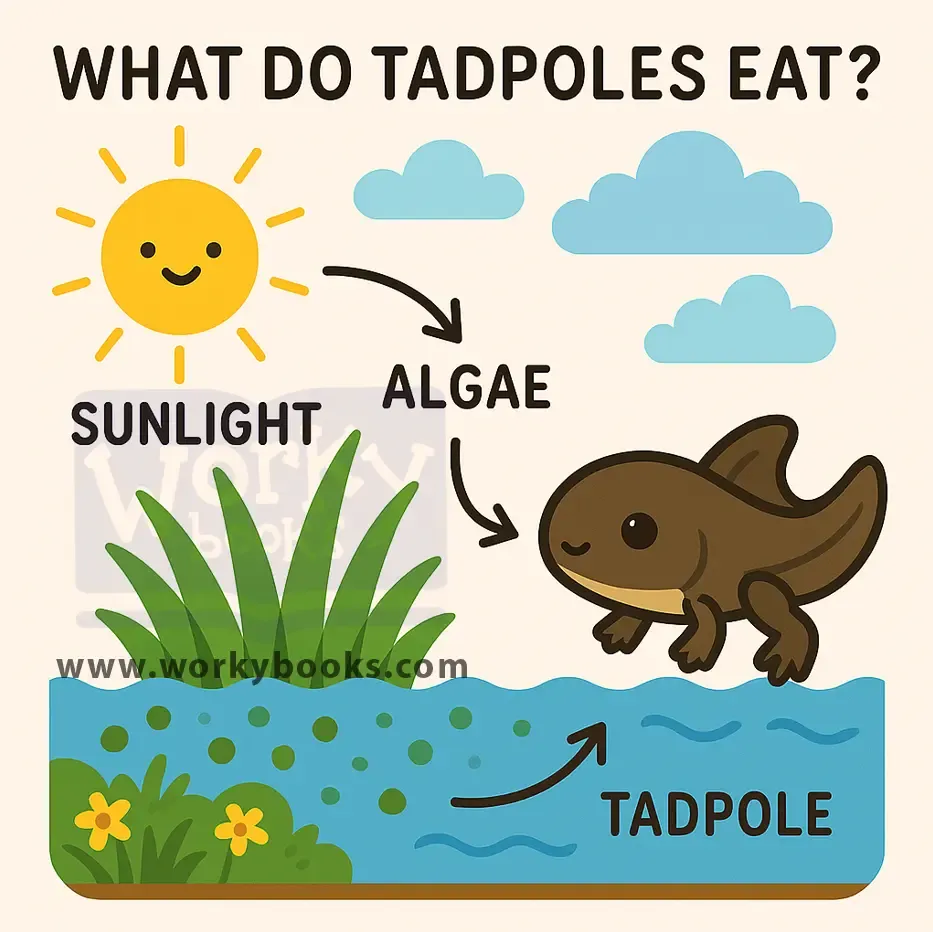
In the water, tiny green algae floated. Algae are like tiny plants, and just like bigger plants, they need the sunlight that shines down on the pond's surface to make their food. They also need the water of the pond to live.
Little tadpoles (baby frogs!) swam through the water. What did they eat? The tiny green algae! The tadpoles depended on the algae for their breakfast, lunch, and dinner. Without the algae, the tadpoles would have no food.
When the tadpoles grew into frogs, they no longer ate algae. Now, they waited patiently on lily pads for flies and other insects to buzz by. The frogs depended on these insects for their food.
And where did the flies get their food? Many flies eat small bits of decaying plants or animals that fall into the water or are found near the pond.
This is a perfect example of an ecosystem and its interdependent relationships. The algae depend on sunlight and water. The tadpoles depend on the algae. The frogs depend on the flies. And the flies depend on other parts of the pond environment. Everything is linked, and if one part of this pond community disappeared, it would affect many other living things!
Comprehension quiz (8 questions)
1. What was bursting with life in the forest?
2. What are "algae" described as in the passage?
3. What do tadpoles eat for their food?
4. What do adult frogs wait for on lily pads to eat?
5. What would happen to the tadpoles if there was no algae?
6. What is the main idea of this passage?
7. What does "interdependent relationships" mean for the pond's life?
8. Which of these is a non-living part of the pond ecosystem mentioned?
Perfect for the way you teach
- Build comprehension skills
- Auto-graded quiz
- Differentiated reading
- Read together at home
- Improve fluency
- Quiet reading time
- Reading curriculum support
- Independent practice
- Track Lexile growth