Celebrating the Fourth of July
Interactive passage with audio narration, comprehension questions, and printable PDF.
By completing this purchase you agree to our Terms of Use and Privacy Policy. Your subscription renews automatically until you cancel. You can cancel anytime from your account settings. All sales are final and non-refundable. Digital content is available for download in your account immediately upon purchase.
What's included
Part of this bundle

Celebrating the Fourth of July preview and details
About this printable Celebrating the Fourth of July reading passage (Grades 3-5)
Sample passage and quiz from Celebrating the Fourth of July
Reading passage and comprehension quiz preview
Declaration of Independence
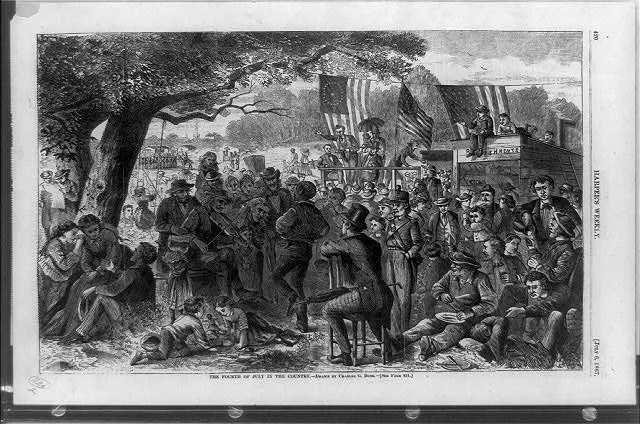
Source: Library of Congress
The Declaration of Independence is one of the most important papers in American history. In 1776, the thirteen American colonies were ruled by Great Britain. Many colonists felt the British government treated them unfairly. They had to pay high taxes and follow laws without having a say in making them.
Leaders from the colonies gathered in Philadelphia to talk about what to do. They wanted freedom to make their own decisions. The leaders chose a group to write a statement explaining why the colonies needed to be free. Thomas Jefferson, who was only thirty-three years old, was asked to write the first draft.
Jefferson worked hard and finished the draft in just a few days. He wrote about the right to life, liberty, and the pursuit of happiness. These are called natural rights. Jefferson believed everyone has these rights from birth. He also wrote that a government should protect the rights of its people.
The paper listed complaints against the British king. For example, the king made unfair laws and sent troops to control the colonies. The leaders signed the Declaration on July 4, 1776. This day is now called Independence Day in the United States. By signing, they risked their lives but showed bravery and unity.
The Declaration of Independence became the founding document of the United States. It inspired others around the world to fight for freedom, too. The words Jefferson wrote helped create a new nation based on fairness and equal rights.
Today, the Declaration is a symbol of American freedom and justice. It reminds us that people can work together to change unfair situations. The ideas from 1776 still guide the United States today.
Interesting Fact: The original Declaration of Independence is kept in the National Archives in Washington, D.C., and you can visit to see it in person!
Comprehension quiz (8 questions)
1. Who wrote the Declaration draft?
2. When was the Declaration signed?
3. Where did the leaders meet?
4. Why did colonists want freedom?
5. What are 'natural rights'?
6. What happened after leaders signed?
7. The Declaration is kept in Washington, D.C. True or false?
8. What does 'draft' mean?
Common Core standards for Celebrating the Fourth of July
Refer to details and examples in a text when explaining what the text says explicitly and when drawing inferences from the text.
Explain events, procedures, ideas, or concepts in a historical, scientific, or technical text, including what happened and why, based on specific information in the text.
Determine the meaning of general academic and domain-specific words or phrases in a text relevant to a grade 4 topic or subject area.
Perfect for the way you teach
- Build comprehension skills
- Auto-graded quiz
- Differentiated reading
- Read together at home
- Improve fluency
- Quiet reading time
- Reading curriculum support
- Independent practice
- Track Lexile growth