The 13th Amendment Ends Slavery
Interactive passage with audio narration, comprehension questions, and printable PDF.
By completing this purchase you agree to our Terms of Use and Privacy Policy. Your subscription renews automatically until you cancel. You can cancel anytime from your account settings. All sales are final and non-refundable. Digital content is available for download in your account immediately upon purchase.
What's included
Part of this bundle

The 13th Amendment Ends Slavery preview and details
About this printable The 13th Amendment Ends Slavery reading passage (Grades 3-5)
Sample passage and quiz from The 13th Amendment Ends Slavery
Reading passage and comprehension quiz preview
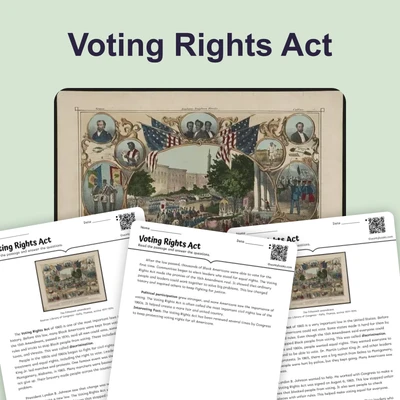
13th Amendment Ends Slavery
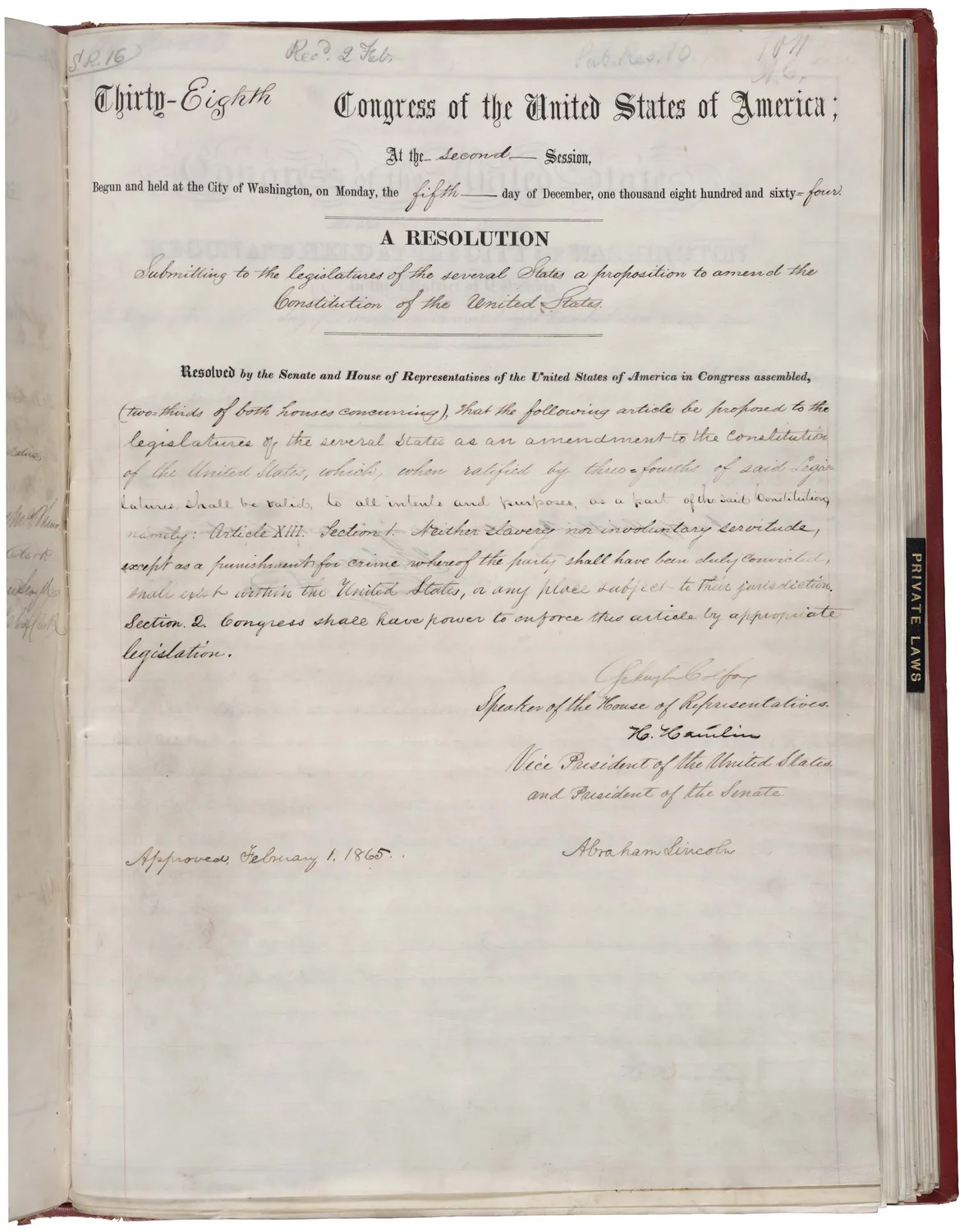
Source: Wikimedia Commons - National Archives of the Unites States
The 13th Amendment ended slavery forever in the United States. Before it was passed, slavery was legal in many states. Millions of African Americans were forced to work without pay and had no freedom. The Civil War, fought from 1861 to 1865, was a battle between the North and the South. One of the main causes of the war was slavery.
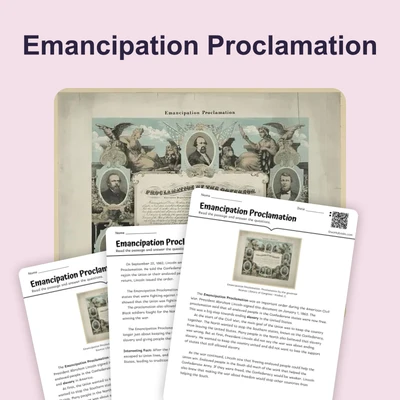
During the war, President Abraham Lincoln wanted to help end slavery. In 1863, he wrote the Emancipation Proclamation. It said that all enslaved people in the states fighting against the Union were free. But this did not end slavery everywhere. To make sure slavery was gone for good, a law had to be added to the Constitution. A change to the Constitution is called an amendment.
In 1865, Congress passed the 13th Amendment. It had three sentences that made a huge difference. The first sentence said, “Neither slavery nor involuntary servitude, except as a punishment for crime... shall exist within the United States.” This meant that nobody could be owned by another person in America ever again.
The 13th Amendment had to be ratified, or approved, by three-fourths of the states. By December 1865, enough states agreed. The 13th Amendment became part of the Constitution. About four million African Americans were freed.
This change was not easy. People who had been enslaved faced many new challenges. They had to find homes, jobs, and ways to support their families. Many were happy to be free, but life was still hard. It took courage and hard work to build new lives.
The 13th Amendment was a big step toward equality for all Americans. It showed that the country could change for the better. Over time, more laws were passed to protect the rights of all people.
Today, the 13th Amendment is remembered as a symbol of freedom and justice. It reminds us that everyone deserves to be free and treated fairly.
Interesting Fact: The 13th Amendment is only three sentences long, but it changed the lives of millions of people in the United States.
Comprehension quiz (8 questions)
1. What did the 13th Amendment end?
2. Who was president during the Civil War?
3. When was the 13th Amendment passed?
4. Why was the 13th Amendment needed?
5. What did freed people have to do after freedom?
6. How did the 13th Amendment help the country?
7. The 13th Amendment is part of the Constitution. True or false?
8. What does 'amendment' mean?
Common Core standards for The 13th Amendment Ends Slavery
Refer to details and examples in a text when explaining what the text says explicitly and when drawing inferences from the text.
Explain events, procedures, ideas, or concepts in a historical, scientific, or technical text, including what happened and why, based on specific information in the text.
Quote accurately from a text when explaining what the text says explicitly and when drawing inferences from the text.
Explain the relationships or interactions between two or more individuals, events, ideas, or concepts in a historical, scientific, or technical text based on specific information in the text.
Perfect for the way you teach
- Build comprehension skills
- Auto-graded quiz
- Differentiated reading
- Read together at home
- Improve fluency
- Quiet reading time
- Reading curriculum support
- Independent practice
- Track Lexile growth