Voting Rights for African Americans
Interactive passage with audio narration, comprehension questions, and printable PDF.
By completing this purchase you agree to our Terms of Use and Privacy Policy. Your subscription renews automatically until you cancel. You can cancel anytime from your account settings. All sales are final and non-refundable. Digital content is available for download in your account immediately upon purchase.
What's included
Voting Rights for African Americans preview and details
About this printable Voting Rights for African Americans reading passage (Grades 3-5)
Sample passage and quiz from Voting Rights for African Americans
Reading passage and comprehension quiz preview
Voting Rights Act
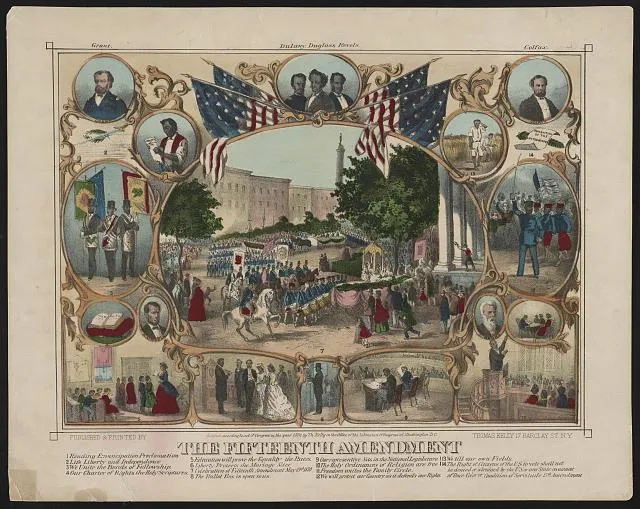
Source: Library of Congress - Kelly, Thomas, active 1871-1874
The Voting Rights Act of 1965 is one of the most important laws in United States history. Before this law, many Black Americans were kept from voting. Even though the 15th Amendment, passed in 1870, said all men could vote, some states used unfair rules and tricks to stop Black people from voting. These included reading tests, poll taxes, and threats. This was called discrimination.
People in the 1950s and 1960s began to fight for civil rights. They wanted fair treatment and equal rights, including the right to vote. Leaders like Dr. Martin Luther King Jr. led marches and protests. One famous event was the march from Selma to Montgomery, Alabama, in 1965. Many marchers were beaten by police, but they did not give up. Their bravery made people across the country pay attention to the problem.
President Lyndon B. Johnson saw that change was needed. He worked with Congress to create a new law. The Voting Rights Act was signed on August 6, 1965. This law banned unfair tests and taxes that stopped people from voting. It also sent officials to watch elections in places where unfair practices had happened. These steps helped make sure voting was equal for everyone.
After the law passed, thousands of Black Americans were able to vote for the first time. Communities began to elect leaders who stood for equal rights. The Voting Rights Act made the promise of the 15th Amendment real. It showed that ordinary people and leaders could work together to solve big problems. This law changed history and inspired others to keep fighting for justice.
Political participation grew stronger, and more Americans saw the importance of voting. The Voting Rights Act is often called the most important civil rights law of the 1960s. It helped create a more fair and united country.
Interesting Fact: The Voting Rights Act has been renewed several times by Congress to keep protecting voting rights for all Americans.
Comprehension quiz (8 questions)
1. What year was the Voting Rights Act signed?
2. Who was President when the law passed?
3. Which march helped lead to the law?
4. Why were reading tests and poll taxes unfair?
5. How did the law help voting become fair?
6. Why is the Voting Rights Act important?
7. The Voting Rights Act ended unfair voting rules. True or false?
8. What does 'discrimination' mean?
Common Core standards for Voting Rights for African Americans
Refer to details and examples in a text when explaining what the text says explicitly and when drawing inferences from the text.
Explain events, procedures, ideas, or concepts in a historical, scientific, or technical text, including what happened and why, based on specific information in the text.
Determine the meaning of general academic and domain-specific words or phrases in a text relevant to a grade 4 topic or subject area.
Perfect for the way you teach
- Build comprehension skills
- Auto-graded quiz
- Differentiated reading
- Read together at home
- Improve fluency
- Quiet reading time
- Reading curriculum support
- Independent practice
- Track Lexile growth